Results of My Physical

snapping glove

I had a physical last week. That evening I bought a new scale.

However, I realized that:

  • It’s time for me to regularly evaluate issues with my body.
  • It’s time for me to get back in the groove of exercising regularly and consistently.
  • It’s time for me to make those important doctor’s appointments to help me live a more healthy lifestyle.

What’s my biggest issue?

In the words of comedian Jim Gaffigan, “These aren’t skinny jeans, I’m just fat.”

In other words, I’m overweight, obese, stout, full-figured, corpulent, pudgy, flabby, rotund, paunchy, fleshy, and well upholstered. In layman’s terms, I’m fat. I may not be grossly overweight, but I’m still fat, like 8 and 10 other adults in the Greater New Orleans area.

Overweight

But, it’s time to put a stop to it.

This past week, I kept reading and kept being convicted by

1 Corinthians 6:19-20. In it, Paul writes,

“Do you not know that your body is a temple of the Holy Spirit?

Therefore honor God with your body.”

That means I’m going to honor God with how I take care of this body that He gave me. It means I’m going to honor Him with what I eat, what I drink, how I exercise, how I rest, and how I visit health care professionals.
Who’s with me?

Keep Moving Forward

climbing

The things people say often punch you in gut when they’re said and come back to haunt your mind when you least expect it, most often in the middle of the night.

When this happens, keep moving forward.

People will never understand your total perspective or never fully share your motivation. Who cares? Keep moving forward.

Don’t let stupid comments by annoying people keep you from doing what you know you’re supposed to be doing. They may come from an enemy, a friend, boss, spouse, neighbor, social media acquaintance, best friend, or your mama. It doesn’t matter. Keep moving forward.

When you are criticized, it means you are doing something. You are the one on stage, behind the pulpit, on the treadmill, on the field, or in the studio. You are the one with the ball, the microphone, the canvas, the instrument, or the computer.

frustrated

Steven Pressfield once wrote, It’s better to be in the arena, getting stomped by the bull, than to be up in the stands or out in the parking lot.

Keep moving forward.

When you don’t want to get up in the morning, get up and keep moving forward.

When you want to give up, don’t quit. Keep moving forward.

When you’re tired and sore and beaten and bruised. Keep moving forward.

Dr. Martin Luther King Jr. once said,

If you can’t fly, then run.

If you can’t run, then walk,

If you can’t walk, then crawl,

But whatever you do, you have to keep moving forward.

Keep Moving Forward
You control what you do. Don’t give up. Don’t give in. Keep moving forward.

Start

This morning is the start of many people’s real 2015. It seemed fitting to reshare this blogpost with you. Happy New Year.

johnfrady's avatarJohnJFrady.com

Leonardo da Vinci once said, I have been impressed with the urgency of doing.  Knowing is not enough; we must apply.  Being willing is not enough, we must do.  His words make a lot of sense.  When the time is right, we must take action.  Doing so is more important than understanding while doing nothing.

With this in mind, how are we supposed to respond to atrocious problems that exist both around the world and across the street?  How do we respond to the thousands of people still living in tent cities in Port au Prince, Haiti in the aftermath of the 2010 earthquake?  What can we do about the problem of modern day slavery and sex trafficking in Asia, Africa, Europe, and North America?  How can we end hunger in the United States?  These problems are daunting and seem impossible.

I’m convinced that the way to make a difference…

View original post 304 more words

Top Five List of Christmas Gifts Not To Give Your Pastor

Let’s face it. People in ministry are often given the most bizarre items. So, in order to help the member of the laity not be embarrassed by the gifts they give their pastors this Christmas, here is a list of five things not to give your pastors.

5. Anything beginning with the word “Chia” chiaMr.T

4. Fire Bible Prop

firebible

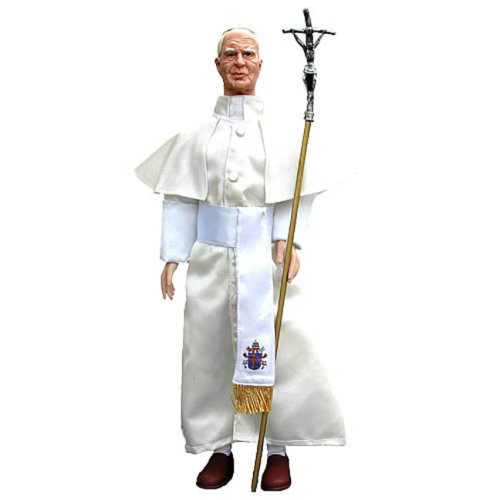
3. An Action Figure of The Pope

pope

2. Classic Neil Diamond Records

Neil-Diamond-The-Best-Of-434488

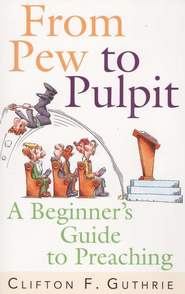
And the #1 gift not to give your pastor this Christmas is The book “From the Pew to the Pulpit: A Beginner’s Guide to Preaching”

066603_w185

Why Many Worship Leaders Don’t Like (Or Are Afraid Of) Christmas Carols

frustrated

Christmas is a special time of year for many Christians as they gather to celebrate the mystery that is the birth of our Savior. However, for many worship leaders, the Christmas season is a mystery, a conundrum, an enigma, for an entirely different reason:  Christmas carols.

For many years, a decade or more, I noticed a decline in the singing of Christmas carols in churches across America. Even though I’m beginning to see that trend reverse, there is still a resistance to Christmas carols from some worship leaders.

Here are a few reasons why:

  • Christmas Carols are often written in traditional, hymnlike styles and basically sound old. This can be a inward struggle for some worship leaders who strive most of the year to create or maintain a modern style only to feel like they’ve been jerked back hundreds of years by one month every year. Many feel like they are caving into their stylistic principles just because it’s Christmas.
  • Christmas Carols are often written in key or time signatures unusual to worship leaders and instrumentalists, therefore making them more difficult to play and forcing preparation times to go longer. Worship leaders are often puzzled as to how to lead people into the presence of God when their team is struggling with figuring out the music.
  • Christmas Carols have the dual problem of being wordy and containing antiquated lyrics, making them less relevant to many congregations. To compound the problem, most churches typically only sing them at Christmas, so worship leaders, singers, and congregation members find it easy to forget the words while finding it hard to decipher them. Being tied to the music or a confidence monitor for words often makes it difficult for a worship leader to lead others in worship.
  •  Christmas Carols change chords often, sometimes containing 3 to 4 chords per measure. This compounds the problem for worship leaders and their teams when they are already struggling with an overabundance of unusual key and time signatures and unusual lyrics. Because of this, worship teams are sometimes frustrated, glued to the music or lead sheet, and completely self-focused, making it extremely difficult to lead people deeper into worship.
  •  Sometimes, Christmas Carols just don’t appeal to people and they can’t explain why. I asked one worship leader why he never led Christmas Carols and he answered, “Because they’re stupid and I hate them.”

piano

So what are worship leaders to do? Should they just quit singing Christmas carols and ignore the Christmas season altogether? Should they completely cave in and go traditional for one month of every year? Is there anyway to strike a balance with modern worship music and Christmas carols?

I did a quick survey of a few worship leaders I know who are successfully integrating carols into their times of musical worship. Here are a few of their answers:

  • “When possible, simplify and rewrite the chord progressions by allowing for less harmonic movement. For example, some hymns and carols may have 3 or 4 chords per measure of music. Try reducing it to 1 or 2 when possible.”
  • “Mash them up. Think through how to combine Christmas Carols and worship songs that can be sung in conjunction with each other. This can be done by adding in the chorus of a new or favorite worship song as a tag to a Christmas Carol or vice versa.”
  • “Update the carols musically and creatively with production elements, different arrangements, varying instrumentation, modernizing the chords while keeping the melody, mashing them up with current worship songs, and writing extra choruses and bridges with modern words.”
  • “Don’t wait until right before the service to prepare. Find an arrangement with a demonstration your team can listen to throughout the week. Provide the music or lead sheets for them in advance and ask them to come to practice prepared to worship.”
  • “Use mashups. Every Christmas song we’ve done this year has been a mashup with other songs our congregation already knows well. This way, the song isn’t such a shock to the system for everyone involved, including the musicians onstage. It makes the music easier to play, even familiar in some situations. It’s actually been really exciting for me to find interesting ways to combine new and old songs in a fun way. I the fact that it forces me to think in creative ways…”
  • “Have a rehearsal before your pre-service runthrough to prepare your Christmas songs. Taking time to work through songs without the pressure of a service starting in an hour or less gives the worship team time to perfect the songs, allowing them to feel more natural to you.”

worship leader

To millions of people, the Christmas season, Christmas carols, and Christmas songs provide a reminder that God loved the world so much that He gave us Jesus. In this hectic world, Christmas carols can slow us down, help us forget about our frustrating pace of life, and remind us of the real meaning of Christmas. Hopefully, the suggestions above can help worship leaders and worship teams not be frustrated while preparing to lead people in times of worship utilizing carols in the Christmas season.

(Special thanks to my worship leader friends for their input)

She Came At Me With The Frying Pan

Frying_pan

There I was, relaxed in the recliner, watching a Christmas special on television, when she angrily stomped past me without a word and disappeared into the kitchen. Within seconds, my three year old sister was back holding a frying pan with both hands.

“Do you see this?” she cried out before she began swinging it viciously at me.

“Cut it out!” I yelled.

“This will teach you!” she screamed as she tried once again to hit my head with the frying pan.

I managed to dodge her efforts once again then quickly snatched the frying pan from her hands.

She lunged at me, so I dropped the pan and grabbed her hands before they smacked into my face. Since I was 14 years older than she, it was easy for me to pick her up, carry her to her room, toss her onto her bed, and hold her door shut.

She hated that even more, so she beat on the door, kicked the doorframe and screamed (quite loudly).

I finally released the door, but she didn’t know because she was still throwing a fit. I went back to the living room and continued watching my show, that is, after I placed the frying pan on top of the refrigerator.

Later, when she calmed down, I discovered that I had said something upsetting to her hours earlier and while had forgotten and was watching television, she was in her room festering. I apologized and she forgave me, but I left the frying pan on the refrigerator just in case.

There were 3 lessons I learned that day (although I still relearn them to this day):

  1. Be careful what you say. People hold grudges at varying lengths. Even if someone is offensive, answer calmly and try to resolve the conflict. Remember that a soft answer turns away wrath, but a harsh word stirs up anger. (Proverbs 15:1 ESV)
  2. Apologizing can do a world of good even if you feel you’ve done nothing wrong. It shows you and the other person that your relationship is extremely important. Jesus once said Therefore, if you are offering your gift at the altar and there remember that your brother has something against you, leave your gift there in front of the altar. First go and be reconciled to brother; then come and offer your gift. (Matthew 5:23-24 NIV)
  3. Evaluate how to improve your continued relationship with the person. Are they sensitive about certain subjects? Have you honestly ever intentionally tried to offend them? Do you need to forgive them for anything? Remember the words of Paul when he wrote: Be kind to one another, tenderhearted, forgiving one another, as God in Christ forgave you. (Ephesians 4:32 ESV)

And if necessary, hide the frying pan until the relationship is restored.

Will The Real Minister Please Stand Up?

funny-priest

What do you think about when you hear the word Minister? Some may think of a person, most often a man, dressed in all black, possibly wearing a white backwards collar, who works professionally preaching from the Bible, ministering to the sick, and counseling the hurting. Others think of a missionary, in some remote country, sharing the good news of Jesus Christ to unreached people groups. Still others may think of a hermit monk, priest, or televangelist.

So, what is the true definition of a Minister?

The Merriam-Webster online dictionary defines a Minister as “a person whose job involves leading church services, performing religious ceremonies (such as marriages), and providing spiritual or religious guidance to other people: a member of the clergy in some Protestant churches.”

That’s a pretty good definition from the world’s viewpoint, but it’s incorrect.

thumbs down

In Ephesians 4:11-12 (NLT), Paul writes, “Now these are the gifts Christ gave to the church: the apostles, the prophets, the evangelists, and the pastors and teachers. Their responsibility is to equip God’s people to do His work and build up the church, the body of Christ.”

According to this scripture, the pastors, teachers, apostles, prophets, and evangelists are the ones who “equip” God’s people to do the work of the ministry. This can only mean that “God’s people” are the ones who do the work of the ministry.

Therefore, God’s people, those who have begun a relationship with Jesus Christ, who have asked the Lord for forgiveness for their sins, who have repented of their sins and made Jesus the Lord of their lives, are the Real Ministers in the body of Christ.

This means so much for all Christians everywhere:

  • It means that every Christian is responsible for the work of the ministry.
  • It means that everyone has a job to fulfill.
  • It means that pastors, teachers and leaders have a greater responsibility to teach others to serve and to lead.
  • It means that all believers in Jesus must live holy lives, not just those in vocational ministry.
  • It means we must all look for opportunities to serve.
  • It means that we are all interdependent upon each other.

So, greetings, fellow minister. It’s an honor serving with you.

Welcome Back

IMG_1913

Last night, as I slept on my cushioned mattress topper in New Orleans, I dreamed of Nicaraguan sheet metal houses and dirt floors. As I woke, it was hard to rise and continue my regular life, because the life changing moments of the past week still held true in my mind.

I picture the 83 year old woman in the Batman t-shirt welcoming us to her home, the fruit distributor praying with one of our team members for the first time in his life, the young unwed mother to be holding her belly as she gave her life to Christ, and the faces of the children as they gathered in the church with their bowls, spoons, and cups to receive their most nutritious and filling meal of the week.

But then, I also can’t stop thinking about the conversation I had with the lady security officer in the Miami International Airport. She noticed the matching shirts on our smiling team and asked, “Where have you been?”

“Oh,” I replied, surprised by her question, “We’ve been in Granada, Nicaragua for a week serving together.”

“Serving together?” she asked. “What were you doing in Nicaragua?”

Suddenly moving into churchy language, I said, “We were doing evangelistic work.”

Hmm,” she replied. “I’m not sure what that means.”

“I’m sorry,” I said. “What I meant to say is that we’ve been in Nicaragua sharing and showing the love of Jesus.”

Her face contorted. “Really?”

“Yes, Ma’am.”

“Ok,” she said, no longer interested. “Move along now. Welcome back to the United States.”

I turned and continued through the airport, surprised at her resistance to the name of Jesus.

“Welcome back to reality,” I whispered to myself.

Our Nicaragua trip was awesome. I hope everyone on the trip has an opportunity to return and see more people won into the kingdom for Jesus. I pray that our church family will continue to support the ongoing work of the Lord in that place. I believe He will call more people from our congregations to serve in full time in remote areas.
However, my prayer for all of us, especially today, is that we will continue to live as missionaries in our everyday lives. For, that is where our everyday realities will meet our true convictions.

We Are The Music Makers

Wearethemusicmakers

Arthur O’Shaughnessy once wrote, “We are the music-makers, and we are the dreamers of dreams, wandering by lone sea-breakers, and sitting by desolate streams, world-losers and world-forsakers, on whom the pale moon gleams: yet we are the movers and shakers of the world forever, it seems.”

When the ark of the covenant was brought into Jerusalem, David told the Levites to appoint their relatives as musicians. The singers were to sing joyfully while the harps, cymbals, and lyres played. Seven priests were to go before the ark playing trumpets. A celebration was about to take place. David was going to dance before the Lord. There had to be music. And Chenaniah, who was skillful in music, was selected as the musical worship leader.

“Chenaniah, the leader of the Levites, was to direct the music because he was skillful.” 1 Chronicles 15:22 HCSB

Chenaniah was the music maker for King David that day. The entrance of the ark just wouldn’t have been the same without him. Today, those of us entrusted with the musical and artistic worship of the church are the music makers. We have been selected to lead the people of God in celebration of His new covenant with us.

That means several things:

We must strive to be skillful.

The body of Christ needs us.

And it wouldn’t be the same without us.

The Permanence of Spiritual Gifts

Permanent

“For God’s gifts and His call can never be withdrawn.” Romans 11:29

Devotional Thoughts

I know a Christian lady who moved to New Orleans after her marriage fell apart. For years, she had lived a holy, set apart lifestyle. However, upon her move, she decided to embrace the ways of the sinful world. She stopped attending worship services and life groups and started frequenting bars and night clubs. Late one evening, while in a bar on Bourbon Street, she was approached by a man who offered to buy her a drink. In the midst of their conversation, the man smiled and asked, “What are you doing here, Honey? There’s something good shining out from you and you’re trying to cover it up.”

Once the Holy Spirit enters us, He is there working in and through our lives even when we’re purposefully trying to sin.  In a similar fashion, the spiritual gifts we receive from the Lord are alive, working through us from the time of our salvation to bring about the purposes of the Lord. They are within us, working to accomplish the Lord’s will even if we are not purposefully activating them. In other words, the spiritual gifts we receive from the Lord are permanent. They cannot and will not be withdrawn, rejected, stolen, spoiled, re-gifted or returned.

Follow-Up Activity

Write out a prayer to the Lord, thanking Him for His constant presence in your life and for the permanence of the spiritual gifts He has given you.

Prayer Focus
Lord, it is comforting to know the permanence of the spiritual gifts You give to us. Help me to always use them to serve others and to glorify Your name.

(This devotion is featured in today’s HOLY OTHER Devotion Series at Celebration Church. If you would like to subscribe to this devotion series Click Here