My Last Drink of Alcohol


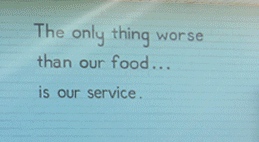
I saw a sign in a restaurant the other day proclaiming “The Only Thing Worse Than Our Food Is Our Service.” Unfortunately, I’d already ordered the pancakes.

By the way, the sign was right.
“I ain’t no professional” is a phrase I’ve heard once too often in my life in various capacities. I think it’s safe to say that if “You ain’t no professional then there ain’t no need to say it. Everyone already knows.”
The difference between the amateur and the professional is simple. The professional is willing to roll up his sleeves and go to work.

The word professional is defined by Google dictionary as someone “engaged in a specified activity as one’s main paid occupation rather than as a pastime.” This means the person is serious about it and is willing to work hard.
My profession for most of my life has been ministry. In some of my positions, I haven’t always acted professionally for various reasons. I sometimes I didn’t know what to do or who to trust and I often let my insecurities keep me from doing the work that needed to be done. In those moments, I was allowing myself to become an amateur.
The author of Proverbs 22:29 once wrote: “Do you see someone skilled in their work? They will serve before kings; they will not serve before officials of low rank.”
Some people want to reference the above verse and say that we shouldn’t associate with certain people. Believe it or not, they may be right, but not in matters of race, socio-economic status, or sports team affiliation. However, we should be careful with associating with those who are going to wastefully absorb our time and keep us from the professionalism we should strive to achieve.
In The War of Art, Steven Pressfield writes:
“Grandiose fantasies are a symptom of Resistance. They’re the sign of an amateur. The professional has learned that success, like happiness, comes as a by-product of work. The professional concentrates on the work and allows rewards to come or not come, whatever they like.”
It’s time to quit whining. It’s time to do the work that’s set before us. It’s time to be professional.

At a recent conference, I learned about the biggest problem with creativity. Here it is:
People want creativity to be like this

People most often want creativity to be linear – straight from the need to the end result. Archimedes said that the shortest distance between two objects is a straight line. That seems to make sense, right? If that is so, creativity should work like that too, correct? We should have the ability to be creative on demand with our best ideas, right?
It may work that way for some, but most often not.
Creativity is really more like this

The best creativity comes from a crockpot instead of a microwave. The best creativity involves starting with an idea, allowing your to marinate (ponder) what you have, making adjustments along the way, and finally coming to a finished product.
The secret is giving yourself time to ponder, edit, soak, and revise.
In 1992, Hurricane Andrew devastated South Florida. Among the victims was the owner of a waterfront exotic fish aquarium. The man loved his fish and, not wanting to see them perish, released them into Miami’s Biscayne Bay.
Sounds reasonable and humane, right?
However, among the fish he set free were six carnivorous Pterois native to Indo-Pacific waters, better known as Lionfish. These six fish multiplied at an enormous rate. As a result, there are now millions of Lionfish spread from Bermuda to North Carolina across the Caribbean and hundreds of miles up the Amazon River. These carnivorous fish are wreaking havoc on native populations of fish such as snapper and grouper, eating their young before they have the chance to mature. Unless something happens, certain Atlantic based species of fish may become extinct.

Here are some facts about Lionfish:
Who would have thought releasing six fish would have such a devastating impact on the waters surrounding two continents?
As I pondered these facts this past week, I realized that there is another Lionfish with another name in the church, in politics, and in society today. The name of this Lionfish is gossip.
Gossip is something that cannot be contained once it is released. It often does it’s damage and then continues to spread until people grow bored with it, despite the facts.
Here’s one example:
One year before Hurricane Andrew prompted the exotic fish tank owner to dump his Pterois into Biscayne Bay, a rumor surfaced that Tropical Fantasy Soda Pop was actually manufactured by the Ku-Klux-Klan and contained a unique formula which caused sterility among African-American men. Sales dropped 70%. Even though the rumor was discounted, sales never fully recovered and smaller rumors continue to this day.

Here are some facts about gossip:
A pastor I know once said that spreading gossip is like cutting the paper from a notebook into tiny pieces and setting them out for the wind to blow them where they may. No matter how much you try, you’re very unlikely to regather all of the pieces.

How do we stop gossip? It’s doubtful gossip will ever fully be stopped this side of Judgement Day, but here are some steps we can take to remove it (or at least reduce it) in our own lives:
The Apostle Paul wrote the following advice in Ephesians 4:29:
Don’t use foul or abusive language. Let everything you say be good and helpful, so that your words will be an encouragement to those who hear them.
I’ve read that the suggested way many governments are requesting fisherman to deal with Lionfish in the Atlantic is by removing them one at a time. Perhaps this is the best way to deal with rumors and gossip as well.
It’s time for us all to spread good news and speak life to those around us. The world needs our encouragement much more than it needs the Lionfish of gossip.

As a teenager, I had a love hate relationship with Prince’s art. I never saw Purple Rain, but I knew every lyric on the soundtrack. However, I was once so convicted when I caught myself singing some of his unsavory lyrics by my high school locker that I pulled all of the tape from the cassette (yes, I’m old) and burned it in our fireplace.
But now, hearing of his death, decades away from that moment, I find myself once again perplexed by this man, but for a different reason.
In his song Raspberry Beret, Prince states his boss, Mr. McGee, didn’t like his kind because he was a bit too leisurely. That’s an interesting line in the song, but apparently, the opposite was true of Prince. He worked hard, writing songs and recording music at all hours of the day and night. He was known for waking up sound engineers in the middle of the night, requesting they come right away to record a song he had just perfected.
I read yesterday that Prince has a vault with so much unreleased recorded music that if his estate were to release one album per year of completely original music that the world could have new Prince albums for the next 100 years. If an average album has twelve songs, that means he could have around 1200 unreleased songs.
Prince apparently was never really known for doing something close to nothing.
In the book of Colossians, Paul encourages Christians to work hard as well. He writes, Work willlingly at whatever you do, as though you were working for the Lord rather than for people. Remember that the Lord will give you an inheritance as your reward, and that the Master you are serving is Christ.
At the end of our lives, we may not have a century’s worth of unreleased recorded music, but if we serve God faithfully and do the work he’s called us to do, we’ll have something even better, the pleasure of our Lord and Master.
Once, I was overseeing the preparations for a worship service when the sound operator was working hard to mix individual parts. During these times, the volume is often higher and seems more intense, especially since the congregation is not present to absorb much of the sound. On this one particular day, one of our first impressions volunteers walked through the worship center. He stopped in the middle, jumped up and down, and waved at me furiously.
Assuming he was a little overzealous in saying hello, I waved back.
In response, he clamped his hands over his ears and jumped up and down.
I left my station, walked to where he was, and started to explain the situation. Fortunately, there was a lull in the music so the volume had dropped.
“I know it’s a little louder right now while he’s setting the music, but…”
“You know what?” he interrupted.
“What?” I asked.
“I’m going to make a lot of money.”
“Really?”
“Yes,” he said as he crossed his arms, “I’m going to sell earplugs outside the doors as people enter. What do you think about that?”
I paused and took in a breath. I didn’t have time for this.
“Well,” I said. “Be sure to tithe on it.”
Fortunately, he laughed and we both continued with our work. We spoke later, after the worship service, and he accepted my explanation of what was happening.
Dealing with complaints and criticism is something that is extremely common in worship ministry. It’s easy to get miffed when this happens because to worship leaders, artists, technicians, and speakers, the complaints are seemingly aimed at us.
So, how should we deal with criticism, especially in the church? This is by no means an exhaustive list, but here are a few tips that help me:
I must admit that I’m not the best at receiving criticism, but these steps above help me through the process when it happens. If you have other tips, thoughts, or criticisms, I welcome your feedback.
I looked across the kitchen and thought, “I’m not sure we’re going to pull this off.”
While on our annual staff retreat, the worship ministry team had the responsibility for cooking breakfast for the rest of staff. We had grandiose plans of preparing 72 eggs, 120 pancakes, 72 biscuits, a variety of fresh fruit, assorted yogurts, prepackaged granola bars, milk, juice, coffee, and (cue the music) 10 lbs of bacon.
We were prepared to knock it out quickly with the retreat center’s oven, stove top, microwaves, and electric griddles. Sounds reasonable, right?
However, when we arrived, there was no oven, there was no stove top, and the microwaves were broken. Our alternative equipment was a Crock Pot, two older electric griddles, and two coffee pots.
So, an hour before breakfast, we started cooking, using every outlet we could find, which worked well for about five minutes, when we threw a breaker.
Quickly, we rearranged the kitchen, borrowed a few cooking items, started cooking bacon in the dining hall, moved the coffee to the meeting room, found the breaker room, reset the breaker, and continued cooking.
We spent the next hour working as a team, taking care of issues as we found them and resetting the breaker from time to time. Right on time, our delicious meal was presented to the rest of the staff. As they enjoyed their meal, I felt a surge of satisfaction and munched a piece of bacon to celebrate.
At the end of the retreat, when we were asked to share our best memory from the retreat, I said that mine was making breakfast with our team. We’re used to overcoming the odds (and the clock) in worship services, but this was a real team building exercise for us, with better results than a professional ropes course.
Working as a team through difficult situations will either tear you apart or bring you closer together. Why not use them (or even create them) to bring you closer together.
Solomon, the wise son of King David, once wrote, Two people are better off than one, for they can help each other succeed. If one person falls, the other can reach out and help. But someone who falls alone is in real trouble. Likewise, two people lying close together can keep each other warm. But how can one be warm alone? A person standing alone can be attacked and defeated, but two can stand back-to-back and conquer. Three are even better, for a triple-braided cord is not easily broken.
My advice to all of us is this:
No matter what your vocation, use these simple tips to improve your writing.
I belong to a fitness club. It’s right next to my office. When I say “right next” I don’t mean “right next door,” I mean it’s in the same building as my office. When I enter the offices, I have to walk right past their front door. And yet, for most of this past year, I still couldn’t get there. I was always too busy, my schedule wouldn’t allow it, or some other excuse always came to mind.
Here are some of my favorite excuses I’ve made:
More than likely, my excuses are (and I quote Jim Gaffigan), “Today I can’t exercise because I don’t wanna and tomorrow I’m not going to be interested.”
I’ve had enough of my own sorry excuses. I’m tired of waiting for motivation. I’m tired of carrying around more weight than necessary.
I’m pretty imaginative and I’m sure I could continue creating excuses, but I’m not going to do that anymore.
I’m working out today.
I had a physical last week. That evening I bought a new scale.
However, I realized that:
What’s my biggest issue?
In the words of comedian Jim Gaffigan, “These aren’t skinny jeans, I’m just fat.”
In other words, I’m overweight, obese, stout, full-figured, corpulent, pudgy, flabby, rotund, paunchy, fleshy, and well upholstered. In layman’s terms, I’m fat. I may not be grossly overweight, but I’m still fat, like 8 and 10 other adults in the Greater New Orleans area.
But, it’s time to put a stop to it.
This past week, I kept reading and kept being convicted by
1 Corinthians 6:19-20. In it, Paul writes,
“Do you not know that your body is a temple of the Holy Spirit?
Therefore honor God with your body.”
That means I’m going to honor God with how I take care of this body that He gave me. It means I’m going to honor Him with what I eat, what I drink, how I exercise, how I rest, and how I visit health care professionals.
Who’s with me?