Holy Monday – Jesus Clears the Temple

Scripture – Jesus entered the Temple and began to drive out all the people buying and selling animals for sacrifice. He knocked over the tables of the money changers and the chairs of those selling doves. He said to them, “The Scriptures declare, ‘My Temple will be called a house of prayer,’ but you have turned it into a den of thieves!” (Matthew 21:12-13) 

Devotional Thought: What is the first thing you do when you arrive at the church building for worship? It’s probably different from what Jesus did on Holy Monday. That day, Jesus became angry and immediately started overturning the tables of the merchants and driving them out of the temple. This almost seems out of character for Jesus because we think of Him as a peacemaker. However, God is serious about worship. Jesus, being God the Son, realized that the merchants and the moneychangers were making it difficult for people to enter into the temple and worship so He took the appropriate steps to cleanse the temple in order to restore it as a house of prayer and worship. 

In the world of Marvel comics, Bruce Banner transformed into the Incredible Hulk whenever he became angry. This is not what happened to Jesus. He didn’t suddenly transform into a destructive creature while He wasn’t aware of His actions. He was in His right mind and in that moment, it was appropriate for Him to display His righteous anger because of this disruption of worship. Righteous anger is being angry about what makes God the Father angry. Because we are sinful, this is often hard for us to understand because we typically fall into sinful anger which is completely prideful and does not glorify God.

Many of the Jewish leaders were already angry with Jesus. He was well aware that His cleansing of the temple would not improve His relationship with them. He knew that in just a few days, the religious leaders would come to arrest Him. He knew that before Him lay a tremendous amount of pain before His own death on a cross. Even so, He continued to honor and glorify His heavenly Father. When all is said and done, we should strive not to be like the merchants who were distracting people from worship, but like Jesus who knew the heart of God and had the courage to take action. 

Prayer: Lord, thank You for showing us how important worship is to You when Jesus cleared the temple. Thank You that He didn’t back down even though it was so close to His crucifixion. Help me to never be a distraction or a hindrance to others when it is time to worship You. In Jesus’ name, Amen. 

Followup Activity: In your journal or on a piece of paper, make a list of ways you might intentionally or accidentally distract others from worshiping the Lord. Then, next to your first list, make another list of ways you can encourage others when they are worshiping the Lord. Then, pray and ask the Lord to help you always assist others when they come to worship the Lord. If you are leading your family through this devotion, encourage them to do this activity as a family.

*Image courtesy of Marek Studinski

**This devotion is part of an 8-day Holy Week devotional titled RENEWED. It is available as a free download from Celebration Church in New Orleans at http://www.celebrationchurch.org/library.

Night of Worship Outline based on Ephesians 3:14-21

Opening Worship Set and Prayer

  • Song
  • Song
  • Prayer – Inviting the presence of the Holy Spirit to lead us as we worship together 

Empowering Section (When we pray, God empowers us through His Holy Spirit)

  • Song – Holy Spirit, You Are Welcome Here  
  • Scripture and Sharing – “When I think of all this, I fall to my knees and pray to the Father, the Creator of everything in heaven and on earth. I pray that from His glorious, unlimited resources He will empower you with inner strength through His Spirit.” (Ephesians 3:14-16)
  • Prayer – Asking God to continue empowering us through His Holy Spirit

Understanding Section (When we pray, God gives us glimpses of His infinite love)

  • Song – How He Loves, Reckless Love, Goodness of God
  • Scripture – “Then Christ will make His home in your hearts as you trust in Him. Your roots will grow down into God’s love and keep you strong. And may you have the power to understand, as all God’s people should, how wide, how long, how high, and how deep His love is.” (Ephesians 3:17-18)
  • Prayer – Asking God to help us understand His love for us and for the world.

Experiencing Section (When we pray, we experience the love of Jesus and the power of God in our lives)

  • Song – Same God
    • Scripture – “May you experience the love of Christ, though it is too great to understand fully. Then you will be made complete with all the fullness of life and power that comes from God”. (Ephesians 3:19)
  • Prayer – Asking God to allow us to experience His love and power.

Accomplishing Section (When we pray, God allows us to see Him accomplish more than we can ever imagine)

  • Song – I Speak Jesus
  • Scripture – “Now all glory to God, who is able, through His mighty power at work within us, to accomplish infinitely more than we might ask or think. Glory to Him in the church and in Christ Jesus through all generations forever and ever! Amen.” (Ephesians 3:20-21)
  • Prayer – Asking God to continue to accomplish more than we can ask or think in our lives, our families, our church, and our country. 

Closing – Encourage the people to keep on praying because God can do miracles. 

Upbeat Closing Song

*Photo courtesy of Ben White

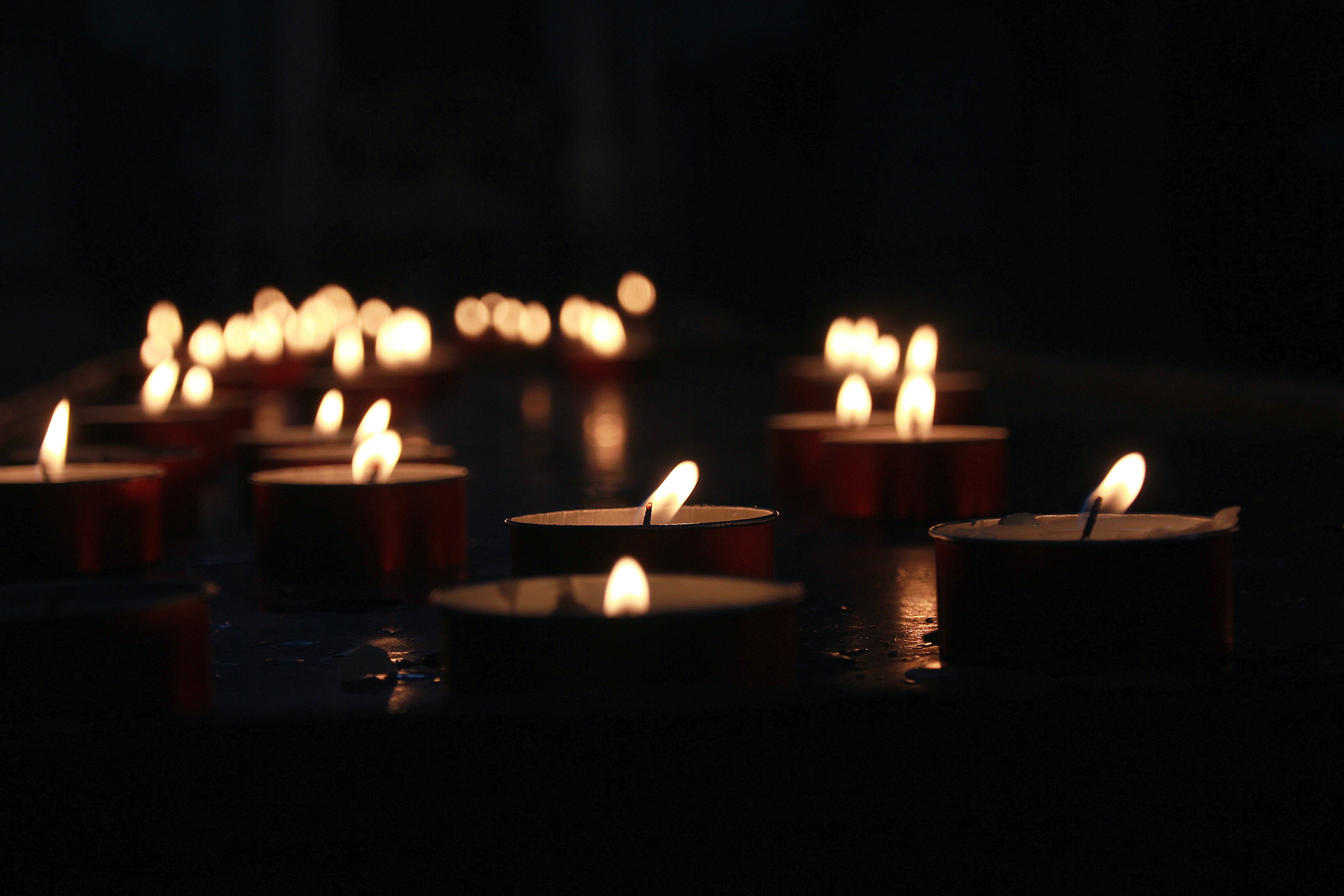
Christmas Candles

As Christmas approaches, churches often plan services where congregations of all sizes and all ages hold lighted candles and pass the flame to others as they sing carols. While this practice brings concern to fire marshals, church facilities personnel, and parents of small participating children, it can also be extremely meaningful. 

But I sometimes wonder why. What is the significance of candles at Christmas? 

Although candles were often used in ancient winter solstice celebrations as a way of remembering that spring would soon come, Christians most likely picked up the practice of using candles from Judaism where candles were used in ancient services for various purposes. As unspiritual as it may sound, candles were probably first used as a source of illumination (not the spiritual kind). 

At some point, in early Christian worship, someone realized the light of the candle could easily symbolize Jesus who once said, “I am the light of the world. If you follow me, you won’t have to walk in darkness, because you will have the light that leads to life.” (John 8:12)

Over the years, people began to associate candlelight with various spiritual practices. In Orthodox traditions, members were encouraged to place small votive candles in small sandboxes which symbolized a spirit of prayer within the church. To Catholic and Protestant clergy alike, candlelight often represented the power and the presence of God, akin to the pillar of fire that led the Israelites in Exodus. To others, candles represented their prayers being lifted to the Lord, symbolizing their lives as offerings to Him, being slowly consumed in their Christian service. And at Christmas in the Middle Ages, a large lit candle was used to represent the star of Bethlehem. 

It can be a moving experience to be a part of a service when the lights are lowered, a carol is sung, and the candle flame is passed from believer to believer. It is certainly visually stimulating to see a worship center filled with countless numbers of candles, filling the darkness with light. If that light carries meaning, it can be an even greater experience (especially if you can keep from dripping burning wax on your hands)

Merry Christmas.

*Image courtesy of Zoran Kokanovic

Lies Christians Tell

farago-tudor-andrei-277076

Honesty may be the best policy, but deception and dishonesty are part of being human. That sentence is a direct quote from a recent article I read in a National Geographic article (June 2017) titled Why We Lie. The article even stated that Learning to Lie is a natural stage in child development. I’m not one who is overly prepared to discuss human development, but I do know that it’s not hard to see that dishonesty is prevalent in our society today. It is also rampant in our churches as well, especially in corporate worship.

Let me explain.

Charles Spurgeon once said, A lie can travel half way around the world while the truth is putting on its shoes. He makes a good point, and Christians should be the first ones to understand the importance of truth, especially since we worship the One who is the Way, the TRUTH, and the Life. (John 14:6) However, instead of heralding truthfulness, we often champion deceit, inaccuracy, and falsehood, especially when we’re with other Christians in corporate worship.

To quote A.W. Tozer, Christians don’t tell lies, they just go to church and sing them.

I know we look like pillars of integrity when we stand to sing, sometimes with our hands raised high, but the question remains, do we honestly, wholeheartedly, sincerely, mean the words that are coming out of our mouths?

When I was a child, one of my favorite hymns was My Jesus, I Love Thee written by William R. Featherstone. The first stanza contains the lyrics, “For Thee, all the follies of sin I resign…” Even when I have the opportunity to sing that song now, I belt it out with all my heart, but when I reflect on the words, I must ask myself, “Have I really resigned from all follies of sin?” Sadly, the answer is most often, “No, I haven’t.”

One of my favorite worship songs now is When You Walk Into The Room by Bryan and Katie Torwalt. However, there are lyrics within the song that cause me to doubt my level of honesty with the Lord. For example, one line says “We can’t live without You, Jesus…” I’m lying if I say I always keep Jesus at the center of my life. Being a selfish person, I constantly try to live my life without Jesus’ influence. So, often, when I sing those words, I feel more conviction than rejoicing.

So, is the answer to stop singing and participating in corporate worship? Absolutely not. These internal struggles are part of the process of worship. In worship, we come to terms with the holiness of God and therefore, reflect on our own sinfulness. In Isaiah 6, which I learned in college is a textbook example of an ultimate worship service, Isaiah sees the Lord. He’s awed by the power that is before him. He hears the seraphim singing “Holy, holy, holy is the Lord of Heaven’s armies! The whole earth is filled with His glory!” (Isaiah 6:3). As Isaiah is taking all of this in, he is completely overwhelmed by the Lord’s holiness, and then he comes to grips with his own sinfulness. He cries out, “It’s all over! I am doomed, for I am a sinful man. I have filthy lips, and I live among a people with filthy lips.” (Isaiah 6:5a)

Isaiah knew that if he were to join the seraphim in singing “the whole earth is filled with His glory” that his own life would need to reflect the glory of God. The same is true for us with the songs we sing in worship. If we’re going to sing, “The sun comes up, it’s a new day dawning, it’s time to sing Your song again…” (10,000 Reasons – Matt Redman), then we should be willing to rise in the morning, remembering who He is, and being willing to lift up His name in song, and willing to submit our day to His will.

So, let’s determine to sing songs, hymns, and spiritual songs to the Lord with hearts that are pure and ready to confess. As we enter into worship, let’s encounter his holiness and repent of our own sinfulness. Let us be filled with integrity in our worship, lifting Him up in Spirit and in TRUTH.

The End Result of Worship

sacrifice

Everyone, everywhere seems to have an remarkably meticulous opinion of what or how worship is supposed to be or happen.  Interestingly enough, most of these opinions do not refer to true worship in a biblical sense, but are more about musical preference, sermon methodology, tradition (or the absence thereof), and permissible clergy clothing.

However, when Isaiah saw the Lord in Isaiah 6, he experienced the greatness of God, realized the extent of his own sinfulness, and witnessed his sin being atoned for.  The end result of his worship experience was when Isaiah said “Here am I, send me.”

God shaped us after Himself so that we could experience His presence and accomplish His purposes.  When we realize who He is and all that He has done for us, our only reasonable response to Him is worship and absolute surrender.


Pornography Showing At Church

At a church not too far away, in the Sunday morning worship service, the pastor was introducing a well known guest speaker. To aid in his delivery, he called for a video to be played. The technicians followed his instructions…

And pornography appeared on the screens.

shocked-face

Most people understood that it was a mistake. A few left and never returned.

I was shocked when I first heard this story, but honestly, I’m surprised it doesn’t happen more often, not just in worship services, but in youth classes and children’s gatherings.

Here are some steps churches can take to make sure this never happens.

  1. Preview every video that is supposed to play in your service from start to finish. This just makes sense. You can’t always control what people are going to say, but you have complete control over whether or not you show a video.
  2. Never show videos straight from the internet. It’s just too unpredictable. A similar version of the most godly video could contain pornography. An unseemly ad may play when you least expect it. Someone could accidentally hit the wrong tab and play the wrong video. It’s just not worth it. Download the video and play the file.
  3. Protect your presentation computers. You can install filters if you think that is best, but the best protection is keeping it away from public use.

In the case above, too many people had access to the church worship center computer and unfortunately, someone had used it to view pornography (which is tragic in itself). When the speaker called for the video, which he was having the technicians play from an online source, a wrong button was pushed and the rest is history, or at least the church was, especially for many of their former members.

Dustin Lee - Unsplash 1

Good Friday Outline/Script using Hillsong’s “O Praise The Name”

good-friday-copy

Here’s a basic outline/script for Celebration Church’s 2016 Good Friday service. It’s my hope that other churches can find it helpful and meaningful in the future.

Three basics props are needed for this service:

  1. Biblical Whip
  2. Crown of Thorns
  3. Three large 8-10 inch nails

We chose to use a high table for the props.

O Praise The Name Good Friday Outline/Script

3 Opening Songs – Based around the cross and the goodness of the Lord

Brief Offering Introduction and Prayer

Transition Video – http://www.danstevers.com/store/life_with_god/ (also available in Spanish)

THE NAME OF THE FATHER SECTION

Speaker: (quoting video) Life with God is not about a religion. It’s about a relationship. Here at Celebration Church, we encourage everyone to know God personally.

When you first meet someone, you most often learn each other’s name. When meeting the Lord, most people realize that He already knows their name, but how are we to address God?

I mean, really, what do you call the Supreme, Ever-Present, All-Knowing Power in the Universe? Let’s explore that.

For thousands of years, there have been many names for God

  • He is Elohim, our Mighty Creator, who spoke and the worlds came into existence. (Show slide displaying the name “Elohim”)
  • God is called El Shaddai meaning God Almighty(Show slide displaying the name “El Shaddai”)
  • He is YAHWEH, which is sometimes known as the only proper name of God. This name was revealed when Moses asked the Lord for His name. God answered by saying, “I Am Who I Am.”(Show slide displaying the name “YAHWEH)
  • God is also called Adonai which simply means Lord(Show slide displaying the name “Adonai)

There are many other names of God in the Bible reflecting on the attributes of God, but the name Jesus most often used when praying and teaching others to pray was Father.

(Show slide displaying the name “Father)

The name Father was more descriptive than most other names because the word Father describes more than a characteristic of God. It describes a relationship.

Think of all a Good Father is and that describes who God the Father is to us. He is our Provider, our Shelter, our Forbearer, our Wise Ancestor. He’s given us Life, Protection, and Nourishment. He’s our Source, our Sire, our Parent. No matter if you call Him Padre, Papa, or Daddy, He is our Father. Our Good, Good Father.

Let’s take a moment and think about His goodness.

Sing: Good, Good Father – https://www.youtube.com/watch?v=x0gwz_IDY7w (Spanish version also available)

(Soft music from one instrument continues to play as speaker continues)

THE NAME OF JESUS Section

Speaker – God, our good, good Father, patterned mankind after Himself because He desired a personal relationship with each person. However, man’s sin created a problem. You see, God is so good and so Holy that sin cannot exist in His presence.

In fact, we learn from the first part of Romans 6:23 that “the wages of sin is death…”

(Show Romans 6:23a slide as it is being read)

Basically, it’s saying that the punishment for our sin is death. With that being said, it sounds as if we are doomed. However, Romans 6:23 also continues to say, “But the free gift of God is eternal life through Jesus our Lord.”

(Show Romans 6:23b slide as it is being read)

So God provided a way for us to be forgiven. But how can this be? Why would He do such a thing? Because our Good, Good Father loves us.

The Bible actually says in Romans 5:8 – “But God showed His great love for us by sending Christ to die for us while we were still sinners.”  

(Show Romans 5:8 slide as it is being read)

Jesus died on the cross to pay the penalty for our sins. He took our place and endured the punishment that we should have received.

Taking this punishment is the reason Jesus was born in the first place. It’s how He got His name. An angel appeared to Joseph and said, “You are to name Him Jesus, for He will save His people from their sins.”  (Matthew 1:21)

(Show Matthew 1:21 slide as it is being read. Music switches to minor key)

CRUCIFIXION SECTION

However, the punishment He took for us was serious, painful, punishment. John chapter 19 describes much of this torture Jesus endured in detail.

(Stagehands uncover table. Music continues)

Speaker: “Then Pilate had Jesus flogged with a lead-tipped whip.” (John 19:1)

(Show John 19:1 slide as it is spoken)

(Speaker goes to table and examine lead-tipped whip. Holds up the whip for all the see)

Speaker: Jesus was beaten at least 39 times at the whipping post. The whip lashed His shoulders, back, and legs, cut through His skin and tissue, and caused blood to ooze from His capillaries and veins. The lead tips produced deep bruises which were broken open by subsequent blows. Many who were sentenced to crucifixion never made it to the cross because they died during the flogging.

(Speaker returns the whip to its place)

Speaker: “The soldiers wove a crown of thorns and put it on his head,” (John 19:2)

(Show John 19:2 slide as it is spoken)

(Speaker holds up the crown of thorns and examines it while speaking)

Speaker: The main purpose of the crown of thorns was for the pleasure of the mocking guards, who thought it was hysterical that Jesus should call Himself a king. The guards formed the crown from thorns of a nearby plant. They shoved it down on Jesus’ head so that it would not fall off during the crucifixion. The humiliation of the crown continued throughout His crucifixion. Every step Jesus made towards his own death, His followers saw the crown of thorns. His enemies pointed and laughed and continued the mocking.

(Speaker Return the thorns to the table)

Speaker: “So they took Jesus away. Carrying the cross by himself, he went to the place called the Place of the Skull. There they nailed him to the cross.”  (John 19:17-18a. Show slide as scripture is being read)

(Show John 19:17-18a as it is spoken)

(Speaker picks up the nails and holds them at arm’s length toward the people)

Speaker: Imagine the soldiers stretching one of Jesus’ arms out and nailing His hand to the cross.

(Speaker hits two of the nails together three times)

Speaker: Think about the soldiers stretching Jesus’ other arm out and nailing His other hand to the cross.

(Speaker hits two of the nails together three times)

Speaker: Picture the soldiers placing Jesus’ feet one on top of the other, and driving a nail through them.

(Speaker hits two of the nails together three times)

Speaker: The soldiers raised the cross and Jesus hung there for everyone to see. It was there that Jesus, the Son of our Good Father, who received His name because He would save His people from their sins, died.

(music stops abruptly)

Speaker: “For this is how God loved the world: He gave his one and only Son, so that everyone who believes in him will not perish but have eternal life.”  (Show John 3:16 slide as it is read)

(Music for next song begins and Speaker exits)

O Praise the Name – https://www.youtube.com/watch?v=LqBpifDpNKc(Also available in Spanish)

Gospel Presentation/Decision Ministry – 

Communion Intro – We’ve shared tonight about the love of our Good Father and the sacrifice of our Lord Jesus. Now, together, let’s take time to commemorate what Jesus did for us on the cross by observing communion together…

Communion –

“You Are Good” (Kari Jobe/Gateway) – Suggested Song for Communion – https://www.youtube.com/watch?v=O15tsWWo_Ys

Closing Remarks

Closing Song

Dustin Lee - Unsplash 1

(Photos courtesy of Unsplash)

3 Steps For Improving Spoken Transitions


photo courtesy of Unsplash - Lee Miller

It was the early 90’s. I had big hair, a mustache, and huge shoulder pads in my sports jacket. In our musical worship set, I was verbally transitioning to the old praise song Behold the Lamb. I had planned to share about how John the Baptist pointed to Jesus and proclaimed, “Behold the Lamb of God, who takes away the sin of the world.”

However, in the moment, the transition was going well, so I took it further than I had planned. Big mistake.

Here’s what I said:

“Jesus is the Lamb of God. He’s the only person who has ever lived who has lived a totally sinful life.”

And then, without realizing my mistake, I said it once again.

Spoken transitions, no matter where they fall, are extremely important for the flow of a worship service. If one goes badly, the worship leader or preaching pastor may never fully re-engage the people.

Here are 3 steps I believe can help us all improve our spoken transitions:

Think. Take time to think about what you are really trying to accomplish. Think about the words you are going to say. Think about the people who will be hearing your words. Think about what is coming after the transition.

Script. Take time to write out what you are going to say. Then, tighten it up by shortening it as much as possible. Remove unnecessary or repeated words and phrases.

Practice. Take time to rehearse what you’ve scripted out. Start by reading your what you’ve written aloud. Chances are, you’ll make a small adjustment or two. Then, stand in front of a mirror and practice until what you are saying feels more natural to you.

These 3 steps all have two words in common.

Take Time.

If something is worth being said, it’s worth taking the necessary time to make it as good as possible. Hopefully, by doing so, you can avoid telling your congregation that Jesus lived a sinful life.

Dustin Lee - Unsplash 1

(Photos courtesy of Unsplash.com)

One Word We Need To Stop Using During Communion

Dustin Lee - Unsplash 1

Recently, one of our pastors spoke with a guest who had attended one of our worship services. The man said he enjoyed the music and the preaching, but he was confused about something he heard from the stage.

“What was confusing to you?” asked the pastor.

The man replied, “Well, this man said we were going to remember what Jesus did for us and then he asked everyone to come forward and receive the elements. I wasn’t about to do that because I’ve only heard that word used when someone was speaking about drugs.”

It may sound silly, but since then, I’ve tried to not use the word elements when speaking of the bread and juice that we serve when we celebrate communion (another term I want to find another name for). I thought about calling it the body and the blood but I figured that might really freak people out. I haven’t successfully found appropriate terminology for the term yet, so for now, I will refer to the elements as the bread and the juice.

If you can think of better terminology, please reply.


One of the Most Important Weekly Investments For Pastors, Worship Leaders, Speakers, and Prayer Counselors

Dustin Lee - Unsplash 1

Churches spend thousands, if not tens of thousands of dollars on quality sound systems and hundreds of thousands if not millions of dollars on worship facilities. Worship leaders and speakers also often invest thousands of dollars in training, instruments, and resources, not to mention countless hours in sermon preparation, worship rehearsals, worship planning, and prayer. All of this time and money is dedicated to honoring the Lord, reaching the lost, and empowering the church.

However, one small weekly personal investment can help pastors and worship leaders when it comes time to make real connections with people.

Gum.

No matter how great our upfront preparation is and will be, if we speak personally with people and they are offended by our breath, we will lose vital opportunities to share the gospel, encourage the timid, or recruit vital leaders and volunteers.