My Personal Battle with Truth and Fiction

jesus-kiteque-224069

I’ve heard it said that truth is stranger than fiction, but I was never certain as to whether or not I could really believe it. Truth and Fiction are so similar that it’s sometimes hard to distinguish between them. Many times, in either classification, people are simply telling stories.

Don’t misunderstand me. I love stories. I always have. There’s something about the ebb and flow of the introduction of characters, the unfolding of the setting, the emergence of conflict, the buildup of relational tension, and the joy of resolution that grips me down deep.

Stories teach. Stories heal. Stories whisk us away to other lands and somehow through the mental break and moral lessons they provide, we emerge from them as better people, much of the time at least. Stories impact our lives and change us.

When I was eight years old, a preacher came to my house and shared with me, what I was told, was the greatest story ever told. Knowing it was only a story, I repeated his prayer and two weeks later I was baptized on a Sunday night.

Suddenly, my story changed, at least in theory. For you see, to the world I was a Christian, living a life dedicated to my Lord Jesus and striving to be free and separated from sin.  The truth however, is that even though I was a card-carrying member of a church, that I was living a lie. I was telling a story. I thought that the Bible stories that I heard at church and at home were simply stories, no different than the stories of Curious George, Spiderman, Santa Claus, and the Engine That Could. I loved all of these stories, but understood that honestly, they were simply moral lessons designed to teach me to be a good boy.

But then, as a teenager, a conflict arose within me. Suddenly, I became both protagonist and antagonist making major plot decisions in how my life’s story was going to play out.  I realized I was standing at a major crossroads. The decisions I was about to make would not only determine the next chapter of my life, but it would be instrumental in defining my journey’s end.

Honestly, I thought about abandoning stories altogether. It didn’t matter if it was Truth or Fiction. Both seemed to be getting stranger by the day. A whirlwind of stress and confusion caused the tension within me to swell to the point of explosion, when I realized I was wrestling with an unseen character.

This new character was dynamic and powerful yet peaceful and controlled. This character had the power to transform my story forever. This character was the Author Himself. He stepped into my story and helped me realize that it was His story all along.

That’s when I realized that the stories I had learned as a child about the Lord weren’t stories at all. They were real.

It was then that I joined His story as a willing participant, honored to be included as a character in His book forever.

I’ve heard it said that Truth is stranger than Fiction. That may be true, but at least it’s real.

Why I Choose To Be Thin-Skinned

rachael-gorjestani-282049

King David was a king, a warrior, and a man after God’s own heart.  He was also an artist, a musician and a writer. Who else but a sensitive person with an artistic heart could have written so many heart felt psalms? Who else but a talented artist could have played so skillfully that demons fled from Saul as he listened? The church needs artists today. We need people who cry when listening to beautiful pieces of music. We need people who stop running so frantically and see the beauty, hurt, and awe around us. We need people who pay more attention to God’s creation than business plans. We need people who feel deeply and have the ability to communicate those feelings to the rest of us.

Rory Noland, in The Heart of the Artist, writes that “Everyone with an artistic temperament has been told at some point in his or her life to develop a thicker skin. That’s nonsense! The world doesn’t need more thick-skinned people. It needs more people who are sensitive and tender.” I agree with Rory’s sentiment for the most part. I suggest that artists, in the church, need to be thin-skinned people when experiencing beauty and hearing from God but then be willing to put on spiritual full-body armor when experiencing evaluation, criticism, and spiritual warfare.

I am a firm believer that God determines what He wants someone to do by who He made them to be. I also believe that everyday, as we grow closer to Him, experience life’s victories and defeats, learn new skills, and tolerate pain and resistance, that we are in a constant state of becoming.  So, the two questions are, “Who did God create you to be?” and “How has God being creating you recently?” 

Did He create you to be an artist of some kind?  Then keep reading.

The world pushes artists of all kinds down from the time they are young.  Think about it.  Adults ignore or laugh at children’s artwork when presented to them, kids taking artistic lessons are often downplayed by those in sports leagues, Jr. High students are merciless in their teasing of classmates trying to express themselves in any creative way, high school and college standards weed out those who simply want to create art for enjoyment, and then adulthood comes along and presents us with the immediate priorities of financial obligations, thank you very much. I know, I know. Life happens and people have to grow up and find real jobs in order to stay alive. That’s true, but what fun is life if there isn’t some kind of beauty we can experience along the way? What good is the money we make if we are numb to art and beauty?

I want to encourage artists, especially those in the church, to not be afraid of your own sensitivity. Feel what’s going on around you. Experience it. Live it. Make it a part of you.  Then communicate it to the world around you in beautiful, unique ways. Write, sing, sculpt, paint, draw, play, act, compose, speak, direct, form, whatever…

Just don’t stop. 

If you do, it’s not just you who loses. 

It’s all of us.  


What God Thinks About You

warren-wong-277326

When I was in college, I attended a large student conference in North Carolina. One day, as I was waiting for my friends, an older woman struck up a conversation with me. She asked me if I was enjoying the conference. For some reason, I told her I was really disappointed because I hadn’t been selected to sing the solo with the choir for that evening’s worship service.

She replied, “If the foot should say, ‘Because I’m not a hand, I don’t belong to the body,’ in spite of that it still belongs to the body. And if the ear should say, ‘Because I’m not an eye, I don’t belong to the body,’ in spite of this it still belongs to the body.” (1 Corinthians 12:15-16) Do you know why I stopped to talk with you?”

“No,” I replied.

“I wanted to tell you that each night when the choir sings, I watch you worship and it encourages me. You are unique and loved by God.  He doesn’t want you comparing yourself to others. He wants you to rejoice in what He’s given you.”

I walked away encouraged.

That evening, I was surprised to see that very woman introduced as the keynote speaker.  She walked to the podium, looked out at 1500 college students and said, “You are unique and loved by God.”

I noticed a girl on the front row wiping her eyes.  She needed that message as much as I did.

We all spend so much time comparing ourselves with others that we forget that God loves us just as we are and made us that way on purpose.

So, before I go, let me remind you – You are unique and loved by God.


*Warren Wong Photo courtesy of Unsplash 

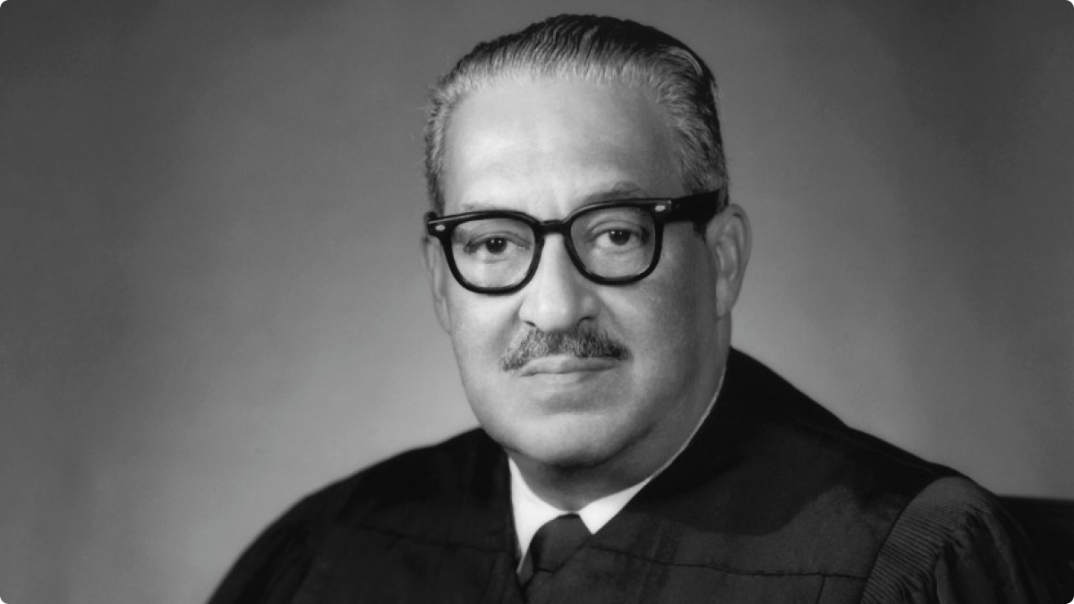
Lesson Learned from Thurgood Marshall

thurgood_marshall

Thurgood Marshall became a Supreme Court Justice in 1967. As the first African-American justice, he was attributed with the following quote: The measure of a country’s greatness is its ability to retain compassion in time of crisis. 

Today, as I ponder his words, I have to wonder, “Do I retain my compassion in times of crisis?” No, I don’t. Instead, I often freak out and become completely self-centered?”

However, as Christians, we are called to live differently.

The Apostle Paul once wrote, “Therefore, as God’s chosen people, holy and dearly loved, clothe yourselves with compassion, kindness, humility, gentleness and patience.” (Colossians 3:12)

We all struggle with selfishness. If we say we aren’t, we’re not being truthful. The truth is, we could all spend the rest of our lives learning how to clothe ourselves with compassion, not to mention kindness, humility, gentleness, and patience.

Let’s get started.

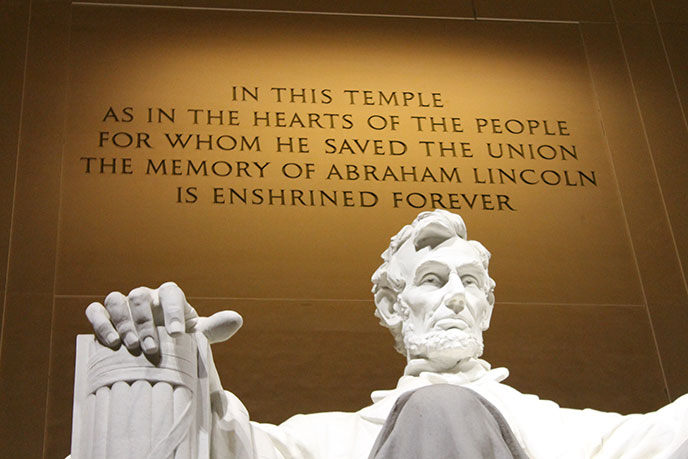
Abraham Lincoln Is Alive and Well

LincolnMemorial

Imagine for a moment that you are in Washington D.C. at the national mall. You walk past the reflection pool and make your way up the steps of the Lincoln Memorial.  Slowly, you walk up to the large statue of Abraham Lincoln. You pause and remember the man that many people consider the greatest president to have ever served. Suddenly, the statue begins to move and, to your surprise, it starts speaking to you. At first, you wonder if he’s some sort of zombie statue who might devour you, but then, you realize that he, the real Abraham Lincoln, is really there, in person, speaking through that statue, desiring a one-on-one conversation with you. What you thought was going to be a personal memorial for a deceased man has suddenly become an interaction with a living president.

This is not unlike what often happens when we encounter Jesus. We think of Him as the One who died on the cross to pay the penalty for our sins, but we often don’t anticipate it going any further than that. We often memorialize Him and certainly don’t expect any personal interaction with Him. But then, when He speaks to us, we are totally blown away. It’s often, at that point that we remember that He’s alive and well, not wanting to destroy us but desiring a strong, real, meaningful, personal relationship with each of us.

Don’t settle for a knowledge of Jesus. Get to know Him.

The Holy Spirit On Bourbon Street

Bourbon Street

I know a lady who moved to New Orleans after her marriage fell apart. For years, she had lived a holy, set apart lifestyle. However, upon her move, she decided to embrace the ways of the sinful world. She stopped attending worship services and life groups and started frequenting bars and night clubs. Late one evening, while in a bar on Bourbon Street, she was approached by a man who offered to buy her a drink. In the midst of their conversation, the man smiled and asked, “What are you doing here, Honey? There’s something good shining out from you and you’re trying to cover it up.”

Once the Holy Spirit enters us, He is there working in and through our lives even when we’re purposefully trying to sin.  In a similar fashion, the spiritual gifts we receive from the Lord are alive, working through us from the time of our salvation to bring about the purposes of the Lord. They are within us, working to accomplish the Lord’s will even if we are not purposefully activating them. In other words, the spiritual gifts we receive from the Lord are permanent. They cannot and will not be withdrawn, rejected, stolen, spoiled, re-gifted or returned.

God’s gifts and His call can never be withdrawn. Romans 11:29

The End Result of Worship

sacrifice

Everyone, everywhere seems to have an remarkably meticulous opinion of what or how worship is supposed to be or happen.  Interestingly enough, most of these opinions do not refer to true worship in a biblical sense, but are more about musical preference, sermon methodology, tradition (or the absence thereof), and permissible clergy clothing.

However, when Isaiah saw the Lord in Isaiah 6, he experienced the greatness of God, realized the extent of his own sinfulness, and witnessed his sin being atoned for.  The end result of his worship experience was when Isaiah said “Here am I, send me.”

God shaped us after Himself so that we could experience His presence and accomplish His purposes.  When we realize who He is and all that He has done for us, our only reasonable response to Him is worship and absolute surrender.


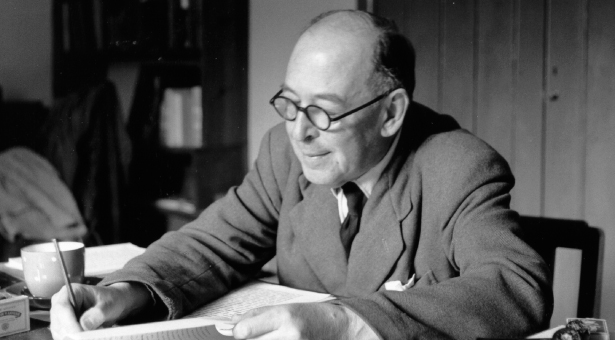
Amazing Grace?

cs-lewis_at_desk

Many years ago, during a British conference on comparative religions, experts were discussing whether there was any belief that was truly unique to Christianity. Creation, incarnation, and resurrection were quickly eliminated because of similar examples in other religions. C.S. Lewis wandered into the room and enquired as to the topic of conversation. When told about the debate, without hesitation, Lewis replied, “Oh, that’s easy.  It’s grace.”

Grace is so simple that it baffles the experts. Grace is what makes Christianity unique. Because of it, we have the opportunity to know Jesus as Savior and Friend. Grace helps us understand the difference between happiness and joy. It allows us to conquer all of our fears. There is nothing we can do to earn grace and there is no way that we can destroy it. In Ephesian 1:5-6, the Apostle Paul wrote: He predestined us to be adopted through Jesus Christ for Himself, according to His favor and will, to the praise of His glorious grace that He favored us with in the Beloved.  

His grace really is amazing.


How 2 Rite Good (Or at least better)

Sign - Photo courtesy of Unsplash

Jack Kerouac once said, It ain’t whatcha write, it’s the way atcha write it.

There’s some truth to that statement, no matter if you’re writing a thesis or a thank you note. Here are a few tips to help us all improve our writing:

  1. Lead with your main idea – Let people know your subject upfront. If you don’t, they’ll stop reading.
  2. Good writing is concise. It can certainly be creative, but it should be free of superfluous adjectives and unnecessary details. More is not always better. Sometimes it’s just more. Most often it’s less.
  3. Avoid using the word that as often as possible. Even though that is sometimes useful when adding description, the sentence can most often become more powerful by moving the description to before the noun.
  4. Condense what you’ve written, then condense it again, then do it a third time. This will help your writing be tighter and more interesting.
  5. Use a thesaurus to help you find the perfect word. Mark Twain once said, “The difference between the right word and the almost right word is the difference between lightning and a lightning bug.”
  6. Overused clichés are as common as dirt. Good writers avoid them like the plague. You get my drift?
  7. Read more and your writing will naturally improve.
  8. Use Spell Check. It’s free and instantly available. Duh.
  9. Write when your emotions are elevated about your cause. You can always go back and edit later. Henry David Thoreau once wrote, Write while the heat is in you… The writer who postpones the recording of his thoughts uses an iron which has cooled to burn a hole with.

Valentine’s Day: The Real Story

valentines-day

Ever since I was in elementary school, I’ve loved the yummy chocolates, pretty flowers, chalky tasting hearts, and fancy dinners associated with February 14th. Those things pretty much sum up Valentine’s Day, right? Well, no, not really.

Here’s how it all started: In the 3rd century, Roman Emperor Claudius released an edict which prohibited the marrying of young people. It was his belief that unmarried soldiers made the best soldiers because they weren’t concerned with a wife and family. Because of this, young men and women often chose cohabitation outside of marriage. Many others, however, opted for more free, open relationships with allowed for multiple sexual partners.

However, as more and more young people in this time period gave their lives to Christ, they desired the commitment and unity found within the confines of marriage. Not knowing where to turn, they turned to Valentine the priest, who began to secretly perform Christian marriages.

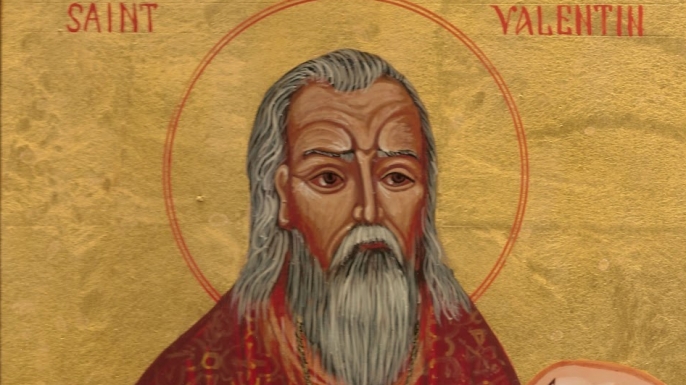
valentine

In time, Claudius learned of Valentine’s actions, had him arrested, thrown into prison, and tortured for his actions. Eventually, Valentine was sentenced to a three part execution involving beating, stoning, and finally decapitation. Legend has it that he sent a note to a young lady before his execution, signing it with the words From Your Valentine.

So, today, we celebrate the memory of Saint Valentine, as we now call him. He is the patron Saint of true lovers. However, much more than a title, he gave his life because of his love for the Lord Jesus Christ and for the love that is found and exemplified within the institution of Christian marriage.