Let All Mortal Flesh Keep Silence: The Ancient Christmas Carol That Ushers In Christmas Communion

When I was a child, to feign off boredom in church, I used to thumb through the hymnals. Once, when I was visiting a friend’s church, I came across the Christmas hymn Let All Mortal Flesh Keep Silence. Tired of people telling me to be quiet, I moved on. The next time I remember hearing the song, I was in college. I borrowed my friend’s Cynthia Clawson Hymnsinger cassette tape (Ok, so I’m old) and listened to the song multiple times. I found it mysterious and even somewhat haunting, but honestly, I paid little attention to the lyrics.

Let All Mortal Flesh Keep Silence is one of the oldest Christmas hymns still in use. It’s based on the Prayer of the Cherubic Hymn in the Liturgy of St. James. This liturgy was thought to be the work of James, the brother of Jesus, but now it’s believed that it was written during the 4th century and is often referred to as the Liturgy of Jerusalem.

Using portions of the Psalms, Isaiah 6, and Revelation 4, Let All Mortal Flesh Keep Silence compels the worshipers to engage in welcoming the Incarnation of Christ and gain a sense of actually entering into the Holy of Holies. Obviously, it was written from the perspective that the bread and wine actually transform into the body and blood of Jesus during communion. To add to the dramatic flair, It was sung as the communion bread and wine were carried into the place of worship. 

During the liturgy, the leader would say, “We remember the sky, the earth and the sea, the sun and the moon, the stars and all creation both rational and irrational, the angels and archangels, powers, mights, dominations, principalities, thrones, the many-eyed Cherubim who say those words of David: ‘Praise the Lord with me.’ We remember the Seraphim, whom Isaias saw in spirit standing around the throne of God, who with two wings cover their faces, with two their feet and with two fly; who say: ‘Holy, holy, holy, Lord of Sabbath.’ We also say these divine words of the Seraphim, so as to take part in the hymns of the heavenly host.”

No matter your stance on what happens to the bread and wine (or juice) during communion, it is easy to see how this Christmas hymn would enhance the worship experience of these ancient Christian worshipers. What better way to celebrate the birth of our Savior than to focus on his life’s purpose of giving His life, His blood, His body for us. 

Check out the lyrics written below.

Let all mortal flesh keep silence, and with fear and trembling stand;

Ponder nothing earthly minded, for with blessing in His hand

Christ our God to earth descendeth, our full homage to demand.

King of kings, yet born of Mary, as of old on earth He stood,

Lord of lord, in human vesture – in the body and the blood.

He will give to all the faithful His own self for heavenly food.

Rank on rank the host of heaven spreads its vanguard on the way, 

As the Light of light descendeth from the realms of endless day,

That the pow’rs of hell may vanish as the darkness clears away.

At His feet the six-winged seraph, cherubim, with sleepless eye,

Veil their faces to the Presence, as with ceaseless voice they cry,

“Alleluia, alleluia! Alleluia, Lord most high!”

Click here to hear Cynthia Clawson’s short arrangement of Let All Mortal Flesh Keep Silence. Click here to heard the full version by Fernando Ortega

*Image courtesy of Dan Kiefer
We Three Kings, The Christmas Carol I Learned As A Parody

I was first introduced to We Three Kings as a child through its parody. On the school bus, other kids and I sang: We three kings of Orient are smoking on a rubber cigar; It was loaded, it exploded, now there are only two… Unfortunately, the Wise Men in our version didn’t learn from their mistakes because one by one they were exploded by the loaded rubber cigar. Then we sang, “Silent Night…”

Yes, it was childish and silly, but I was a child. 

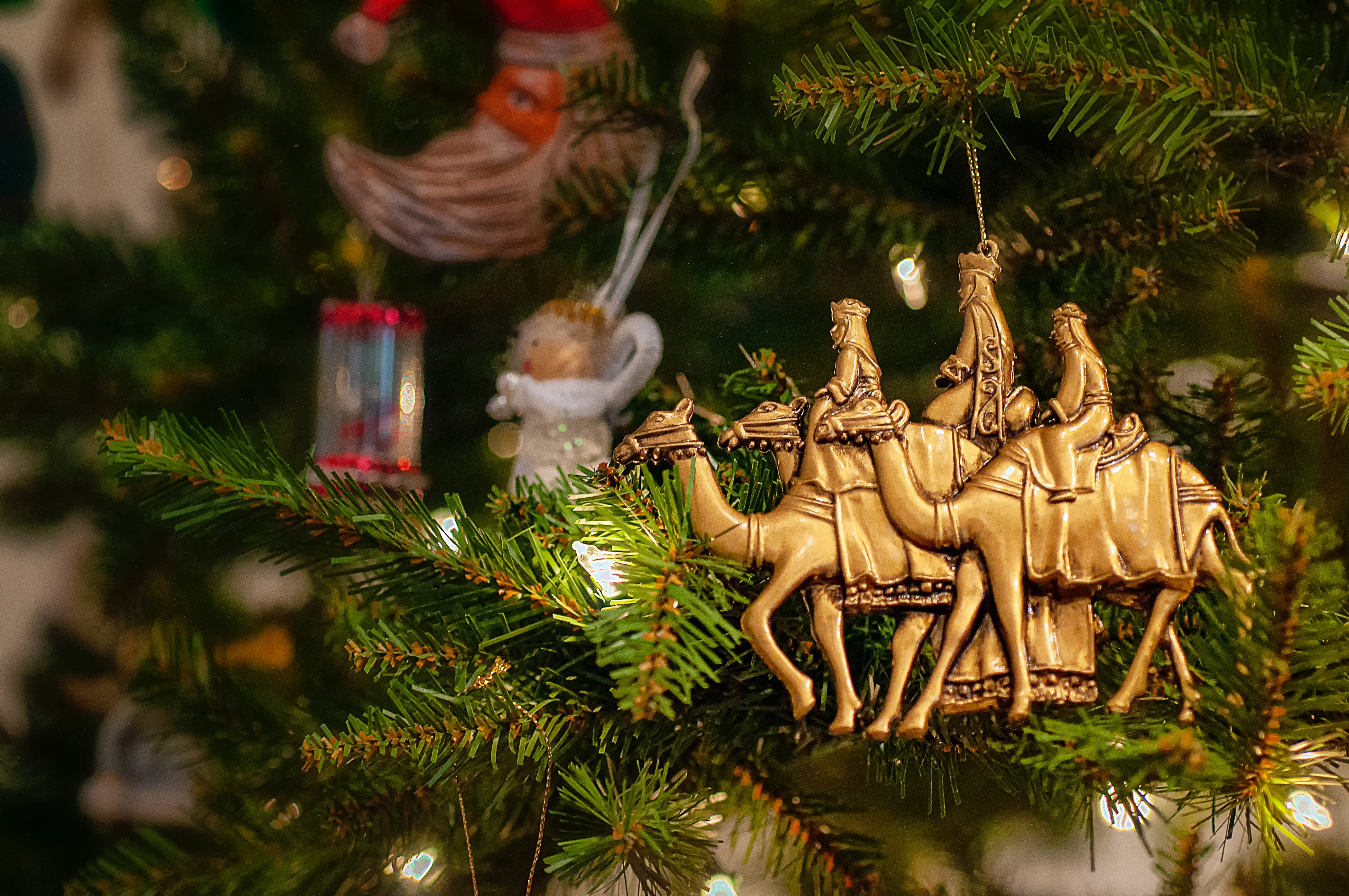
The first time I heard the legitimate version was in church, where three deacons dressed in bath robes and head pieces trying to portray the three kings as they followed the star searching for the Messiah. I laughed quietly when I saw them, not only because they looked funny, but because I thought it was kind of hokey to include the Christmas carol in the church production (Again, I was a kid and didn’t know any better). I later learned that the carol was actually written for a Christmas production in 1857 by composer John Henry Hopkins, Jr. He served as a music teacher at the General Theological Seminary in New York City. He desperately desired to write a song which featured the gifts presented by the wise men to baby Jesus.

We Three Kings originally contained five verses. The first and last verses were meant to be sung by all three wise men. Each of the verses in between were written as a solo for the wise man carrying gold, frankincense, or myrrh. Each solo describes the purpose of each respective gift. Gold was a gift for a king. Jesus was born King of kings. Frankincense was often carried by priests in worship of the Lord. Jesus Himself was and is God. Myrrh was a spice used in burial. This signified Jesus as the perfect sacrifice for our sins. 

Verse 1: We three kings of Orient are; bearing gifts we traverse afar,

Field and fountain, moor and mountain, following yonder star.

Refrain: O star of wonder, star of light, star with royal beauty bright,

Westward leading, still proceeding, guide us to thy perfect light.

Verse 2: Born a King on Bethlehem’s plain, gold I bring to crown Him again,

King forever, ceasing never, over us all the reign. (Refrain)

Verse 3: Frankincense to offer have I; incense owns a Deity nigh; 

Prayer and praising, voices raising, worshiping God on high. (Refrain)

Verse 4: Myrrh is mine; its bitter perfume breathes a life of gathering gloom;

Sorrowing, sighing, bleeding, dying, sealed in the stone-cold tomb. (Refrain)

Verse 5: Glorious now behold Him arise; King and God and sacrifice:

Alleluia, Alleluia, sounds through the earth and skies. (Refrain)

Check out this version of We Three Kings by the Hound and the Fox and Tim Foust.

*Image courtesy of Robert Thiemann

The Friendly Beasts – The Christmas Carol About the Animals in the Nativity Story

Over the years, I’ve heard hundreds of Christmas carols and songs. I’ve sung in dozens of Christmas choirs and even directed multiple Christmas musicals. To top things off, last year I started blogging about the origins of Christmas Carols. I asked my social media friends to submit their favorite Christmas carols for me to research. When numerous people submitted The Friendly Beasts, I thought it was a joke because I was totally unfamiliar with the song. Fans of Garth Brooks, Burl Ives, Johnny Cash, and Harry Belafonte were not impressed.

The Friendly Beasts originated in 12th century France, probably by Pierre de Corbeil who was the Bishop of Sens. The melody of the donkey portion was originally sung during the Fete de l’Ane or Festival of the Donkey. Instead of focusing on the birth of Jesus, this festival actually focused on the holy family’s flight to Egypt. During the Catholic mass for this festival, a donkey was often ridden or led into the church building. 

Over the years, the festival shifted from the Holy family’s flight into Egypt to Joseph and Mary’s journey to Bethlehem. As time passed, The Friendly Beasts featured verses highlighting the cow, the sheep, the doves, and the camel. As Jesus is born, each of the “friendly beasts” experience a magical event where they are each able to sing about the gifts they are offering to Jesus: 

The donkey gave transportation for Mary to Bethlehem

The cow gave its manger as a place for Jesus to sleep

The sheep gave their wool for a warm coat.

The doves coo the baby Jesus to sleep.

The camel carried the wise men who brought gifts to Jesus

Some connect this song to old beliefs that all animals have the gift of speech at midnight on Christmas Eve. One comment I read said, “If God gave Balaam’s donkey the ability to speak (Numbers 22), why wouldn’t he do the same to the animals of the Nativity? Exploring this would be a post (if not a research paper) of its own. I understand that the story is more legendary than biblical. But, it’s still a sweet notion to think that the animals in the stable were able to participate in honoring Jesus at his birth. 

It also brings to mind Psalm 148:7-13 – Praise the Lord from the earth, you creatures of the ocean depths, fire and hail, snow and clouds, wind and weather that obey Him, mountains and all hills, fruit trees and all cedars, wild animals and all livestock, small scurrying animals and birds, kings of the earth and all people, rulers and judges of the earth, young men and young women, old men and children. Let them all praise the name of the Lord. For His name is very great; His glory towers over the earth and heaven!”

Click here to hear The Friendly Beasts by Garth Brooks and friends

*Image courtesy of Martin Castro

Sweet Little Jesus Boy – The Christmas Song Written As An Apology to Jesus

One of the sweetest Christmas songs I heard as a child was Sweet Little Jesus Boy. Like many, I assumed it was a spiritual first sung by the slaves of the American South. You can imagine my surprise when I learned that the song was written in 1934 by Robert MacGimsey, a white lawyer.  

MacGimsey was born in Pineville, Louisiana and grew up with black domestic help including “Aunt Becky,” his caregiver. When he was an infant and young child, Becky sang spirituals to young Robert. She and other workers in the MacGimsey home gave Robert a rich background in the gospel music of the south. 

Robert MacGimsey grew to adulthood and began practicing law, but he also wrote and published songs throughout his life. No matter where Robert traveled, he never forgot his Aunt Becky and the songs she sang to him as a child. In fact, Robert focused his life’s work on making African-American folk music of the South known and accessible by the world. 

Sweet Little Jesus Boy was written because of a personal experience. One Christmas Eve, MacGimsey was walking through the snowy streets of New York City. He was appalled by the number of people visiting various nightclubs who chose to celebrate Christmas by getting drunk instead of focusing on who Jesus was and why He came into the world. To Robert, Christmas was a time of worship and praise. So, he penned the lyrics to Sweet Little Jesus Boy as an apology to Jesus because, as goes the refrain, “We didn’t know who you was.”

Sweet Little Jesus Boy was written to reflect the lives of black Christians during the Civil War. Robert MacGimsey once stated that as he wrote the song, he “pictured an aging black man whose life had been full of injustice standing in the middle of a field giving his heart to Jesus in the stillness.” As you read through the lyrics below, you can almost picture this taking place. 

Sweet little Jesus Boy-they made you be born in a manger.

Sweet little Holy Child-Didn’t know who You was.

Didn’t know You’d come to save us, Lord; 

To take our sins away.

Our eyes was blind, we couldn’t see, 

We didn’t know who You was.

Long time time ago, You was born, born in a manger low,

Sweet little Jesus Boy, the world treat You mean, Lord,

Treat me mean, too, 

But that’s how things is down here-

We don’t know who You is.

You done told us how, we is a trying’!

Master, You done show’d us how, even when You was dyin’.

Just seem like we can’t do right,

Look how we treated You.

But, please, Sir, forgive us, Lord-

We didn’t know ‘twas You.


Listen to Sweet Little Jesus Boy sung by Mahalia Jackson on the Ed Sullivan Show on December 18, 1960.

*Image courtesy of Michael Payne

I Heard the Bells On Christmas Day – The Carol Inspired by Grief and Loss

In July of 1861, Fannie Elizabeth Appleton, the wife of the famed poet Henry Wadsworth Longfellow, tragically died. She had been sealing envelopes with hot wax which sparked a flame which caught her dress on fire. Henry tried to extinguish the flames, first with a rug and then with his own body, but Fannie had already suffered severe burns. She died the next morning. Henry was also badly burned, so much that he was unable to attend his wife’s funeral. Because of his burns, he stopped shaving and grew a beard that became his trademark. Henry’s grief was so overwhelming that he believed he was going to end up in an asylum.

Two years later, in March of 1863, Henry’s 18 year old son Charles Appleton Longfellow secretly boarded a train in Cambridge, Massachusetts that was bound for Washington D.C. He enlisted in the Union Army and was commissioned as a Second Lieutenant in the 1st Massachusetts Cavalry.

On December 1st of that same year, Henry Wadsworth Longfellow was dining alone at his home when he received a telegram with the news that his son had been severely wounded four days earlier in the battle of the Mine Run Campaign. Charley, as he was called, had been shot through the left shoulder. He avoided paralysis by less than an inch. Henry and his younger son Ernest traveled to Washington D.C. where they learned that, although serious, Charley’s wounds were not as horrific as they had initially been told.

Three weeks later, on Christmas Day, 1863, Henry Wadsworth Longfellow was overwhelmed by loss. He was a 57 year old widowed father of six children, the oldest of which had been nearly killed or paralyzed as he fought for a country that was at war with itself. To capture the way he felt, Henry wrote a poem he titled I Heard the Bells on Christmas Day. That day, he heard the Christmas bells ringing in Cambridge and he had listened as people sang “peace on earth.” However, the world he observed was filled with injustice and violence that mocked the truthfulness of the optimistic outlook. The theme continues throughout the poem, finally leading the listener to a settlement of confident hope that even in the midst of bleak despair, that God is alive and faithful and that His righteousness will prevail.

Click here to hear an interesting arrangement of I Heard the Bells on Christmas Day by Charlene Closshey.

Click here to watch the trailer for the new I Heard the Bells On Christmas Day movie set to open in December in theaters. Ironically, I knew nothing about the movie when I first posted this blogpost this morning. If you see it, let me know what you think.

*Photo courtesy of Maximillian Zahn

(Note: This is a repost from 12-25-21. Tomorrow, on 12-1-22, I’ll begin 25 days of new posts featuring the stories behind our most favorite sacred Christmas Carols.)

Go Tell It On The Mountain: the Christmas Carol that Saved a University

American spiritual songs are difficult to date because most were passed down through the generations orally without publishing or recording. Such was the case with the Christmas song Go,Tell It On the Mountain. It became a Christmas classic because of the efforts of John Wesley Work.

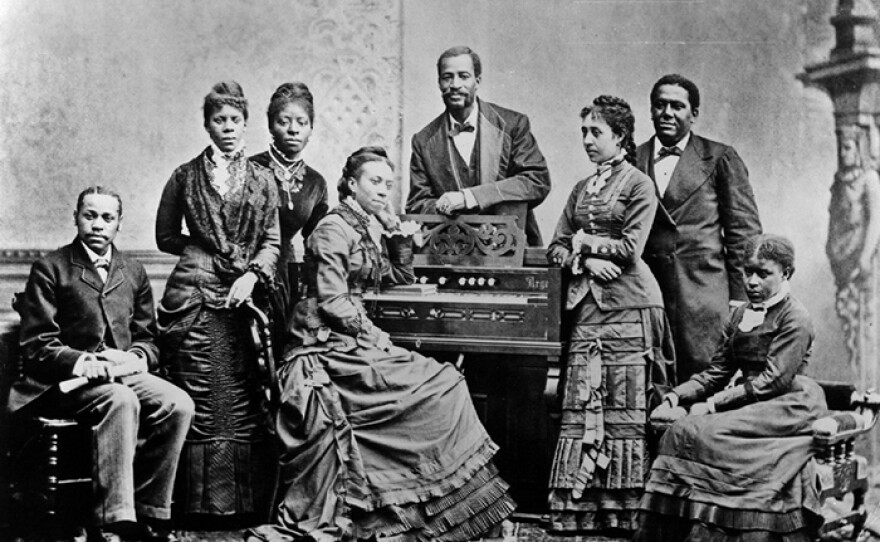
John Wesley Work was born and raised in Nashville, Tennessee. He officially studied Latin and history at Fisk University, but his other great passion was music. In 1872, he was asked to lead the Fisk Jubilee Singers, a ten member touring vocal ensemble commissioned to save the University. In a bold move, the ensemble was sent on an eighteen month tour and was given the entire University treasury for travel expenses.

Go, Tell It On The Mountain and other spirituals were a regular part of the student singing at Fisk University, but were not part of the original repertoire of the ensemble. This is understandable because the songs were associated with slavery and represented recent history many of them wanted to forget. However, the school’s treasurer encouraged them to expose the world to the rich history of spirituals in this tour. The response was overwhelming and by the time they reached New York in December of that year, their concerts consisted primarily of choral arrangements of spirituals. 

Over the course of their 18 month tour, the Fisk Jubilee Singers grew to a full choral ensemble. Led by John Wesley Work, they performed a host of spirituals to both white and black audiences across the United States and Europe, including William Lloyd Garrison, Wendell Phillips, Ulysses S. Grant, William Gladstone, Mark Twain, Johann Strauss, and Queen Victoria. This phenomenal tour resulted in both the school and the musical style earning an international reputation. Fisk University was saved financially and Go, Tell It On the Mountain was on its way to becoming a Christmas staple.

Click here to hear Mahalia Jackson’s rendition of Go, Tell It On The Mountain. 
Click here to read more about the history of Fisk University.

(Note: This is a repost from the 2021 Christmas Season. New Christmas Carol Stories will begin being posted daily on December 1, 2022)

Christmas Carol Countdown

I love Christmas carols. Now that we’ve made it past Thanksgiving, it’s awesome that we’ll be hearing them more on the radio and tv, online, and in worship services. Last December, I posted the stories of our most beloved Christmas carols. While this year, I’ve posted more about my diet and physical fitness struggles, I plan to release posts sharing the stories of 25 more posts on December 1-25. I’ve posted links to those from last year below. If you have a favorite Christmas carol you’d like for me to research and share, post it in the comments or send me a private message. Merry Christmas!

Angels From the Realms of Glory

Angels We Have Heard On High

Away In A Manger

Come, Thou Long Expected Jesus

Do You Hear What I Hear?

Go, Tell It On The Mountain

God Rest Ye Merry Gentlemen

Good King Wenceslas

Hark The Herald Angels Sing

I Heard The Bells On Christmas Day

I Wonder As I Wander

In The Bleak Midwinter

It Came Upon The Midnight Clear

Joy to the World

Mary, Did You Know

O Come, All Ye Faithful

O Come, O Come Emmanuel

O Holy Night

O Little Town of Bethlehem

Silent Night

The 12 Days of Christmas

The First Noel

The Little Drummer Boy

Welcome To Our World

What Child Is This?

*Image Courtesy of David Beale

The Christmas Carol Written From Personal Experience

Pastor Phillips Brooks was a staunch abolitionist, which is probably why he was asked to speak at the funeral of President Abraham Lincoln. However, he is most remembered for writing the lyrics to the Christmas carol O Little Town of Bethlehem.

Shortly after the American Civil War, Brooks took a sabbatical to the Holy Land which extended through the Christmas holidays. On Christmas Eve, Brooks traveled from Jerusalem to Bethlehem on horseback so he could attend a service in Constantine’s ancient basilica, built over the potential site of the Nativity. Of his journey, Brooks reported: “Before dark we rode out of town to the field where they say the shepherds saw the star. It is a fenced piece of ground with a cave in it, in which, strangely enough, they put the shepherds…Somewhere in those fields we rode through, the shepherds must have been.”

It was here, in the fields outside Bethlehem that Brooks first conceived of the phrase: “O Little Town of Bethlehem, how still we see thee lie. Above thy deep and dreamless sleep, a silent star goes by.” Several years later, Brooks finally completed the song and asked Lewis Redner, his organist, to write the music. The song was first performed by the children’s choir of their church. It wasn’t long before the song was included in hymnals worldwide.

Even though Phillips Brooks and his wife never had children of their own, they had a great love for children. Later in life, they met and ministered to young Helen Keller, who was born blind and deaf. Brooks explained the gospel of Jesus to Keller for the first time. Keller, through her teacher and translator Anne Sullivan, said, “I’ve always known there was a God, but until now I’ve never known His name.”

Even though the third verse of O Little Town of Bethlehem was written long before Helen Keller met Phillips Brooks, it shares what the joy of salvation might have felt like to her:

How silently, how silently, the wondrous gift is given!

So God imparts to human hearts the blessing of His heaven.

No ear may hear His coming, but in this world of sin,

Where meek souls will receive Him still, the dear Christ enters in. 

Click here to hear O Little Town of Bethlehem performed by Chris Tomlin.

*Image courtesy of Travis on Unsplash

The Shepherds and the Savior – Interactive Christmas Sermon for Children

gareth-harper-dABKxsPTAEk-unsplash

(The following is an interactive children’s sermon for the Christmas season)

This year, I’m going to need some help in telling my Christmas story. Can I count on you all to help? Great…let’s practice first. When I say these words, I want you to follow my instructions. And every time you hear me say them in my story, you go ahead and respond…

SHEPHERD/S – Raise your hand and say (that’s me!)

ANGEL/S – Shake both hands back and forth over your head and say (Praise God!)

SHEEP – Fluff your hair and say (Baaaaaah)

GOOD NEWS – Make a fist and pump it shouting (Hooray!)

Let’s practice one more time…

SHEPHERD/S – Raise your hand and say (that’s me!)

ANGEL/S – Shake both hands back and forth over your head and say (Praise God!)

SHEEP – Fluff your hair and say (Baaaaaah)

GOOD NEWS – Make a fist and pump it shouting (Hooray!)

Ok – you think you have it?  Let’s begin:

I want to tell you a story – and YOU have a very important part to play.  Listen now as I share.

Many, many years ago, in the town of Bethlehem, there were some SHEPHERDS (that’s me!) guarding their SHEEP (Baaaah) at night in the field. 

It was like any other night. The sky was clear and full of stars. The SHEEP (Baaaaah) were quietly resting and the SHEPHERDS (that’s me!) were quietly talking.

When suddenly, out of nowhere, right in front of the SHEPHERDS (that’s me!) came an ANGEL (Praise God!)

“Ooooooooo!” said the SHEPHERDS (that’s me!) looking so frightened!

“Don’t be afraid” said the ANGEL (Praise God!) I’m here with GOOD NEWS (Hooray!) for you; 

“GOOD NEWS (Hooray) which will make everyone very happy!”

“I’ve come to tell you that a Savior has been born. His name is Jesus. You’ll know who he is because you’ll find him wrapped up in blankets, lying in a manger!” said the ANGEL (Praise God!)

“The Savior has been born!” said the SHEPHERDS! (that’s me!) That was very GOOD NEWS (Hooray!) The whole world had been waiting for the Savior to be born!

And with that the whole sky was filled with ANGELS (Praise God!) They sang “Praise God in heaven! Peace on earth to everyone who pleases God!”

Then it was quiet again, and all that was left in the field were the SHEPHERDS (that’s me!) and the SHEEP (Baaaaah).

“Let’s go and see if we can find this Savior named Jesus!’ the SHEPHERDS (that’s me!) said to each other.

They hurried off, leaving their SHEEP (Baaaaah) who were now fast asleep.

The SHEPHERDS (that’s me!) found Mary and Joseph in the manger, just like the ANGEL (Praise God) had said. With them, lying in the manger, just like the ANGEL (Praise God!) said, was Jesus.  

Mary and Joseph were hardly expecting any visitors that night; they certainly weren’t expecting to see any SHEPHERDS (that’s me!) come to their stable.

But the SHEPHERDS (that’s me) knew they had to tell someone! They just couldn’t go back to their SHEEP (Baaaah). They couldn’t keep GOOD NEWS (Hooray!) like this to themselves…they had to tell EVERYONE!

This kind of GOOD NEWS (Hooray!) was too special to keep quiet about – the SHEPHERDS (that’s me!) had to go and tell others. So off they went to Bethlehem, telling everyone about the birth of Jesus.  That was great!!! Thank you so much for helping me tell the Christmas Story – (give yourself a hand!)

But remember, when I told you that you had an important part to play in my story. The important part doesn’t stop here. It’s just beginning.  That first Christmas might have been over 2,000 years ago, but the GOOD NEWS (Hooray!) is something we still need to tell others about today, like the SHEPHERDS (that’s me!) did that first Christmas.

That’s right – all of us have a part to play…we all need to tell others about our Savior, Jesus. 

If you would be willing to tell others about Jesus, like the SHEPHERDS (that’s me!) did, raise your hand and say (“That’s me!).

Awesome! I knew I could count on you!

Merry Christmas.

(Photo courtesy of Gareth Harper of Unsplash)

Nativity Maturity

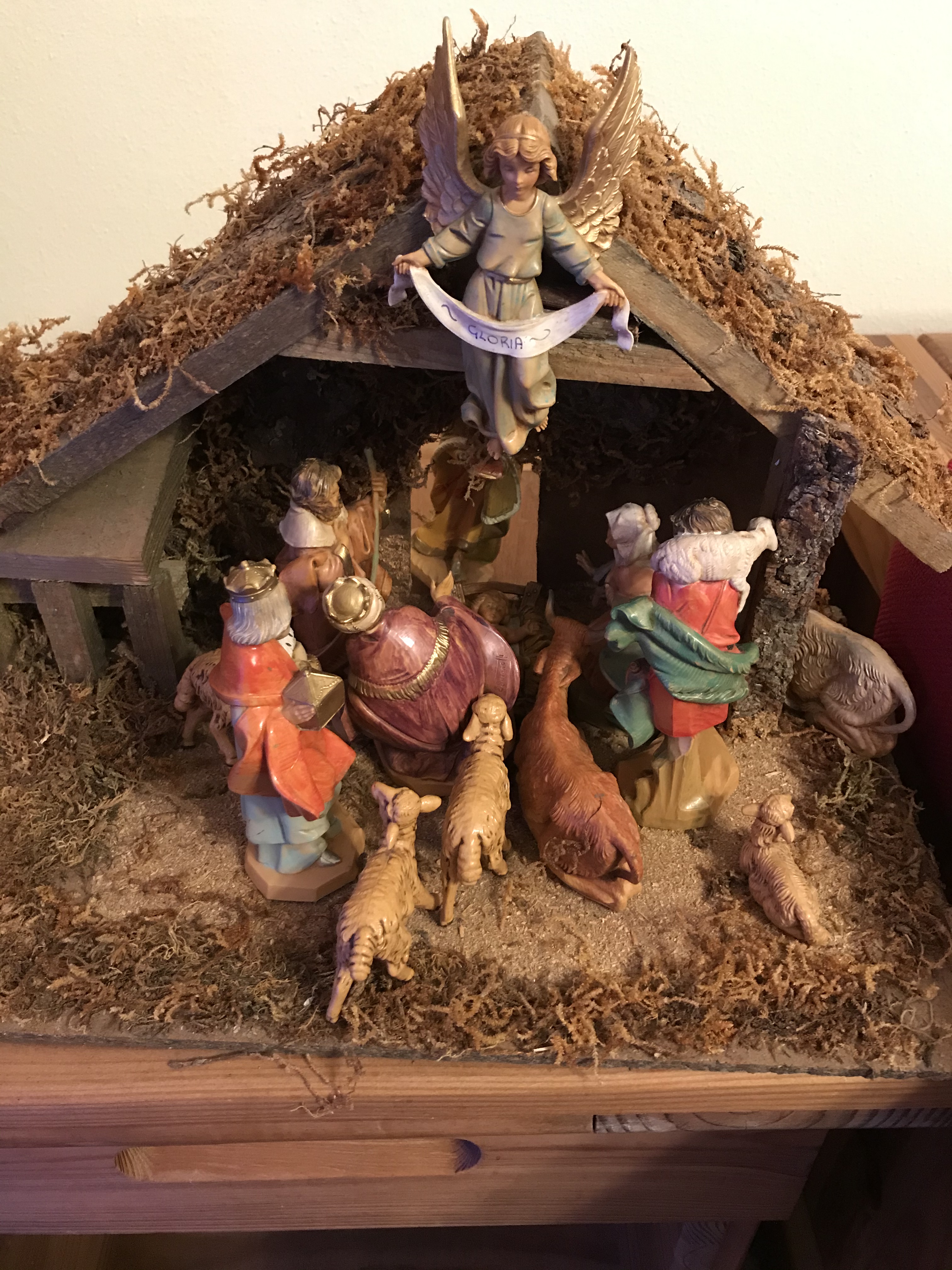
Nativity

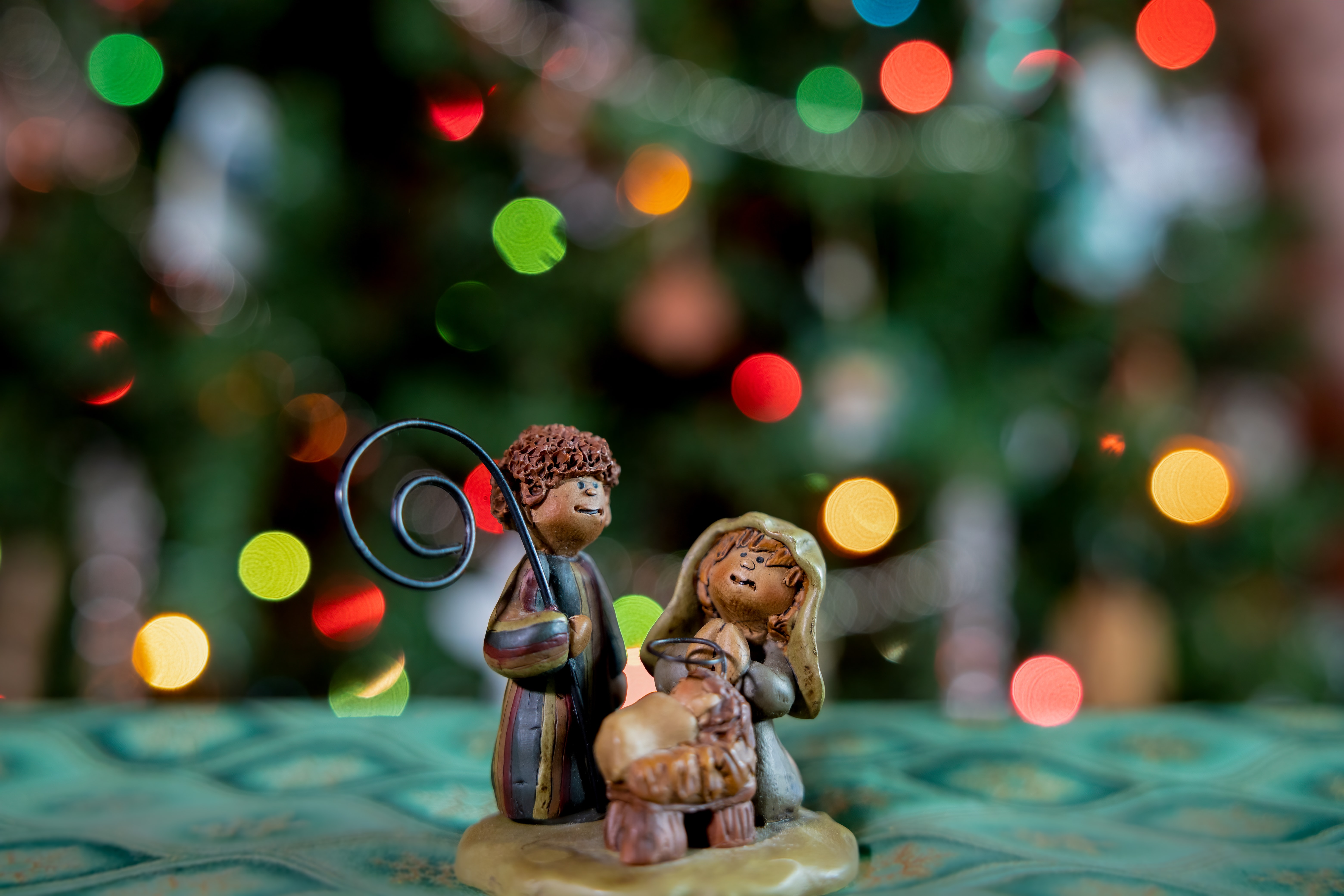
A week or two ago, my wife invited a mom and her preschool daughter to our home, to decorate for the upcoming holiday and for Christmas cookies. She asked the young girl if she would place the Nativity scene pieces in a small stable that was sitting on an end table near the sofa. 

The girl looked carefully at the figures and at the stable, then began by placing the Baby Jesus figure, lying in a manger, in the center of the stable. Then, she placed Mary and Joseph, the animals, the shepherds, the wise men, and finally, the angel.

Sounds pretty normal, right? Most adults would do the same thing.

Except… 

The little girl placed all of the figures facing inside the inside center of the stable instead of facing outward.

When I saw the Nativity scene, I thought, “What is this? No one can see the characters because they’re all looking at Jesus.”

Then, I realized that the little girl had it right. Jesus is the center of the story. It’s all about Him. Why would anyone look at anything or anyone else?

Lord, this year, help us to fix our eyes on Jesus. Help us make the Christmas season all about Him.