The First Noel – The Christmas Song With The French Name

Being a song that was passed down orally, The First Noel may date to the 13th or 14th century. Some believe the song was inspired by a dramatization of the Christmas Story where actors would act out vignettes as they sang. The song does tell the story of Jesus’ birth from Matthew 2 and Luke 2, and would have worked well as a dramatized song with a repeating chorus. 

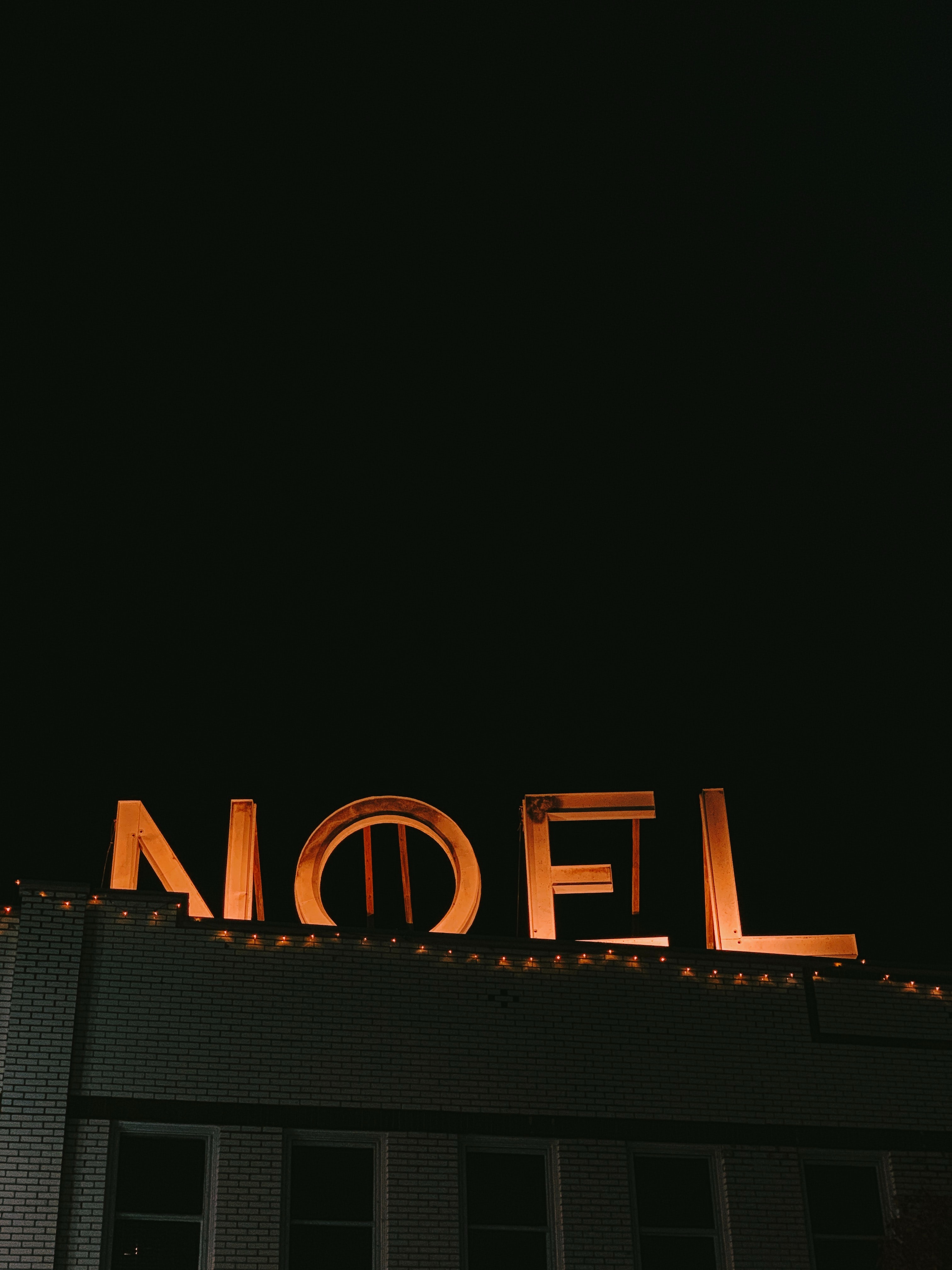
The word “Noel” is French for “Christmas” which is derived from the Latin word “Natalis,” meaning “Birthday.” Even though “Noel” works well for the chorus of The First Noel, it’s strange to consider that when the ancient singers arrived at the chorus of each verse that they were simply singing, “Christmas, Christmas, Christmas, Christmas….” 

The First Noel was first published by Davies Gilbert in 1823 in Some Ancient Christmas Carols. Ten years later, William Sandys published the song in Christmas Carols Ancient and Modern increased the popularity and prominence of the carol. The song originally had nine stanzas, but five are most commonly used today. In most recordings, artists rarely perform more than two or three verses which is a shame because it causes people to miss out on the story of the song. Though the angels appear to the shepherds in the first verse, most of the carol focuses on the journey of the wise men, giving the carol an Epiphany focus. The fourth verse is one of my favorites: 

“This Star drew nigh to the Northwest; O’er Bethlehem it took it’s rest.

And there it did both stop and stay, Right over the place where Jesus lay.”

Click here to read all nine verses of The First Noel.

Click here to hear Claire Crosby and Family sing The First Noel

*Image courtesy of Jon Tyson and Unsplash
**For this post and others like it, see www.johnjfrady.com


God Rest Ye Merry Gentlemen – The Christmas Carol That Angered Scrooge

God Rest Ye Merry, Gentlemen is one of the oldest Christmas carols still popular. It was most likely first published in 1760 but it was centuries old by this time. The lyrics, sung in a minor key, center around the joy experienced at the news of Christ’s birth – Jesus came “to save us all from Satan’s power when we were gone astray. O tidings of comfort and joy!”

The first line is unusual to modern English speakers because it’s not a phrase we typically use. Different sources give different meanings for the first phrase of the song. However, most commonly, the word “rest” is translated as “keep” and the word “merry” is translated as “harmony” or “in harmony.” With this understanding, “God Rest Ye Merry” probably really means something like “May God keep you in peace” or “God keep you in harmony.

The Christmas carol God Rest Ye Merry Gentlemen even made an appearance in Charles Dickens’ novel A Christmas Carol when Scrooge terrifies carolers with his foul temper: 

“At the first sound of ‘God bless you, merry gentlemen! May nothing you dismay!’, Scrooge seized the ruler with such energy of action that the singer fled in terror, leaving the keyhole to the fog and even more congenial frost.”

It’s interesting that Scrooge attacks the carolers as they are singing the very lyrics he most needs to hear – “Let nothing you dismay. Remember Christ our Savior was born on Christmas Day.” As the song states, regardless of social class or distinction, the love and power that exists in the birth of our Lord and Savior Jesus Christ is far greater than anything that could possibly disturb or dismay us. If only Scrooge would have heeded the words to the song, he could have saved himself from a very disturbing evening.

Click here to hear God Rest Ye Merry Gentlemen by Rend Collective

*Image courtesy of S&B Vonlanthan and Unsplash

**This post and others like it can be found at www.johnjfrady.com 

The Christmas Carol That Was Sampled (possibly) by an 80’s Rock Band

Adeste Fideles, is a Latin hymn which is translated O Come, All Ye Faithful. The official authorship has been given to John Francis Wade (1711-1786), whose name is included on most if not all of the earliest manuscripts. Even so, the lyrics and tune appear to be the result of a collaboration of several people over hundreds of years, although what we sing today is a 19th century version of an 18th century compilation.

Some believe that Adeste Fideles is not actually about Christ, but is instead about Bonnie Prince Charlie, grandson of James II, England’s last Catholic king. In 1745, Bonnie Prince Charlie led a rebellion to restore the Catholic House of Stuart to the English throne. Fideles is believed to mean Faithful Catholic Jacobites. Bethlehem is also believed to be a term for England. If this is true, the song is actually a war cry shouting out, “Come and Behold Him, Born the King of the English.” 

More recently, others believe that the 1980’s rock band Twisted Sister sampled the melody of their biggest hit, We’re Not Gonna Take It from O Come, All Ye Faithful. The melodies of the songs are very similar, but it’s purely coincidental. Jay Jay French, lead guitarist of Twisted Sister stated in a radio interview that the band discovered the similarities and recorded a version of O Come, All Ye Faithful for their Christmas album A Twisted Christmas. 

I suppose I can ignore the possibility of O Come, All Ye Faithful having its origins with Bonnie Prince Charlie if it results in a song that God can use to get a rock group like Twisted Sister to sing “O Come, Let Us Adore Him, Christ the Lord!”

Click here to hear Adeste Fideles by Andrea Bocelli

Click here to hear O Come, All Ye Faithful by Tasha Cobbs

Click here to hear O Come, All Ye Faithful by Twisted Sister 

*Image courtesy of Gareth Harper and Unsplash.

The Christmas Carol That Needed A Little Help

The Christmas Carol That Needed A Little Help

Charles Wesley, the brother of John Wesley, was an early leader in the Methodist Church. It has been reported that in his lifetime, he wrote over 6,000 hymns in order to teach the poor and illiterate sound doctrine. One Christmas day, as he walked to church, he was inspired by the sounds of the London church bells to write a new Christmas Carol. It was then that he quickly penned the lyrics to “Hark, How All the Welkin Rings.”

Charles Wesley’s new carol first appeared in 1739 in Hymns and Sacred Songs. It was intended to be sung to EASTER HYMN, the tune of Christ the Lord is Risen Today.

Here are the first two verses of the original song: 

Hark, how all the welkin rings, Glory to the King of kings;

Peace on earth, and mercy mild, God and sinners reconciled!”

Joyful, all ye nations rise, Join the triumph of the skies;

Universal nature say, “Christ the Lord is born today!”

Yeah, kind of different, huh?

A few years later, George Whitefield, a student turned colleague turned rival of John and Charles Wesley, adapted the lyrics into the version we now sing. Whitefield selected a new tune titled MENDELSSOHN and He published the newly revised version in 1757 under its new title Hark! The Herald Angels Sing. 

Although Whitefield rarely gets credit for the changes, his contributions to the carol helped leave a wonderfully revised version the whole world seems to prefer. 

Listen to both versions below and judge for yourself.

Click here to hear Hark! The Herald Angels Sing performed by Nat King Cole

Click here to hear Hark, How All the Welkin Rings performed by the Boys of Worcester Cathedral Choir. 
*Image courtesy of Chad Madden and Unsplash

The Christmas Carol Written by a Former Nazi Soldier

In October, 1962, there was a 14 day standoff between both the Soviet Union and Cuba and the United States. The Soviets had been spotted constructing bases for ballistic nuclear missiles in Cuba. If the missiles had launched from these bases, they could strike anywhere in the continental United States. A confrontation was only averted when the bases and missiles were dismantled at the insistence of the President of the United States. During the standoff, however, neither side acted. If they had, there could very well have been mass nuclear destruction in all three countries. 

During this standoff, composer and lyricist Noel Regney began struggling with severe depression and flashbacks from World War II. Regney had been drafted into the Nazi army where he was forced to serve until he escaped and joined a group of French Resistance fighters. He later moved to Manhattan where he worked in the music industry. One day, as he walked the streets of New York, he noticed mothers pushing their babies in strollers. This led him to think about a time when God had given men the opportunity for true peace. Regney went home and penned the lyrics to the song Do You Hear What I Hear? He took the lyrics to his wife, Gloria Shayne, who composed the melody and the musical accompaniment. The song was recorded that November, released in December, and sold 25 million copies during its first holiday season. 

In a 1985 interview with the New York Times, Regney said, “I am amazed that people can think they know the song – and not know it is a prayer for peace. But we are bombarded by sound and our attention spans are so short that we now listen only to catchy beginnings.”

It’s quite possible that Do You Hear What I Hear? isn’t a Christmas song at all, but simply a song about peace clothed in Christmas symbolism. Some believe the star “with the tail as big as a kite” actually represents a missile with great exhaust. Others claim that the “child who shivers in the cold” is not one child but poor children everywhere (to whom we should bring silver and gold). Hmm… I don’t know. 

Whatever you believe about the song, praying for peace is a good thing. God the Father is sometimes described as Jehovah Shalom, the God of peace and Jesus, in Isaiah 9:6 is called the Prince of Peace. This Christmas, may we all pray to the God of Peace for true peace to come to our cities, our countries, and our world. 

Click here to hear Do You Hear What I Hear? performed by Bing Crosby.

*Photo courtesy of Diego PH and Unsplash

The Christmas Carol That Saved Christmas Eve

Silent Night – The Christmas Carol that Saved Christmas Eve

It was Christmas Eve, 1818, and Pastor Joseph Mohr was getting nervous. For the first time in history, it looked as if it was going to be a Silent Night at the Christmas Eve service at St. Nicholas Church in Oberndorff, Austria. Recent flooding from the Salzach River had put their church organ out of commission and he only had a few hours to come up with a musical alternative. He needed help, and he needed it fast.

Surely filled with anxiety, Mohr walked through the cold to visit his friend Franz Gruber, a school teacher and choir master, who lived in the neighboring town of Arnsdorf bei Laufen. With him, Mohr brought a poem he had written two years prior when walking through a peaceful snowclad forest. It was the epitome of peace to him at the time. Now, that peace was gone, but he had high hopes that Gruber could set the poem to music in time for that evening’s service. Gruber accepted the challenge and within a few hours had composed the melody for Stille Nacht or Silent Night. 

Because the church organ was out of commission, Gruber composed a simple arrangement  for guitar and voice. Franz Gruber and Joseph Mohr traveled back to Oberdorff, where, after a short rehearsal, the two men stood before the people of the St. Nicholas Church and performed their original song. A local choir quickly learned the tune and joined the two friends as they introduced this new Christmas carol to the church, to Austria, and ultimately to the entire world. 

Just a side note: This is the original St. Nicholas Church building in Oberndorff, Austria. It and most of the town, were eventually forced to move or rebuild because of continual flooding.

Click here to hear a version of Silent Night by Kelly Clarkson, Trisha Yearwood, and Reba McIntire

Click here to hear Stille Nacht by the Dresden Choir.

*Image courtesy of Tina Witherspoon and Unsplash

The Christmas Carol That Helped Save A University

American spiritual songs are difficult to date because they were passed down orally without publishing or recording. Such was the case with the Christmas song Go,Tell It On the Mountain. It became a Christmas classic because of the efforts of John Wesley Work.

John Wesley Work was born and raised in Nashville, Tennessee. He studied Latin and history at Fisk University, but his great passion was music. In 1872, he was asked to lead the Fisk Jubilee Singers, a ten member touring vocal ensemble commissioned to save the University. In a bold move, the ensemble was sent on an eighteen month tour and was given the entire University treasury for travel expenses.

Go, Tell It On The Mountain and other spirituals were a regular part of the student singing at Fisk University, but were not part of the original repertoire of the ensemble. This is understandable because the songs were associated with slavery and represented recent history many of them wanted to forget. However, the school’s treasurer encouraged them to expose the world to the rich history of spirituals in this tour. The response was overwhelming and by the time they reached New York in December of that year, their concerts consisted primarily of choral arrangements of spirituals. 

Over the course of their 18 month tour, the Fisk Jubilee Singers grew to a full choral ensemble. Led by John Wesley Work, they performed a host of spirituals to both white and black audiences across the United States and Europe, including William Lloyd Garrison, Wendell Phillips, Ulysses S. Grant, William Gladstone, Mark Twain, Johann Strauss, and Queen Victoria. This phenomenal tour resulted in both the school and the musical style earning an international reputation. Fisk University was saved financially and Go, Tell It On the Mountain was on its way to becoming a Christmas staple.

Click here to hear Mahalia Jackson’s rendition of Go, Tell It On The Mountain. 
Click here to read more about the history of Fisk University.

The Christmas Carol With The Surprise Ending

The original author of O Come, O Come Emmanuel is unknown, but it was most likely an 8th or 9th century monk or nun. Roughly 1000 years after it was written, an Anglican priest named John Mason Neale discovered the song while reading Psalterium Cationum Catholicorum, an ancient book of Latin poetry and music. 

Neale lived in the Madeira Islands near the continent of Africa, where he started an orphanage, a school for girls, and a ministry to reclaim prostitutes. He understood many languages, including Latin, and was able to translate O Come, O Come Emmanuel into English. He first played and sang it for the people he served, who were considered the lowest of society. It was so well received that Neale included the song in his 1851 collection titled Mediaeval Hymns and Sequences.

O Come, O Come Emmanuel is written as if you are in the first century and you are awaiting the actual birth of the Messiah. An anticipation is there for what Jesus would bring. The original Latin text contains seven antiphons (verses) which work together to help the reader or singer to focus on the coming Christmas. Most modern hymnals do not include all seven and rarely in the same order as the original. Here are those verses in order and their related meanings:

  • O Sapentia (Wisdom)
  • O Adonai (Hebrew for God)
  • O Radix Jesse (Root of Jesse) 
  • O Clavis David (Key of David)
  • O Oriens (Dayspring)
  • O Rex genitium (King of the Gentiles)
  • O Emmanuel (God with Us)

You can see from the order above that the 8th and 9th century Christians sang these verses in the opposite order as most people today. Most importantly, they sang the “O Come, O Come Emmanuel” verse last and wouldn’t do so until Christmas Eve. They did this because of the fulfillment of the song and the expectation of Jesus’ birth. 

Here’s the coolest thing.

The original Latin text creates a reverse acrostic which is not complete or seen until the last verse is sung. When the ancient worshipers finally sang this verse on Christmas Eve, the message of the reverse acrostic was solved for all the see. It simply proclaimed, “I shall be with you tomorrow.”

Click here to hear For King and Country’s version of O Come, O Come Emmanuel

Click here for Anna Hawkins version in English and Hebrew filmed in Israel

*Image courtesy of Mike Ralph and Unsplash.com

The Christmas Carol That Isn’t About Christmas

My little sister used to love the Christmas Carol Joy To The World. When she was little, she used to sing out, “Let every heart repair His room!” I can still hear my mother crying out, “Prepare! Sing it right. Prepare Him room.”

I’ve often wondered if my little sister would have enjoyed the Christmas Carol so much if she would have realized that it actually isn’t about Christmas. The lyrics were originally written as a poem in 1719 by the English hymn-writer Isaac Watts in His collection The Psalms of David. The poem was based on Psalm 98 which is actually more reflective of Christ’s second coming than of His birth. In 1836, a Boston music teacher set Joy To The World to music and published it in December which is why it became associated with Christmas. 

I’ve heard it said that ignorance is bliss. When I first learned the truth about Joy To the World, I couldn’t sing it during the Christmas season. It bothered me to no end that the entire world was wrong about the meaning of the song. But, as I matured, I thought, “Who cares?” It’s a great song of worship that brings joy to millions of people every year. Isaac Watts would be thrilled with the success of his poem. 

If the Lord is honored by it, that’s enough for me. Besides, I love the memory of my sister singing it. She’ll have to tell me if she still likes it when she reads this post.

Click Here to listen to one of my favorite renditions of Joy to the World by Whitney Houston and the Georgia Mass Choir.

*Image courtesy of Sincerely Me and Unsplash

An Unlikely Christmas Carol

Joy to the World

For years, Joy to the World has been a favorite Christmas carol of millions. Ironically, it was originally written as a poem (not a song) about the second (not the first) coming of Christ.

Here’s how it happened:

In 1719, Isaac Watts published a book of poetry based on the psalms. In the collection, he adjusted each psalm to reflect the work of Jesus in the New Testament. Joy to the World was his adaptation of Psalm 98. Isaac Watts interpreted the psalm as a celebration of Jesus’ role as King of both His church and the entire world.

Isaac Watts, however, did not write the melody of Joy to the World as we sing it today, but instead, instructed the reader/singer to present it in common meter to the common tunes of the Old Psalm Book of his day. Over the next 130 years, various melodies were written by several composers. Finally, in 1848, Lowell Mason published his version of Joy To The World with its current melody in The National Psalmist. It was his 4th revision of the song, sampling the opening melody from the chorus Lift Up Your Heads from Handel’s Messiah. Ironically, many today, when listening to The Messiah, believe that Handel utilized snippets of Joy to the World in His work to make it more recognizable and Christmasy.

So now we have a Christmas Carol which is written about the second coming of Jesus and was never even meant to be a song that is now a Christmas favorite for many around the world.

Merry Christmas

Related Posts: New Verses to Away In A Manger