Now

Now

Jesus knew that the time had come for Him to leave this world and go to the Father.  Having loved His own who were in the world, He now showed them the full extent of His love.  John 13:1 NIV

If you knew that you only had a short time to live, wouldn’t you show your family and friends the full extent of your love?  Wouldn’t you say the words that you’ve needed to say for years?  Wouldn’t you forgive that friend or family member who hurt you?  Wouldn’t you share stories and advice with your children and relatives?

Why wait until you only have a short time to live?  Why not do those things now?

One lesson about everything that can help make anything better

reap_what_you_sow

I’ve learned lots of lessons.

Some of the best are:

  1. Trust God in everything.
  2. Don’t forget to pray.
  3. Take good care of your health.
  4. Family is very important
  5. Avoid the yellow snow.

In a recent round table discussion, I said, “The most important lesson I’ve learned in the past year is everything impacts everything.”

“What does that mean?” asked one of my colleagues.

Now I’ve never been accused of being the quickest with verbal responses, so I said, “Well, it means that everything…impacts…everything else.”  Everyone was overwhelmed with my dramatic pauses and word addition.

But now I’ve had time to think about what I should have said.

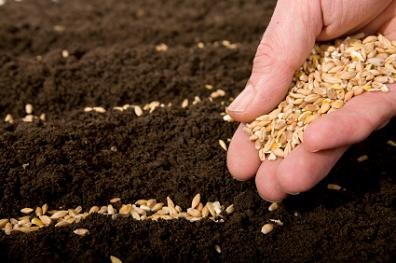
It all begins with seeds.

The Apostle Paul wrote Do not be deceived:  God is not mocked, for whatever one sows, that will he also reap. (Galatians 6:7)

From thefreedictionary.com, I gleaned that sowing means to scatter seed over the ground for growing.  The same source defines reaping as harvesting a crop.  So, Paul was basically saying that the seed you spread determines the type of crop that you harvest.

In other words, whatever one sows, that will he also reap.

In the movie Second Hand Lions, young Walter is sent to live with his eccentric uncles Garth and Hub.  Deciding to plant a garden, they purchase a variety of seeds from a travelling salesman.  After preparing the soil, they plant the seeds in rows and wait patiently for their crops to produce.

One day, as they are hoeing the weeds from their garden, Garth comments, “Think about how good all these vegetables are going to taste.  Peas, beans, squash, tomatoes…”

Even as his uncle is speaking, Walter notices that every plant on every row is almost identical.  When he points it out to his uncles, they are dumbfounded.

“Hey,” said Walter, pointing to the row of corn.  “This one looks right.”

“Well,” said Garth, “All those seeds did look alike, come to think of it.”

Hub throws his hoe and shakes his head.  “Corn, corn, corn,” he says, “Nothing but corn.”

Whatever one sows, that he will also reap.

The older I get, the more I realize that the same is true in every area of our lives.  What we sow determines what we reap:

–       In Finances

–       In Friendships

–       In Business Ventures

–       In our Spiritual Lives

–       In our Families

–       In our Work

–       In our Homes

–       In our Bodies

–       In our Minds

–       In Everything

Everything that we do matters.  Every decision we make, every day we work late, every book we read, every cookie we sneak, every movie we watch, every sit-up we avoid, every dollar we spend, every prayer we pray (or don’t pray), every thought we have – they’re all connected.

They join together to form an enormous tapestry that identifies us to the world and to ourselves.

What do you want your tapestry to portray?  What decisions are making that will change it’s look forever?  Are you weaving something into your tapestry that you don’t want to be there?

Here’s the deal:

Everything Matters.  Everything.

Whatever one sows, that he will also reap.

What are you going to do about it?

The Away In A Manger Controversies

nativity

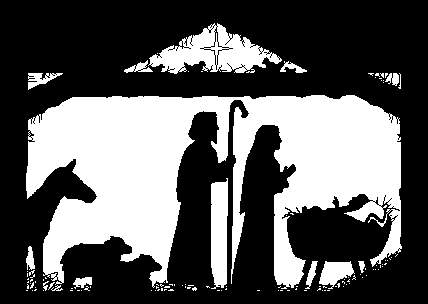
One of the most tender Christmas carols has to be Away In A Manger.  The song expresses simple, childlike love for and faith in Jesus.  It transports us beyond the glitz and glitter of the Christmas season and reminds us of true reason we celebrate Christmas.

Away In A Manger was once titled Luther’s Cradle Hymn.  It was widely thought to have been written by Martin Luther for his own children, but most scholars no longer believe this to be the case.  The first two stanzas were published in the Little Children’s Book in 1885.  The third was added in the early 1900’s by John T. McFarland, a Methodist minister who needed a third verse for a children’s day program at his church.

The second verse of the song is considered by some as heretical because of the line “but little Lord Jesus, no crying He makes.”  Proponents believe the song is claiming that Jesus was fully God but not fully man.  People are certainly entitled to their opinion, but I feel like they just need to get over it.  The song doesn’t claim that Baby Jesus never cried, only that the writer wasn’t envisioning Him crying for that moment in time as he (or she) pictured the scene of the nativity.

What’s more important is the love, affection, and childlike faith that is expressed in the song.  In 2002, the simple lyrics and message of Away In A Manger inspired me to write two more stanzas.  You can find them at the bottom of the song below:

Away in a manger, no crib for a bed, the little Lord Jesus laid down His sweet Head;

The stars in the sky looked down where He lay, the little Lord Jesus asleep on the hay.           

The cattle are lowing, the Baby awakes, but little Lord Jesus, no crying He makes;

I love Thee, Lord Jesus! Look down from the sky, and stay by my cradle till morning is nigh.

Be near me, Lord Jesus, I ask Thee to stay, close by me forever, and love me, I pray;

Bless all the dear children in Thy tender care, And fit us for heaven, to live with Thee there.

No longer a baby, He grew to a man, sent to us from Heaven to fulfill God’s plan;

He died on a cross to atone for our sin, and rose from the dead to be alive again.                                              

This precious Lord Jesus is all that we need if we make Him our Savior and our Lord indeed;

O please, wondrous Jesus, be with us today, fill us with Your spirit, we now humbly pray.

God bless you all (even if you don’t like Away In A Manger) and Merry Christmas.

The Strange Yet Successful Christmas Duet That Almost Wasn’t

782699oo

One of the strangest yet most successful Christmas duets ever has to be The Little Drummer Boy/Peace On Earth by Bing Crosby and David Bowie.  Interestingly enough, it almost didn’t happen.  Crosby was in England on tour in September of 1977 when he was asked to host the Merrie Olde Christmas Special.  Bowie, who was 30 at the time, was asked to sing a duet with Crosby, then 73.  When Bowie learned was told that he was to sing The Little Drummer Boy, he refused, saying that he hated the song.

A few hours before filming, a team of composers spent 75 minutes creating a new melody for Bowie to be sung as a counterpoint to Crosby’s pah-rumpa-pum-pums.  Bowie liked the new version and agreed to sing.  After less than an hour’s rehearsal, the unlikely duet nailed the performance.  The rest is Christmas radio history.

Unfortunately, Bing Crosby died from a heart attack a month after the recording.  The special was aired a month after his death.

Do Less. Experience More of Christmas

Christmaspic

Charles Dickens once said:

It is good to be children sometimes, and never better than at Christmas when its mighty Founder was a child Himself.”

Christmas is indeed a time to celebrate when God, the Mighty Founder, came to earth in the form of child so that we might have the opportunity to live forever in His presence.

Christmas is more than what we’ve made it.  All of us could stand to do less and experience it more.

The one who is the true light, who gives light to everyone, was coming into the world.  John 1:9

Results of my Second Endoscopy

Endoscopy

A few months ago I started having problems swallowing my food.  My doctor scheduled me for an upper endoscopy, which revealed that my esophagus was damaged from acid reflux.  If untreated, the damaged area could possibly become pre-cancerous.

If you’re unfamiliar with the term, an upper endoscopy is a procedure used to visually examine your upper digestive system with a tiny camera on the end of a long, flexible tube.

For the past few months, I’ve taken a generic Prevacid and dramatically changed my diet (cutting out fried foods, tomatoes and tomato based products – very acidic, chocolate, and almost all carbonated caffeinated beverages – my biggest vice.)

Today, after waking from my second endoscopy, my doctor informed me that my esophagus is almost completely healed and I can begin weaning myself off of the medicine.  I also have to continue the diet and lose more around my midsection.  Then I can eat whatever I would like, at least in moderation.  Unfortunately, my wife’s definition of moderation can be translated as “absolute zero consumption.”

Thank you all for your concern and prayers.


John

The First Thing We Learn About God

Oxygen Volume 14

So what’s the first thing we learn about God?

Whenever we read the five words of the Bible, we don’t learn that God is loving or forgiving or convicting or beautiful, even though He is all those things.

Instead, we read:  In the beginning God created

Emily P. Freeman writes The first thing we know about God is He made art.

What is the first thing we know about people?

We were made in the image of God.* 

So what does that make us?

If we’re made in the image of God, then we are creative.

Most of us believe this when we are children.

But then something happens.

Life happens.

Someone laughs at us.

We see someone else who is more creative than us (in our opinion)

Our favorite show comes on, so we give up and quit trying.

Through it all, we lose our creative spark.

We lose our creative desire.

We lose part of who we are.

But it doesn’t have to be this way.

You can change it.

Don’t stop creating.

Remember who you are.

Hold on to who God called you to be.

No matter how you do it, create something.

It doesn’t matter if it’s music notes, clay, words, paint, string or bacon.

Keep creating.

Don’t stop.

Don’t let anyone take it from you.

It’s who God made you to be.

*A Million Little Ways

How to get rid of the stench of sin

image_18119

I was at a gas station filling my tank when I pulled the pump out too fast and gasoline drenched my hands.  I ran into the station restroom and scrubbed my hands in white foamy soap.  But when I rinsed my hands, the smell was still there.  Frustrated, I drove to the hardware store where I learned about a hand cleaner called Goop.  Right there in the store, I rubbed it on my hands and was finally free of the stench.

In many ways, sin is like the smelly gasoline that spilled on my hands.  We don’t mean to get so involved with it, but somehow, we find ourselves soaked with its stench.  We try to cover it up with temporary fixes, but they don’t last.  The only sin cleaner that totally frees us from the stench of our own sin is the cleansing blood of Jesus.

The Psalmist once wrote, Be gracious to me, God, according to Your faithful love; according to Your abundant compassion, blot out my rebellion.  Wash away my guilt, and cleanse me from my sin.  (Psalm 51:1-2 HCSB)  He prayed to the only One who could rid him of the stench of his sin.  You can do the same if you choose.  You’ll be glad that you did.


4 Things to Remember When Doing Hospital Visitation

visit 

I’ve been doing hospital visitation on a regular basis for over 20 years.  One thing that I’ve learned is that I’m not very good at it.  Even though I’m a pretty compassionate person, I struggle when trying to minister to those in the hospital.  Something in me clams up and I struggle with my words.

However, Jesus did say I was sick and you visited me, so it’s important to press on with the visit, even when I feel uncomfortable.

I spent most of the last three days with my mother who was hospitalized.  During that time, I pondered my own hospital visitation situation and realized that there are 4 things to remember when doing hospital visitation.

#1  –  Pray.  The Holy Spirit is a much better Comforter than any of us, so pray and let Him do His work.  Thank Him for who He is in front of the people who need to remember it the most.  If for some reason you can’t pray with the hospitalized or their family, pray by yourself for them and for you as you visit them.

#2 – Bring a small gift.  After visiting my mother for the first day, my wife suggested that we bring her the shampoo and conditioner samples from our hotel room.  We weren’t using them anyway and it allowed my mother to wash her hair with real shampoo.  Whether it’s shampoo, facial tissue, a magazine, or a drawn picture from a child, it could make a huge difference in their hospital stay.

#3 – Know when to leave.  Unless you’re family or considered part of the family (sometimes even then), don’t overstay your welcome.  Understand that while you’re trying to bring someone encouragement, you may be wearing them out.  People are in the hospital for a reason and you might be stealing their sleep time. 

#4 -Use discernment when using anointing oil – Some people don’t understand the symbolism.  To some, it just seems like you’re putting grease on their heads.  Your prayers are more important than the oil.

Remembering these 4 things will help me.  Maybe they’ll help you as well.

By the way, my mother’s doing great.