We Three Kings, The Christmas Carol I Learned As A Parody

I was first introduced to We Three Kings as a child through its parody. On the school bus, other kids and I sang: We three kings of Orient are smoking on a rubber cigar; It was loaded, it exploded, now there are only two… Unfortunately, the Wise Men in our version didn’t learn from their mistakes because one by one they were exploded by the loaded rubber cigar. Then we sang, “Silent Night…”

Yes, it was childish and silly, but I was a child. 

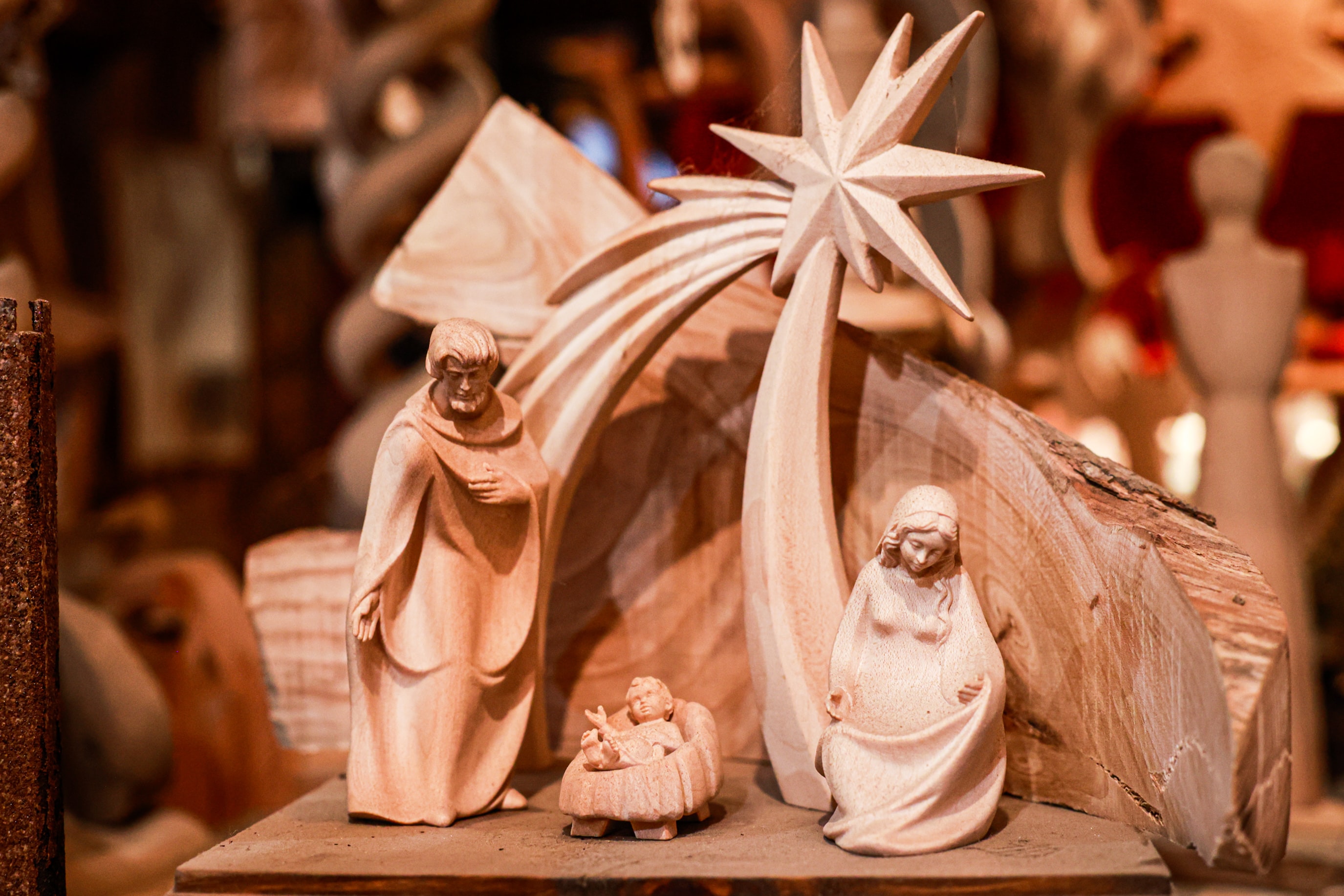
The first time I heard the legitimate version was in church, where three deacons dressed in bath robes and head pieces trying to portray the three kings as they followed the star searching for the Messiah. I laughed quietly when I saw them, not only because they looked funny, but because I thought it was kind of hokey to include the Christmas carol in the church production (Again, I was a kid and didn’t know any better). I later learned that the carol was actually written for a Christmas production in 1857 by composer John Henry Hopkins, Jr. He served as a music teacher at the General Theological Seminary in New York City. He desperately desired to write a song which featured the gifts presented by the wise men to baby Jesus.

We Three Kings originally contained five verses. The first and last verses were meant to be sung by all three wise men. Each of the verses in between were written as a solo for the wise man carrying gold, frankincense, or myrrh. Each solo describes the purpose of each respective gift. Gold was a gift for a king. Jesus was born King of kings. Frankincense was often carried by priests in worship of the Lord. Jesus Himself was and is God. Myrrh was a spice used in burial. This signified Jesus as the perfect sacrifice for our sins. 

Verse 1: We three kings of Orient are; bearing gifts we traverse afar,

Field and fountain, moor and mountain, following yonder star.

Refrain: O star of wonder, star of light, star with royal beauty bright,

Westward leading, still proceeding, guide us to thy perfect light.

Verse 2: Born a King on Bethlehem’s plain, gold I bring to crown Him again,

King forever, ceasing never, over us all the reign. (Refrain)

Verse 3: Frankincense to offer have I; incense owns a Deity nigh; 

Prayer and praising, voices raising, worshiping God on high. (Refrain)

Verse 4: Myrrh is mine; its bitter perfume breathes a life of gathering gloom;

Sorrowing, sighing, bleeding, dying, sealed in the stone-cold tomb. (Refrain)

Verse 5: Glorious now behold Him arise; King and God and sacrifice:

Alleluia, Alleluia, sounds through the earth and skies. (Refrain)

Check out this version of We Three Kings by the Hound and the Fox and Tim Foust.

*Image courtesy of Robert Thiemann

The Friendly Beasts – The Christmas Carol About the Animals in the Nativity Story

Over the years, I’ve heard hundreds of Christmas carols and songs. I’ve sung in dozens of Christmas choirs and even directed multiple Christmas musicals. To top things off, last year I started blogging about the origins of Christmas Carols. I asked my social media friends to submit their favorite Christmas carols for me to research. When numerous people submitted The Friendly Beasts, I thought it was a joke because I was totally unfamiliar with the song. Fans of Garth Brooks, Burl Ives, Johnny Cash, and Harry Belafonte were not impressed.

The Friendly Beasts originated in 12th century France, probably by Pierre de Corbeil who was the Bishop of Sens. The melody of the donkey portion was originally sung during the Fete de l’Ane or Festival of the Donkey. Instead of focusing on the birth of Jesus, this festival actually focused on the holy family’s flight to Egypt. During the Catholic mass for this festival, a donkey was often ridden or led into the church building. 

Over the years, the festival shifted from the Holy family’s flight into Egypt to Joseph and Mary’s journey to Bethlehem. As time passed, The Friendly Beasts featured verses highlighting the cow, the sheep, the doves, and the camel. As Jesus is born, each of the “friendly beasts” experience a magical event where they are each able to sing about the gifts they are offering to Jesus: 

The donkey gave transportation for Mary to Bethlehem

The cow gave its manger as a place for Jesus to sleep

The sheep gave their wool for a warm coat.

The doves coo the baby Jesus to sleep.

The camel carried the wise men who brought gifts to Jesus

Some connect this song to old beliefs that all animals have the gift of speech at midnight on Christmas Eve. One comment I read said, “If God gave Balaam’s donkey the ability to speak (Numbers 22), why wouldn’t he do the same to the animals of the Nativity? Exploring this would be a post (if not a research paper) of its own. I understand that the story is more legendary than biblical. But, it’s still a sweet notion to think that the animals in the stable were able to participate in honoring Jesus at his birth. 

It also brings to mind Psalm 148:7-13 – Praise the Lord from the earth, you creatures of the ocean depths, fire and hail, snow and clouds, wind and weather that obey Him, mountains and all hills, fruit trees and all cedars, wild animals and all livestock, small scurrying animals and birds, kings of the earth and all people, rulers and judges of the earth, young men and young women, old men and children. Let them all praise the name of the Lord. For His name is very great; His glory towers over the earth and heaven!”

Click here to hear The Friendly Beasts by Garth Brooks and friends

*Image courtesy of Martin Castro

I Heard the Bells On Christmas Day – The Carol Inspired by Grief and Loss

In July of 1861, Fannie Elizabeth Appleton, the wife of the famed poet Henry Wadsworth Longfellow, tragically died. She had been sealing envelopes with hot wax which sparked a flame which caught her dress on fire. Henry tried to extinguish the flames, first with a rug and then with his own body, but Fannie had already suffered severe burns. She died the next morning. Henry was also badly burned, so much that he was unable to attend his wife’s funeral. Because of his burns, he stopped shaving and grew a beard that became his trademark. Henry’s grief was so overwhelming that he believed he was going to end up in an asylum.

Two years later, in March of 1863, Henry’s 18 year old son Charles Appleton Longfellow secretly boarded a train in Cambridge, Massachusetts that was bound for Washington D.C. He enlisted in the Union Army and was commissioned as a Second Lieutenant in the 1st Massachusetts Cavalry.

On December 1st of that same year, Henry Wadsworth Longfellow was dining alone at his home when he received a telegram with the news that his son had been severely wounded four days earlier in the battle of the Mine Run Campaign. Charley, as he was called, had been shot through the left shoulder. He avoided paralysis by less than an inch. Henry and his younger son Ernest traveled to Washington D.C. where they learned that, although serious, Charley’s wounds were not as horrific as they had initially been told.

Three weeks later, on Christmas Day, 1863, Henry Wadsworth Longfellow was overwhelmed by loss. He was a 57 year old widowed father of six children, the oldest of which had been nearly killed or paralyzed as he fought for a country that was at war with itself. To capture the way he felt, Henry wrote a poem he titled I Heard the Bells on Christmas Day. That day, he heard the Christmas bells ringing in Cambridge and he had listened as people sang “peace on earth.” However, the world he observed was filled with injustice and violence that mocked the truthfulness of the optimistic outlook. The theme continues throughout the poem, finally leading the listener to a settlement of confident hope that even in the midst of bleak despair, that God is alive and faithful and that His righteousness will prevail.

Click here to hear an interesting arrangement of I Heard the Bells on Christmas Day by Charlene Closshey.

Click here to watch the trailer for the new I Heard the Bells On Christmas Day movie set to open in December in theaters. Ironically, I knew nothing about the movie when I first posted this blogpost this morning. If you see it, let me know what you think.

*Photo courtesy of Maximillian Zahn

(Note: This is a repost from 12-25-21. Tomorrow, on 12-1-22, I’ll begin 25 days of new posts featuring the stories behind our most favorite sacred Christmas Carols.)

Christmas Caroling: A Grassroots Tradition

There is, perhaps, no Christmas tradition more neighborly and friendly than caroling. No matter what the song, Christmas caroling spreads the true spirit of Christmas throughout December. As a child, teen, and even as an adult, I’ve sung carols like Buddy the Elf with groups in retirement centers, nursing homes, city neighborhoods, and even on country farms. However, for most of my life I had no idea how Christmas caroling actually began. 

Let’s start with the carols themselves.

The original carols had their roots in the pre-Christian Festival of Yule, when Europeans would sing and dance to honor the Winter Solstice. The word “carol” has its roots in the Latin word “choraules” which means “a dance to the flute.” The original carols were mostly fun secular, upbeat songs accompanied with dances often performed with a group. Overtime, carols became more associated with Christianity and became more hymnlike and therefore resulted in less dancing (Sorry, Mariah Carey).

Christmas carols themselves thrived as more of a grassroots tradition. Saint Francis of Assisi is said to have first incorporated upbeat carols into informal (and sometimes impromptu) Christmas services in creative ways. He built nativity scenes in caves complete with live animals. The villagers would gather and listen as he taught them about the birth of Jesus. Then, they all joined in singing early versions of Christmas carols. These energetic, joyful carols were often sung with gusto, as in Celebration, in sharp contrast to the traditional somber Christmas music of the day. It’s no wonder these simple songs spread quickly across the Christian world, especially Europe. 

Christmas caroling actually grew out of the Anglo-Saxon custom of wassailing, where the carolers received sustenance in exchange for their singing. This custom derives its name from the drink “wassail,” which was a hot spiced beverage. Over time, wassailing became associated with Christmas and carols. Ironically, the practice of caroling out of doors grew somewhat because of Oliver Cromwell, who banned Christmas celebrations in England from 1649 to 1660. As you can imagine, the persecution of the day most likely put a damper on the outright practice of singing carols in organized services. However, what’s to stop someone from singing Christmas Carols outdoors as they travel to and fro? Even after Cromwell’s time in power ended, caroling did not really experience growth until the 19th century, when joyful, more expressive hymns became more popular across England and Europe. During this time, some caroling groups gathered in public spaces to sing while others went from house to house. Today, the practice of Christmas caroling continues to bring joy to those singing and those hearing, with or without the wassail.

This Christmas season, from December 1st – 25th, I plan to highlight the history of 25 Christmas carols, most of which have been sung at one point or another by Christmas carolers. Some of them are currently extremely popular while others have been all but forgotten. Regardless, I’ve found them all fascinating and I plan to learn as much about them in the next month. I invite you to join me for the journey. 

Merry Christmas

*Image courtesy of Mario Mendez

Christmas Carol Countdown

I love Christmas carols. Now that we’ve made it past Thanksgiving, it’s awesome that we’ll be hearing them more on the radio and tv, online, and in worship services. Last December, I posted the stories of our most beloved Christmas carols. While this year, I’ve posted more about my diet and physical fitness struggles, I plan to release posts sharing the stories of 25 more posts on December 1-25. I’ve posted links to those from last year below. If you have a favorite Christmas carol you’d like for me to research and share, post it in the comments or send me a private message. Merry Christmas!

Angels From the Realms of Glory

Angels We Have Heard On High

Away In A Manger

Come, Thou Long Expected Jesus

Do You Hear What I Hear?

Go, Tell It On The Mountain

God Rest Ye Merry Gentlemen

Good King Wenceslas

Hark The Herald Angels Sing

I Heard The Bells On Christmas Day

I Wonder As I Wander

In The Bleak Midwinter

It Came Upon The Midnight Clear

Joy to the World

Mary, Did You Know

O Come, All Ye Faithful

O Come, O Come Emmanuel

O Holy Night

O Little Town of Bethlehem

Silent Night

The 12 Days of Christmas

The First Noel

The Little Drummer Boy

Welcome To Our World

What Child Is This?

*Image Courtesy of David Beale

The Day Before Black Friday

Sometimes I feel sorry for Thanksgiving. 

Some have called it the most neglected of the major holidays. Although it gets more attention than Ground Hog Day (sorry Bill Murray), it’s slowly getting squeezed out by the Christmas, the king of the hill as far as holidays are concerned. Even Black Friday, which has taken over Thanksgiving Friday and is making its moves on Thursday, gets more respect than it deserves. 

Thanksgiving does lack the pageantry and presents of Christmas. It’s meant to be simple, but so much has changed. It’s now become a day that’s more about overeating (gorging might be a better word), football watching (the original binge watching), dish washing (somebody has to do it), and Christmas shopping (sigh). 

But it doesn’t have to be that way.

We can choose for Thanksgiving to be more of what it was meant to be. (It’s actually more of what Christmas should be as well) – a day when family and friends cease from their labor, thank God for his blessings, and enjoy some of his blessings, all the while growing closer together and closer to him.  

Sorry, Thanksgiving, for the way I’ve treated you over the years. This year, help me remember to be truly thankful. 

*Image Courtesy of Priscilla Du Prees

Lose It App at the 16 Week Mark

For 16 weeks, I’ve been trying my best to find a way to cheat the Lose It App. 

Finally, I’ve figured it out. You cheat by not entering everything you consume into the App.

However, the results are like cheating on an eye exam. I can cheat for the day by not entering everything I eat, but it doesn’t translate to my bathroom scale at the end of the week. I guess the proof is always in the pudding (as long as you enter it into the app).

After 16 weeks, I have begun to embrace the intermittent fasting feature as well. At first it seems silly to think of fasting for a 12 hour period. I mean, what good will that do? I probably come close to that several times a week anyway. However, when I begin the fasting time (which I now do about twice a week) I’ve come to see how often I do reach for food late in the evening or even when I wake up in the middle of the night. This feature helps me keep myself accountable and helps me leave it alone.

So, here’s the moment of truth. After 16 weeks, I’ve lost a total of 28.6 lbs. Not bad. It’s kind of exciting when I realize that I could be at the 30 lb mark in another week or so. 

Thanks for following my Lose It App journey. I plan to make an update every 4 weeks or so. See you at the 20 Week Mark.

*Image courtesy of Drew Beamer

Fighting For Survival

Today, I found myself in the midst of a battle. 

I was minding my own business, trying my best to provide for my family, 

When my adversary felt it was time to hinder my progress. 

At first, I was gentle and friendly, communicating with him that I wanted the best for both of us.

But he didn’t go for it.

Instead, his stubbornness grew.

I tried moving him to the left but he wouldn’t budge.

I tried moving him to the right to no avail. 

Suddenly, a crowd formed around us to watch the struggle.

Embarrassed by the attention, I redoubled my efforts to win the skirmish.

But it didn’t work and my frustration grew with every passing moment.

My fists soon developed minds of their own and they pounded the sides of my opponent.

When I could take it no longer, I grabbed my enemy and raised him over my head.

My strength multiplied as I yanked at his layers and finally ripped him in two. 

I dropped my foe to the ground and held on to the portion I had snatched away.

And then, following my neighbor’s example, I licked my thumb and rubbed it across the plastic bag I held in my hand as I stood in the produce aisle of the grocery store.

To my amazement, it finally opened.

Celebrating my victory, I placed my zucchini inside and continued my battle for food.

I repeated the process in the broccoli section.

I never learned this skill as a child. 

It wasn’t taught at home, at church, or at school, 

Yet, be forewarned good people,

For it is necessary for survival.

*Image courtesy of attentie-attentie.

I Got The Tofu

Recently, I took my first bite of what I thought was a steamy plate of sliced chicken and vegetables in a savory Asian sauce. Suddenly, my gag reflexes began to engage. Something was incredibly wrong.

“Dear,” I said to my wife. “I think there may be something wrong with my chicken.”

“That’s not chicken,” she replied.

“What is it?” I asked.

“It’s tofu.” she answered with a smile. 

“Tofu!” I exclaimed. “Oh no! I’m not sure I’m ready for us to start eating tofu.”

For those of you who are unaware, tofu is a semi-food substance prepared by coagulating soy milk, then pressing the resulting curds into solid white blocks of varying softness, and finally marinating it overnight in liquid sadness.

“The secret to eating tofu,” my wife explained, “Is to eat it with something else on your plate. You see, on its own, it has no taste.”

“That’s the truth!” I said.

“Try some more,” she said. “You might even start to like it.”

Instead, I shook my head and said, “I’m not sure I can eat tofu. It sounds like a condition you get from an old pair of sneakers.”

“Eat your dinner,” she replied.

“I’m not sure about this,” I said. “What if I get sick and people ask me what I have? I’ll have to say, ‘I’ve got the tofu.’ Then people are going to start saying, ‘There goes John. He never washes his feet and now he has tofu.’”

“Eat your dinner,” she said once again.  

“I’m expected to finish this?” I exclaimed.

The expression on her face indicated that I had no choice.

So, I carefully partnered every bite of tofu with vegetables and wiped the plate clean of the sauce which also masked the absence of taste and personal freedom.

So far, we haven’t eaten tofu again. But there’s a block of it in our refrigerator. I discovered it after thinking it was cream cheese for my bagel. 

Sigh…

*Image courtesy of Sherman Kwan.

Lose It App at the Eight Week Mark

Eight weeks ago, I realized I was fat. I’m not sure what happened. All I did was eat way too much consistently over several years and then boom, suddenly I’m fat. I knew I needed a lifestyle change with a directed plan. So I visited my friendly App store and downloaded the paid version of the Lose It App.  

Here’s how it works: 

  • First, I track my food intake. The app database has over 33 million foods. I either type in my food or scan its UPC barcode. If the food is not included in the app, I can add it using its real, or at least estimated, caloric information. 
  • Second, I stick to my calorie budget (For the most part). When I started my account, I entered my height, age, current weight, and goal weight. The app shared how long it will take for me to reach my goal weight IF I follow my personalized daily calorie budget. Currently, I’m scheduled to reach my goal weight by mid-March 2023. 
  • Third, I have the option to enter my daily exercise. When I exercise, not only am I helping myself raise my metabolism, but I earn extra calories which are added to my daily budget. Currently, my exercise of choice is walking. I’ve connected my steps app to my Lose It App. After 7500 steps during the day, I begin to earn extra calories. 

After 8 weeks using the Lose It App, I’ve lost 15 lbs. Not too shabby. 

The Lose It App’s biggest weakness is probably what I like about it. I can eat whatever I want as long as I enter my calories. As you can imagine, my wife is thrilled about that (Yeah, right). Even so, I’ve found that I tend to eat rather than drink my calories, drink more water, and make healthier choices simply because I have to enter what I eat. Also, if I make healthier choices, I can eat more (which I like).

Have you had success using Lose It or another weight loss program app? Let me know.

*Image courtesy of Volodomyr Hryshchenko and Unsplash