The Place of the Skull: A Good Friday Devotion

Scripture – Carrying the cross by Himself, He went to the place called Place of the Skull. There they nailed Him to the cross. Two others were crucified with Him, one on either side, with Jesus between them… When the soldiers had crucified Jesus, they divided His clothes among the four of them. They also took His robe, but it was seamless, woven in one piece from top to bottom. So they said, “Rather than tearing it apart, let’s throw dice for it…” 

Standing near the cross were Jesus’ mother, and His mother’s sister, Mary (the wife of Clopas), and Mary Magdalene. When Jesus saw His mother standing there beside the disciple He loved, He said to her, “Dear woman, here is your son.” And he said to this disciple, “Here is your mother.” And from then on this disciple took her into his home.” 

Jesus knew that His mission was now finished, and to fulfill Scripture He said, “I am thirsty.” A jar of sour wine was sitting there, so they soaked a sponge in it, put it on a hyssop branch, and held it up to His lips. When Jesus had tasted it, He said, “It is finished!” Then He bowed His head and gave up His spirit.” (John 19:17-18, 23-24, 25-30)

Devotion – As we meditate on John 19 today, we find ourselves at the foot of the cross where Jesus, the Son of God, is crucified. This moment is a powerful reminder of the immense suffering He willingly endured out of His love for humanity. Jesus’ journey to Calvary was marked by humiliation, agony, and betrayal, yet His love remained steadfast.

In John 19:30, Jesus utters the words, “It is finished.” With these words, Jesus declared the completion of His mission to save us from our sins. The significance of His suffering cannot be overstated-it was a sacrifice made so that we might receive eternal life. Reflecting on the depth of Jesus’ love and the extent of His suffering invites us to consider the vastness of His grace. Despite the pain and suffering, His actions demonstrate a profound love that transcends human understanding. Through His death, we gain life. As you contemplate the significance of Good Friday, let these truths deepen your appreciation for Jesus’ sacrifice.

Reflection Questions:

  1. What emotions do you experience when you envision Jesus on the cross, willingly taking on the burden of sin for humanity?
  2. How does Jesus’ declaration, “It is finished,” impact your understanding of His work of salvation?
  3. In what ways can you live out the love and grace that Jesus demonstrated through His suffering and sacrifice?

Prayer – Heavenly Father, as I reflect on the profound suffering of Jesus on the cross, I am overwhelmed by His boundless love for me. Thank You for the gift of salvation and for the sacrifice that was made on my behalf. Help me to live in a way that reflects Jesus’ love and grace to others. May my heart be forever grateful, and may I draw closer to You each day. In Jesus’ name, Amen. 

Worship Activity – Make plans to attend a Good Friday service this evening. As you observe communion, reflect upon all Jesus has done for you.

*This devotion was originally written for “The Week that Changed Everything” Holy Week Devotional by Celebration Church NOLA

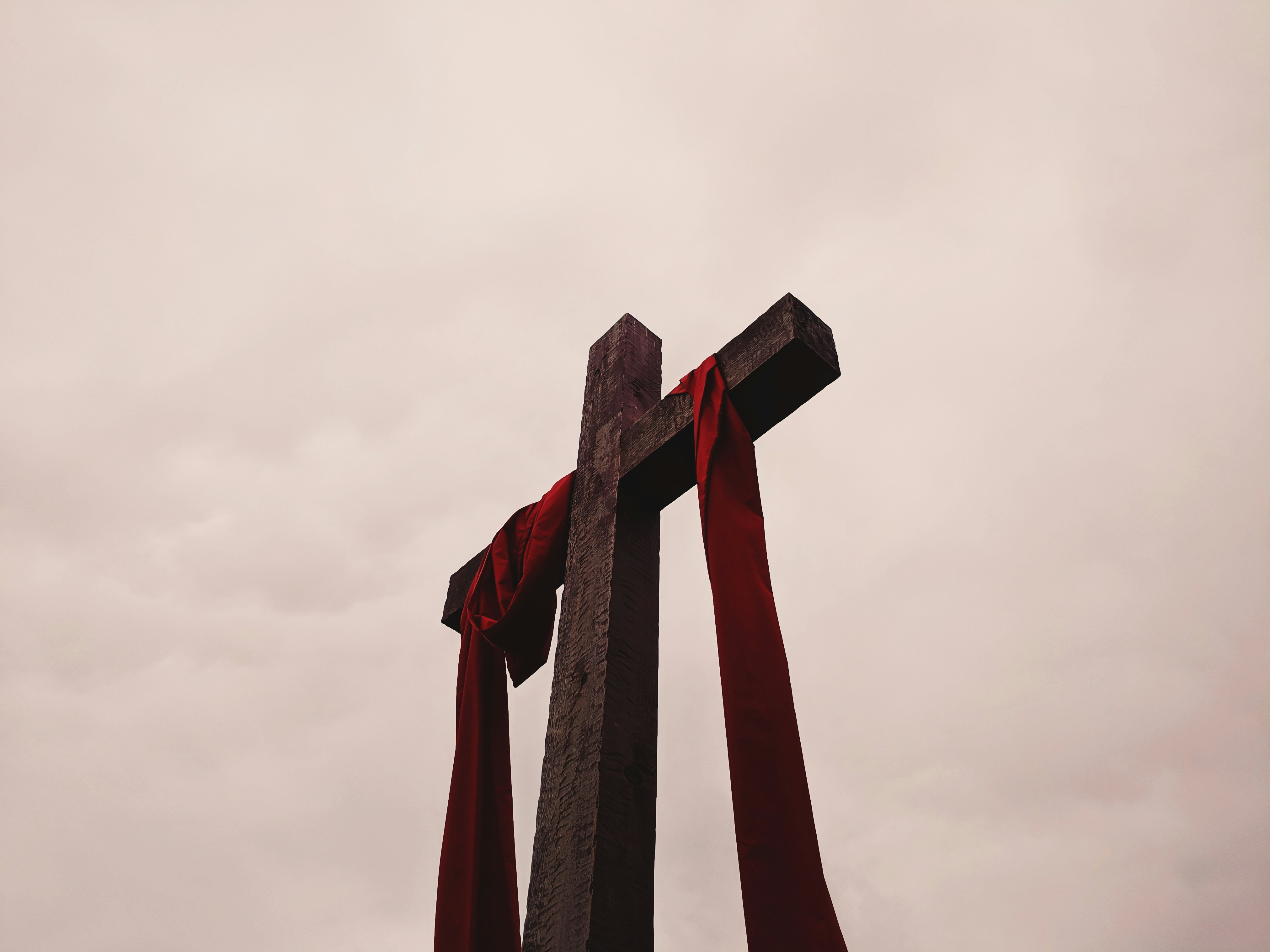
**Photo courtesy of Alicia Quan

Strength Through Prayer: A Maundy Thursday Devotion

Scripture – Accompanied by the disciples, Jesus left the upstairs room and went as usual to the Mount of Olives. There He told them, “Pray that you will not give in to temptation.”

He walked away, about a stone’s throw, and knelt down and prayed, “Father, if You are willing, please take this cup of suffering away from Me. Yet I want Your will to be done, not mine.” Then an angel from heaven appeared and strengthened Him. He prayed more fervently, and He was in such agony of spirit that His sweat fell to the ground like great drops of blood.

At last He stood up again and returned to the disciples, only to find them asleep, exhausted from grief. “Why are you sleeping?” He asked them. “Get up and pray, so that you will not give in to temptation.” (Luke 22:39-46)

Devotion – On the day we call Maundy Thursday, Jesus ate the Last Supper with His disciples. Much later that evening, He was openly betrayed by Judas and arrested. Between those two events, Jesus and His disciples went to the Mount of Olives to pray which was His custom. There, Jesus modeled the power of prayer during times of trial. He urged His disciples to pray so they would not fall into temptation, highlighting the importance of prayer as a source of strength and guidance. 

Jesus, facing immense suffering, turned to God the Father in prayer, aligning His will with God’s. His example shows us that prayer is not just about seeking comfort, but about finding the resolve to follow God’s will, even when it is difficult. As we navigate our own challenges, we must remember that prayer equips us to withstand temptation and remain faithful. It’s a tool for connection with God, empowering us to seek His strength and wisdom in every situation.

Reflection Questions:

  1. What temptations do you face regularly that you need to bring to God in prayer?
  2. How can Jesus’ example of anguish and dedication in prayer encourage you in times of personal struggle?
  3. In what ways can you incorporate more intentional prayer into your daily routine to seek God’s guidance and strength?

Prayer – Heavenly Father, thank You for the example of Your Son, Jesus, who showed us the power and necessity of prayer. Help us to seek You earnestly, especially in times of trial and temptation. Grant us the strength to align our wills with Yours, trusting in Your plan for our lives. Fill us with Your wisdom and peace, that we may walk faithfully in Your ways. In Jesus’ name, Amen. 

Followup Worship Activity – Prayerfully read the following scriptures, all the while asking the Lord to speak to you about how you might improve your own prayer life: Psalm 17, Matthew 6:9-13, Ephesians 6:18, and Philippians 4:6-7.

*This post was originally written for the Holy Week Devotional “The Week That Changed Everything” for Celebration Church New Orleans.

**Photo Courtesy of Jon Tyson

The Widow’s Mite – A Holy Tuesday Devotion

Scripture – While Jesus was in the Temple, He watched the rich people dropping their gifts in the collection box. Then a poor widow came by and dropped in two small coins. “I tell you the truth,” Jesus said, “this poor widow has given more than all the rest of them. For they have given a tiny part of their surplus, but she, poor as she is, has given everything she has.” (Luke 21:1-3)

Devotion: On Holy Tuesday, Jesus went to the temple in Jerusalem to teach and engage with the people. During this time, He addressed various people, including the religious leaders, challenging their authority and highlighting the importance of sincere faith and righteousness. Jesus also used this opportunity to convey parables and teachings about the kingdom of God, emphasizing such themes as justice, humility, and true devotion. His presence in the temple underscored His role as a teacher and prophet, preparing the way for the events that would unfold later in the week. 

As we reflect on the happenings and teachings of Jesus on Holy Tuesday, we are invited to reflect on the nature of true worship, as demonstrated by the widow’s humble offering. Her actions teach us valuable lessons about sacrifice, sincerity, and true devotion to God. The widow gave all she had, illustrating that worship is not about the size of our gift, but about the heart with which it is given. Her act of worship was one of deep trust and adoration, reminding us to consider not simply what we offer, but how and why we offer it to the Lord. 

Reflection Questions:

  1. What are some ways we can offer our resources and talents as forms of worship, regardless of their size?
  2. How does the widow’s example challenge us to reconsider what true sacrifice and devotion is really about?
  3. In what areas of our lives can we put more trust and reliance on God, much like the widow did?

Prayer – Lord, thank You for the powerful example of the widow’s faith and devotion. Help us today to understand that true worship comes from the heart and that our offerings, no matter how small, are significant when given in sincerity and love. Guide us to be more sacrificial in our daily lives, trusting in Your provision and grace. Teach us to give generously, knowing that our acts of worship are pleasing to You. In Jesus’ name we pray, Amen.

Followup Worship Activity – In your journal or on a piece of paper, make a list of several ways God has provided for you throughout your life. Then, write out a prayer of worship, thanking God for His provision and declaring that you put your faith and hope in Him.

*This devotion was originally written for “The Week that Changed Everything” Holy Week Devotional for Celebration Church in New Orleans. The full devotional is available for free download at http://www.celebrationchurch.org/library

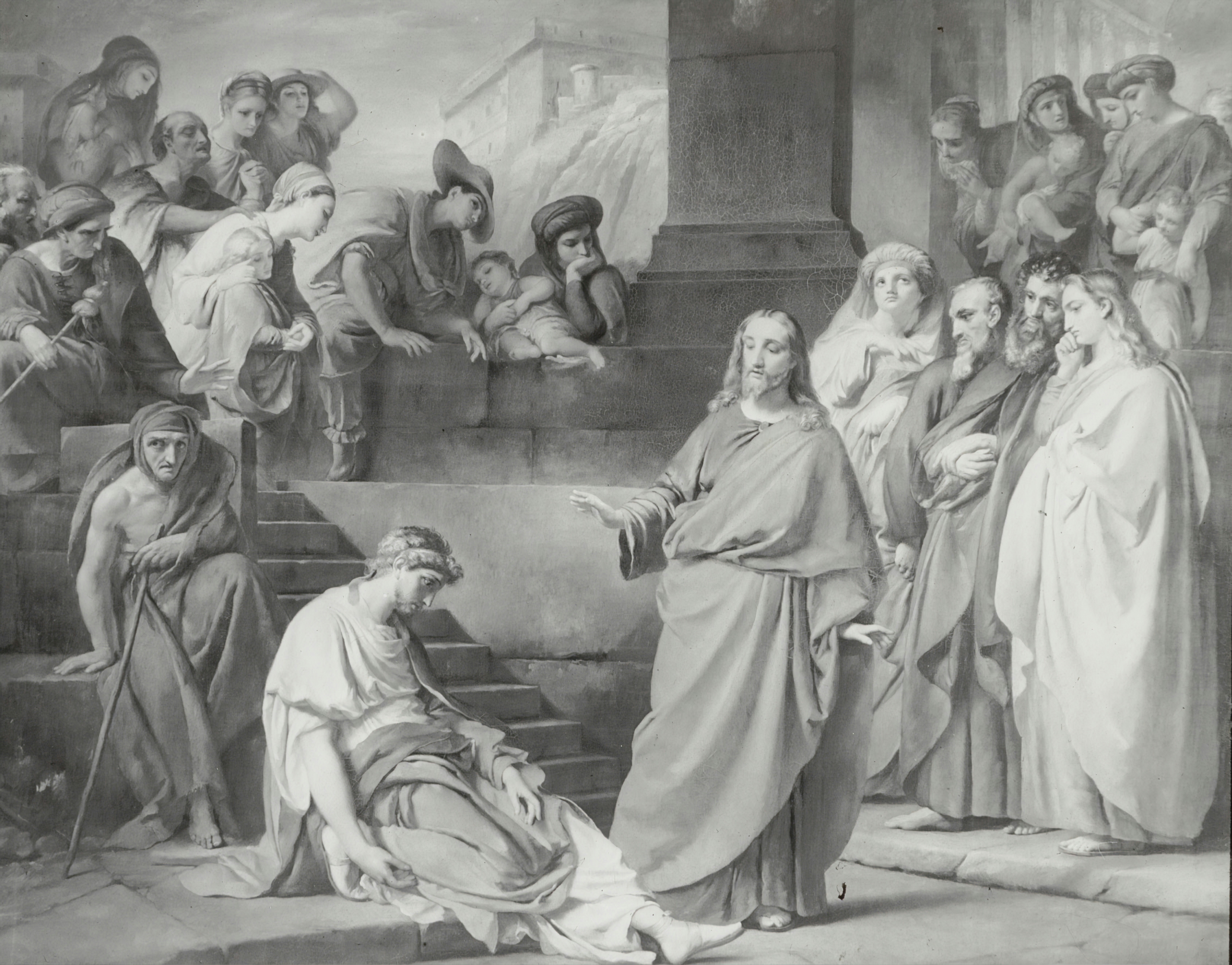
**Image courtesy of Europeana

The Marine and the Imago Dei

My dad went to Heaven in January. As you can imagine, it’s been a difficult few weeks for my mom, my sisters, and for Kathy and me. However, it’s also been a time to celebrate my dad’s life. He was Marine Corps MSGT Johnny Frady, often called Top Frady. He served for 22 years, completing two tours in Vietnam for which he was awarded the Bronze Star for Combat. 

After his military career, my dad worked for the military as a civilian before moving into his third career as a farmer in Arkansas. Even though he was a tough Marine, he was probably the most humane person I’ve ever met. He cared about animals, no matter if they were in the woods, in the fields, in the barns, or in the house. In a similar way, Daddy cared about people and taught us to care about them, regardless of their ethnicity, economic status, or educational background. To him, you respected people because they were people. 

Daddy never used this term, but he instilled in me a strong belief in the Imago Dei, or “image of God.” The Imago Dei is the belief that humans are created in God’s likeness and therefore possess inherent dignity and worth. This idea is rooted in Genesis 1:27, which states, “So God created human beings in His own image. In the image of God, He created them; male and female He created them.” This scripture emphasizes that men and women everywhere reflect God’s nature, fostering the understanding that every person should be treated with respect, care, and love because, even if they don’t realize it, they bear the image of their Creator. 

Life today would be so much better if everyone believed in the Imago Dei. A strong belief that people are made in God’s imageleads us to treat one another with respect, kindness, and compassion, recognizing the inherent value in every person. Understanding that everyone is made in the image of God encourages empathy, fosters a sense of community, and highlights our shared humanity. The Imago Dei promotes the idea that we should honor one another’s dignity and value their existence, regardless of our differences. We should intentionally strive to create environments where love and understanding prevail. Finally, we should strive to reflect care and support for the well-being of every person with whom we interact, either in person or online. It’s my prayer that we would all remember to treat others as if they were made in the image of God. If we did, oh my, how different today’s world would be.

* Photo courtesy of Chad Stembridge via Unsplash

St. Patrick’s Story

On March 25, 433, St. Patrick stepped onto the shores of Slane, Ireland and immediately gave a speech, which went something like this:

“Good people of the Emerald Isle! Henceforth on March 17th, or upon the weekend closest to that date, the rivers of at least one major city should be dyed green in my honor. People without the knowledge that the 3 leafed shamrock represents the Holy Trinity should wear them proudly, along with shiny green top hats. Many people will skip church in order to attend parades where green beads and cabbages will be thrown to the massive crowds who have gathered to celebrate the anniversary of my death. And children not wearing green shall be pinched unmercilessly. Ok, that’s it. Where’s the Guinness? Let’s all get sloshed!”

Ok, so it didn’t happen quite like that. 

When St. Patrick was simply Patrick, he grew up in Banna Venta Berniae, which was in the west of Britain in present day Wales. While Romanized, his family was most likely Welsh. Sixteen year old Patrick was sixteen when he was kidnapped by pirates. He was taken to Ireland and sold into slavery in Ireland where he was forced to serve as a shepherd and caretaker of animals. During his six years of captivity, he gave his life to Jesus. He also learned the Gaelic language of the people and the customs of Ireland.

Years later, he escaped and returned to his family in England, where he began preparing for the priesthood. In Confessio, Patrick’s autobiography, he writes about a dream in which he heard the collective voice of the Irish people compelling him, “We beg you, holy boy, to come and walk among us again.” So, much to the chagrin of his parents, Patrick returned to Ireland in 433 and set about sharing the gospel with everyone he met. Legend has it that Patrick used the shamrock to explain the Trinity to the local people, who had previously worshiped multiple gods.

Before Easter Sunday 433, the local Irish king, Logaire, issued a decree that no one may light any flame until the fires of a pagan spring festival were lit. Patrick, refusing to honor anyone but Jesus, lit the Easter candles anyway on the Hill of Slane. When the king heard about the devotion Patrick held to God, he was so impressed that he allowed him to continue his missionary work. 

St. Patrick lived the life of a missionary and converted thousands, planting churches across the entire island and training priests and overseers to lead them. Even though he was very well known, he lived most of his life in poverty, passing away on March 17, 461.

  • 300 years after St. Patrick’s death, Dallan Forgaill, an 8th century monk and poet, wrote the Gaelic poem “Rop tu mo Baile” honoring his devotion and unwavering commitment to God. 
  • In 1905, 1200 after it was penned, Mary E. Byrne, a university student, found a copy of the poem and translated it into English. 
  • In 1912, Eleanor Hull, an Irish woman, set the words of the translated poem to music. She chose the Irish tune SLANE because it was composed in honor of St. Patrick.
  • In 1919, the song was introduced to the world in its first hymnal and gained instant popularity. 
  • In 2019, hymnologists celebrated the 100th anniversary of the modern version of the hymn now known as Be Thou My Vision. 
  • This morning, I listened to a recorded version of the song and thanked the Lord for the devotion of St. Patrick.  Click here to check out this version by Shane and Shane.

May we all seek to obtain such a dynamic faith and undying devotion to the Lord as was displayed by St. Patrick. 
*Image courtesy of Timothy Dykes

Rockstar?

I was in high school when I first heard Twisted Sister’s I Wanna Rock. It brought images of Dee Snyder, Eddie Van Halen, and Quiet Riot. As many times as I heard the song, I never thought of Dolly Parton. 

Dolly Parton, the country singer, composer, author, actress, and theme park owner, has recently released her long awaited album titled Rockstar. Back in 2022, Parton was nominated for induction into the Rock and Roll Hall of Fame. She almost declined because she had never recorded rock music. Fortunately, she accepted and promised to release a collection of rock songs. 

Recently, that collection, aptly named Rockstar, was released. I listened to the entire Deluxe album over the past three days, which is saying something because the deluxe edition on Spotify includes 39 songs and is just three minutes shy of being three hours long. 

Several years ago, Dolly Parton blew me away when I visited Dollywood. I was expecting it to be hokey. Instead, it was awesome. The same is true of Rockstar.

Dolly has a few original songs on the album including World On Fire (click here to listen). The song has a strong beat, great guitar lines, and strong lyrics (Leave it to Dolly to sing about God in one verse and a politician’s derriere in the next). Dolly also partners with some iconic rock stars including Sting, Steve Perry, John Fogarty, Kid Rock, Steven Tyler, Stevie Nicks, Peter Frampton, Joan Jett, Chris Stapleton, Pink, Brandi Carlile, Kevin Cronin, Elton John, Melissa Etheridge, Rob Halford, Simon Le Bon, Linda Perry, Emmylou Harris, Sheryl Crow, Pat Benatar, Michael McDonald, Paul McCartney, Ringo Starr, and Lynyrd Skynyrd, and a few more to produce nearly three dozen quality covers. 

That’s a lot.

As I began the album on Spotify, I figured I would be skipping some of the songs, but instead, I was compelled to hear Dolly Parton perform classic songs like Free Bird, Every Breath You Take, and Purple Rain. Curiosity caused me to check out this album. Solid music with great vocals and powerful guitar riffs kept me listening. 

But what impressed me most about the album was that this amount of quality songs was recorded and released by a performer who is 78 years old. To me, that should be inspiring to anyone who desires to continue producing any kind of content, making a difference, and being awesome as they get older.

Well done, Dolly.

Good Christian Men, Rejoice – The Christmas Carol Meant to Encourage

It was the 14th century, a dark time where poverty and hopelessness were extremely common. However, the Suso family was doing ok in the finance department. They had the means for their son Heinrich to become part of the ruling class. but he had other plans. Heinrich had seen the suffering and injustice experienced by the common man and wanted to make a difference in their lives and in the world. So, instead of living the life of luxury available to him, Heinrich became a Dominican monk and worked his hardest to lift the spirits of those people he knew who had very little cause to rejoice about anything. Strangely enough, this was not a common practice of most clergy at the time and Heinrich received a good deal of persecution. 

Good Christian Men, Rejoice was an attempt by Heinrich Suso to encourage those suffering throughout the world. The lyrics were originally in Latin, then quickly translated to German. The song is a true folk song which has been translated and modified in various languages and cultures. Once, it was even reported from Moravian missionaries in Bethlehem, Pennsylvania that the song was sung in thirteen different European and Native American languages in one gathering.

Even though Good Christian Men, Rejoice is ancient and has run the gambit, its message is everlasting to men (and women) of all nations: 

Good Christian men, rejoice, with heart and soul and voice!

Give ye heed to what we say: Jesus Christ is born today!

Ox and ass before Him bow, and He is in the manger now;

Christ is born today! Christ is born today!

Good Christian men, rejoice, with heart and soul and voice!

Now ye hear of endless bliss; Jesus Christ was born for this!

He hath ope’d the heav’nly door, and man is blessed evermore.

Christ was born for this! Christ was born for this!

Good Christian men, rejoice, with heart and soul and voice!

Now ye need not fear the grave; Jesus Christ was born to save!

Calls you one and calls you all, to gain His everlasting hall.

Christ was born to save! Christ was born to save!

Click here to hear Good Christian Men, Rejoice by Reawaken Hymns

*Image courtesy of Kolby Milton

Thank You, McDonald’s

Thank you, McDonald’s.

This may seem trivial to some, but it means a lot to me.

I live in Metairie, Louisiana about a mile from Orleans Parish. Not far from my home is an elevated round-a-bout at the intersection of Airline Drive and Causeway Boulevard. When I exit the roundabout toward my home, I have a great view of downtown New Orleans and the various routes of arriving there. I also see a McDonald’s. I’ve visited this McDonald’s hundreds of times over the last two decades for breakfast items for volunteer teams, a quick lunch for me, or a late night ice cream cone.

For the last few years, the sign which was high in the air displayed the wind damage of multiple hurricanes. I’m kind of ashamed to admit this, but the damage to the sign really bothered me. I used to wonder why, but now I think that the broken sign reminded me (and thousands of others) of the devastation of the multiple hurricanes we have experienced over the past several years. I was thinking on this one day as my wife and I were driving to Florida. I noticed that it wasn’t just the McDonald’s sign near me that suffered from this damage, but fast food and business signs all over Southeastern Louisiana and the across the Gulf Coast.

A week or so ago, the McDonald’s sign was replaced. Now, the new sign shines brightly, even when the skies around it are dark and dismal. And, in multiple ways, it reminds me that restoration is still happening around our city and region.

So, thank you McDonald’s. Thanks for replacing your sign. Thanks for being a part of our community.

My Father’s Day Confession

I have a confession to make. 

I watch people I don’t know. I watch them a lot. 

Dads especially catch my eye when they’re with their kids.

I watch them when they’re playing, working, laughing, and even when they’re frustrated.

I watch them and I wonder, “What must that be like?”

It used to make me angry (Ok sometimes it still does) when I read that “Children are a gift from the Lord. They are a reward from Him.” (Psalm 127:3 NLT) I mean, if those who have kids are truly experiencing an actual reward from the Lord, then I naturally assume that I must be a loser of the highest (or lowest) magnitude. 

I’ve absolutely hated Father’s Day because people walk up to me, smile, and practically shout, “Happy Father’s Day!” before they grimace and say “Oh, I’m sorry. I forgot that you’re not a father.” 

One Father’s Day, I was on vacation visiting a church when I was singled out from the pulpit in front of the congregation: “You all know John doesn’t have what it takes to make a baby but let’s pretend that he is by giving him a cheap gift.” Ok, so maybe that wasn’t exactly what they said, but it’s how I felt at the time.

One year, the daughter of a friend approached me on Father’s Day and innocently said, “My daddy is David. Mr. Bob is Ashleigh’s daddy. Whose daddy are you?”

That floored me.

I didn’t know what to say so I slapped her. (Not really)

“They (Children) are a reward from Him.”

I didn’t get a reward. I didn’t place. I wasn’t even allowed to race. I’m not sure what the problem is but I must be doing something wrong.

However, I refuse to allow myself to believe that anymore. 

When I look at my life, I’ve been blessed more than anyone I know. I have a cute wife, a nice home, and a life where I make a difference in the lives of thousands of people, if not more.

And yet, I still watch dads and I wonder, “What must that be like?”

And after all this time, I think I know.

It’s a blessing. With all of the frustrations, from my viewpoint, fatherhood is a reward.

So, I just wanted to say “Congratulations dads!

You have received an amazing gift, a reward from our Heavenly Father.”

And to those of you who are willing to embrace your reward, I honor you this weekend.

You are truly blessed beyond my comprehension! So do your best and make us proud! 

Be men of God willing to raise a generation to love and serve the Lord wholeheartedly! 

I promise to pray for you and try to relate as best I can. Let me know if I can help, seriously. And when we are old and gray(er) and all the children are gone, give me a call, send me a text, or do whatever people are doing then, and we’ll go to lunch or coffee, my treat. 

I’ll tell you how God has blessed me and then…

I’ll sit quietly and listen and you can tell me stories of what it was like.

Happy Father’s Day

*Image courtesy of Shane Rounce

The Praetorium

So Pilate released Barabbas to them. He ordered Jesus flogged with a lead-tipped whip, then turned Him over to the Roman soldiers to be crucified. Some of the governor’s soldiers took Jesus into their headquarters and called out the entire regiment. They stripped Him and put a scarlet robe on Him. They wove thorn branches into a crown and put it on His head, and they placed a reed stick in His right hand as a scepter. Then they knelt before Him in mockery and taunted, “Hail! King of the Jews!” And they spit on him and grabbed the stick and struck Him on the head with it. (Matthew 27:26-30)

Some might call it the beginning of the end. Condemned by Pilate, the punishment of Jesus begins. The Roman soldiers take Jesus to the Praetorium where they bind Him to the whipping post, securing His hands over His head, and exposing His back. The soldiers proceed to lash Him with a three pronged, lead tipped whip for 40 lashes. Their intention is to weaken Him physically before His crucifixion so death will come sooner. To further humiliate Him, they fashion a crown of thorns and shove it down onto His head. They spit on Him. They slapped His face. They mocked Him by crying out, “Hail! King of the Jews!”

Interestingly enough, what the Roman soldiers thought was mockery was actually truth. Jesus was King of the Jews, but to the Romans, He was a criminal to be disposed of. Jesus did not respond to their mockery and He absorbed their blows without complaint. In doing so, He was fulfilling Isaiah 53:3-5: “He was despised and rejected- a man of sorrows, acquainted with deepest grief. We turned our backs on Him and looked the other way. He was despised, and we did not care. Yet it was our weaknesses He carried; it was our sorrows that weighed Him down. And we thought His troubles were a punishment from God, a punishment for His own sins! But He was pierced for our rebellion, crushed for our sins. He was beaten so we could be whole. He was whipped so we could be healed.”  

Within this physical flogging and mocking, we catch a glimpse of how foul our sins are to God. What was justifiable for us, punishment for our rebelliousness, He, an innocent man, the Son of God, took upon His own body because He loved us. We cannot appreciate how foul our sin must be to the Lord. Reflect for a moment on the punishment Jesus received in the Praetorium. That is how detestable our sin is to God. Jesus, His Son endured the brutality of the Roman soldiers so that we might be made whole. He endured physical, emotional, and spiritual degradation for our healing. 

Prayer: Lord, thank You for Your grace and mercy. Thank You for enduring the lashes, the mockery, and the abuse for me.

*Photo courtesy of Mads Schmidt Rasmussen