What Makes Christianity Unique?

photo courtesy of Unsplash - Lee Miller

Once, during a British conference on comparative religions, experts were discussing if there was any belief truly unique to Christianity.  Creation, incarnation, and resurrection were quickly eliminated because of examples in other religions. C.S. Lewis wandered into the room and enquired as to the topic of conversation. When the debate was explained to him, without hesitation, Lewis replied, “Oh, that’s easy. It’s grace.”

CS-Lewis_620

Grace is so simple that it baffles the experts. Grace is what makes Christianity unique. Because of it, we have the opportunity to know Jesus as Savior and Friend. Grace helps us understand the difference between happiness and joy. It allows us to conquer all of our fears. There is nothing we can do to earn grace and there is no way that we can destroy it. In Ephesian 1:5-6, the Apostle Paul wrote: He predestined us to be adopted through Jesus Christ for Himself, according to His favor and will, to the praise of His glorious grace that He favored us with in the Beloved.   

Grace is free and yet it is also priceless. It truly is amazing. 

Since such grace has been given to us, we should always strive to treat others with grace. In doing so, we are imitating our Heavenly Father.

Dustin Lee - Unsplash 1

Why Pastors Should Keep Track of Weekend Worship Service Attendances*

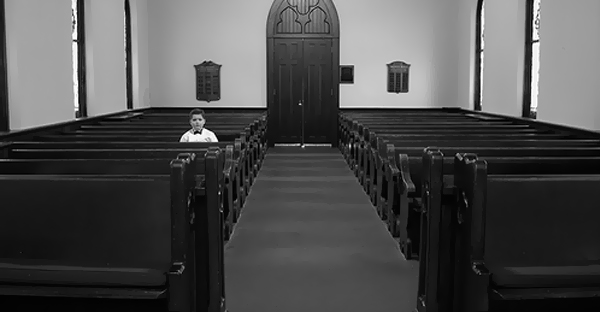
boy-in-church-RULING

I recently joined a discussion with a few pastors about the importance of tracking weekend worship service attendance.

In our conversation, it seemed everyone agreed that weekend attendance:

  • Is the most obvious measure of success.
  • Is fairly easy to track.
  • Is easily understood by most church leaders.

However, as we were about to move to another topic, one pastor, who may have been playing Devil’s advocate, asked the following question:

How can we justify counting people in our worship services when King David got into so much trouble with the Lord when he conducted a census?  

He was referring to a story in 2 Samuel 24. The scripture indicates that the Lord was angry with Israel and caused the king to want to count the people of Israel and Judah. The parallel passage in 1 Chronicles 21 actually reports that it was Satan who caused David to take a census. However it took place, it’s possible that David’s sin was not the counting, but pride associated with the numbers. Joab even tried to stop David from ordering the census, saying:

May the Lord your God let you live to see a hundred times as many people as there are now!  But why, my lord the king, do you want to do this?  2 Samuel 24:3 NLT

After reading both accounts, it seems that King David might have been:

  • Putting his trust in the numbers of his people rather than in the Lord.
  • Taking his eyes off of the Lord when earthly success seemed evident to all.
  • Stealing the glory of what the Lord had reserved for himself.

Whatever the reason, before the Lord’s punishment of David for the census was completed, a 3 day plague swept through Israel killing 70,000 people. (One could easily wonder how they knew the number of people who perished without enduring more punishment for counting). I’ve made lots of mistakes about lots of things in church work, but never anything that’s caused even one death (that I know of), much less 70,000.

So is it wrong to keep track of your worship service attendances?

Interestingly enough, until that pastor asked that question, I had never compared knowing the attendance in a worship service with King David taking a census of Israel. It could be because many of the churches I attended while growing up posted the weekend attendance in the worship center for everyone to see. Another reason may be because the Bible is filled with examples of people counting.

OLYMPUS DIGITAL CAMERA

Here are a few examples:

  • The total number of Jacob’s descendants moving to Egypt was 70 (Exodus 1:5).
  • The Levites killed about 3,000 of the Israelite brothers after the incident with the golden calf(Exodus 32:28).
  • On the day the Israelites crossed the Jordan River, about 40,000 were equipped for war and crossed to the plains of Jericho (Joshua 4:13).
  • The 4th book of the Bible is Numbers.
  • The Lord limited Gideon’s Army to 300 when he attacked the Midianite camp  (Judges 7:1-8).
  • Solomon accumulated 1,400 chariots and 12,000 horsemen (1 Kings 10:26).
  • Jesus broke bread and fed 5,000 men plus women and children (Mark 6:44) and then later fed about 4,000 men plus women and children (Mark 8:8).
  • On the day of Pentecost, 3000 were added to the number of believers in one day (Acts 2:41).

How did Jacob know he had 70 family members with him when he moved to Egypt? You can bet with a family that large they stopped to count everyone before journeying forward each day.

How did Gideon know the Lord had left him with only 300 men to help in attacking the Midianite camp? Someone must have counted.

How did Jesus and the disciples know that there were 5,000 men present when Jesus broke the bread and fish? One of the disciples must have counted. They would want to know because that’s a whole lot of people to serve even if the food is being miraculously multiplied.

Still not convinced?

I asked my social media friends why it would be important to count worship service attendees each week. Here are a few answers I received.

Counting your weekly attendance helps you celebrate what the Lord has done and also helps keep you accountable for pastoring the people with whom God has blessed you.

– You count your offering, right? Why wouldn’t you be as faithful with the people resources God has entrusted you with?

– Tracking and then studying the numbers can help you spot trends and know your congregation…  It can also help you see decline before it is full-blown. Numbers in organizations are like numbers on a growth chart for a child in development. They’re indicators of what’s working and what isn’t.

It can be used for message traction. One church I was in before learned that too much effort went into teaching series openers. There was a large (15%) spike in attendance for the first message compared to the others. It helped us re-tool how the series were put together.

– I’m responsible for the team setting up for communion each month and let me tell you, counting is important. Our church attendance kept rising, but no one ever told me so I didn’t buy enough supplies. Do you know how embarrassing it is to have to tell congregation members they can’t participate in the Lord’s Supper because you’ve run out of juice?

– Being able to look at trends and seeing low attendance periods helps church leadership know when they need to step up marketing, promotions, etc…  It also helps to know that sometimes a slump is just prime vacation time.

While being surrounded by so great a cloud of witnesses to the benefits of tracking attendance, I must say that keeping track of worship service attendance numbers is not only beneficial, but is an absolute must for any pastor desiring to serve and lead in a thriving, healthy ministry.

All this being said, here are some practical steps to remember when keeping track of attendance:

1.  Tell the truth. If all of your attendance numbers begin with the phrase Evangelistically speaking we had… something needs to change. Lying about your attendance is like cheating on your eye exam. You’re only hurting yourself.

2.  Count in the second half of the service. It’s my experience that the number of people you have in the building at the beginning of your service is no indication of how will be there by the end of the service. (This is a different problem for a different article). For accuracy, have someone count in the second half of the sermon. People are normally seated during this time and they’re easier to count anyway.

3.  Create an easily accessible graph for your own reference. Doing so will allow you to compare attendances quickly and efficiently.

4.  Compare attendances from season to season, year to year, and finally Sunday to Sunday. Consider the why’s regarding your trends.

willie_nelson_300-ce334a713e79fc578ae600e305ad72bc67b5be21-s6-c30

Willie Nelson once said When I started counting my blessings, my whole life turned around. It’s uncertain if keeping track of your ongoing weekend church attendance will turn your life around. However, it is certain that those you are counting are God’s blessings for you to evangelize, disciple, and lead.


Happy counting!  


The Culprit In The Sanctuary

soundboard

“There must be a culprit in the sanctuary,” I thought.

The video equipment had been set up and taken down by the same faithful volunteers for close to a year and a half without any problem. Now, each week, throughout the service, the video system would suddenly lose connection for a second or two and then return to normal. It started happening once every five minutes or so, then the problem grew steadily worse.

Pastors, leaders, technicians, and volunteers were all baffled over the situation. Over the course of several weeks, different teams tried updating the presentation system, double checking the connections, updating the computer, using different computers, checking the multiple adapters, replacing a converter, checking the temperature of the equipment, and checking the stress on the cabling, all to no avail.

In the end, I wondered, “Could someone be sabotaging the system?”

Finally, the entire system was setup during the week by a small group, determined to double check every connection until the issue was discovered. However, when everything was setup, the problem could not be reproduced.

Fortunately, one of the team members received a text message, and the problem occurred. Testing a theory, he sent a text message, and the disconnect happened again. Then, the technicians realized that a phone could simply be placed near certain connection points and the glitch would occur. The team found a thicker, more insulated cable and retested the system, placing cell phones over the cables and sending text messages back and forth.

No glitch.

The culprit in the sanctuary had been found. Unseen frequencies, which had previously not been released for cell phone use, had been steadily increasing in the room as people had updated their phones, thereby causing problems in the wired video equipment.

Crazy, right?

Thank the Lord we were able to purchase higher grade, better insulated cables. We would have hated to make everyone check their cell phone at the door.

Dustin Lee - Unsplash 1


My Favorite Illustration Giving Talk

Dustin Lee - Unsplash 1

One purpose of the offering introduction, or giving talk, in a Christian worship service is for ongoing stewardship education. Those words may sound dry, but the giving talk doesn’t have to be. In fact, the more interesting a giving talk is, the more likely the listener is to hear the point and apply it to his own life. In this type of giving talk, illustrations are important because they draw the people in.

Here is my favorite illustration giving talk I’ve seen to date:

Illustration Giving Talk – Wind Farms

We’re about to receive our offering. Many of you have already given online and we appreciate that. While the rest of us prepare to give and our ushers prepare to receive, I like to show you a picture.

(Show picture of wind farm)

wind-farm-hero

Wind farms like these now produce almost 3% of the world’s energy. Many of you have probably seen farms like these in your travels.

Have you ever wondered how windmills are able to capture the wind’s energy? Here’s a brief explanation: A wind turbine blade works like an airplane wing. Blowing air passes around both sides of the uniquely shaped blade. The uneven pressure around the blade then causes it to spin. The blades are attached to a shaft, which turns about 18 revolutions per minute. This doesn’t seem like much, however the shaft is connected to a series of gears, which increases the movement to about 1800 revolutions per minute. At that speed, a generator can produce a lot of electricity as long as the wind is consistent.

You may be thinking, “This is all very interesting, but what does that have to do with my offering?” Sometimes, people think that the amount they give can’t make much of a difference. Like the large shaft that only turns 18 times a minute, it seems like their gift is insignificant. However, God blesses the offerings given by people and allows the church to connect them with the gifts of others, multiplying it a thousand times over in various ways that then produce amazing results.

However, as with the wind and the windmill, the secret to this occurring is faithful and consistent giving.

Let’s pray.

Over the next few weeks, I’ll be sharing examples of giving talks which serve other purposes. I hope you will join me. In the meantime, if you have a favorite giving talk, feel free to comment or contact me personally.

Good Friday Outline/Script using Hillsong’s “O Praise The Name”

good-friday-copy

Here’s a basic outline/script for Celebration Church’s 2016 Good Friday service. It’s my hope that other churches can find it helpful and meaningful in the future.

Three basics props are needed for this service:

  1. Biblical Whip
  2. Crown of Thorns
  3. Three large 8-10 inch nails

We chose to use a high table for the props.

O Praise The Name Good Friday Outline/Script

3 Opening Songs – Based around the cross and the goodness of the Lord

Brief Offering Introduction and Prayer

Transition Video – http://www.danstevers.com/store/life_with_god/ (also available in Spanish)

THE NAME OF THE FATHER SECTION

Speaker: (quoting video) Life with God is not about a religion. It’s about a relationship. Here at Celebration Church, we encourage everyone to know God personally.

When you first meet someone, you most often learn each other’s name. When meeting the Lord, most people realize that He already knows their name, but how are we to address God?

I mean, really, what do you call the Supreme, Ever-Present, All-Knowing Power in the Universe? Let’s explore that.

For thousands of years, there have been many names for God

  • He is Elohim, our Mighty Creator, who spoke and the worlds came into existence. (Show slide displaying the name “Elohim”)
  • God is called El Shaddai meaning God Almighty(Show slide displaying the name “El Shaddai”)
  • He is YAHWEH, which is sometimes known as the only proper name of God. This name was revealed when Moses asked the Lord for His name. God answered by saying, “I Am Who I Am.”(Show slide displaying the name “YAHWEH)
  • God is also called Adonai which simply means Lord(Show slide displaying the name “Adonai)

There are many other names of God in the Bible reflecting on the attributes of God, but the name Jesus most often used when praying and teaching others to pray was Father.

(Show slide displaying the name “Father)

The name Father was more descriptive than most other names because the word Father describes more than a characteristic of God. It describes a relationship.

Think of all a Good Father is and that describes who God the Father is to us. He is our Provider, our Shelter, our Forbearer, our Wise Ancestor. He’s given us Life, Protection, and Nourishment. He’s our Source, our Sire, our Parent. No matter if you call Him Padre, Papa, or Daddy, He is our Father. Our Good, Good Father.

Let’s take a moment and think about His goodness.

Sing: Good, Good Father – https://www.youtube.com/watch?v=x0gwz_IDY7w (Spanish version also available)

(Soft music from one instrument continues to play as speaker continues)

THE NAME OF JESUS Section

Speaker – God, our good, good Father, patterned mankind after Himself because He desired a personal relationship with each person. However, man’s sin created a problem. You see, God is so good and so Holy that sin cannot exist in His presence.

In fact, we learn from the first part of Romans 6:23 that “the wages of sin is death…”

(Show Romans 6:23a slide as it is being read)

Basically, it’s saying that the punishment for our sin is death. With that being said, it sounds as if we are doomed. However, Romans 6:23 also continues to say, “But the free gift of God is eternal life through Jesus our Lord.”

(Show Romans 6:23b slide as it is being read)

So God provided a way for us to be forgiven. But how can this be? Why would He do such a thing? Because our Good, Good Father loves us.

The Bible actually says in Romans 5:8 – “But God showed His great love for us by sending Christ to die for us while we were still sinners.”  

(Show Romans 5:8 slide as it is being read)

Jesus died on the cross to pay the penalty for our sins. He took our place and endured the punishment that we should have received.

Taking this punishment is the reason Jesus was born in the first place. It’s how He got His name. An angel appeared to Joseph and said, “You are to name Him Jesus, for He will save His people from their sins.”  (Matthew 1:21)

(Show Matthew 1:21 slide as it is being read. Music switches to minor key)

CRUCIFIXION SECTION

However, the punishment He took for us was serious, painful, punishment. John chapter 19 describes much of this torture Jesus endured in detail.

(Stagehands uncover table. Music continues)

Speaker: “Then Pilate had Jesus flogged with a lead-tipped whip.” (John 19:1)

(Show John 19:1 slide as it is spoken)

(Speaker goes to table and examine lead-tipped whip. Holds up the whip for all the see)

Speaker: Jesus was beaten at least 39 times at the whipping post. The whip lashed His shoulders, back, and legs, cut through His skin and tissue, and caused blood to ooze from His capillaries and veins. The lead tips produced deep bruises which were broken open by subsequent blows. Many who were sentenced to crucifixion never made it to the cross because they died during the flogging.

(Speaker returns the whip to its place)

Speaker: “The soldiers wove a crown of thorns and put it on his head,” (John 19:2)

(Show John 19:2 slide as it is spoken)

(Speaker holds up the crown of thorns and examines it while speaking)

Speaker: The main purpose of the crown of thorns was for the pleasure of the mocking guards, who thought it was hysterical that Jesus should call Himself a king. The guards formed the crown from thorns of a nearby plant. They shoved it down on Jesus’ head so that it would not fall off during the crucifixion. The humiliation of the crown continued throughout His crucifixion. Every step Jesus made towards his own death, His followers saw the crown of thorns. His enemies pointed and laughed and continued the mocking.

(Speaker Return the thorns to the table)

Speaker: “So they took Jesus away. Carrying the cross by himself, he went to the place called the Place of the Skull. There they nailed him to the cross.”  (John 19:17-18a. Show slide as scripture is being read)

(Show John 19:17-18a as it is spoken)

(Speaker picks up the nails and holds them at arm’s length toward the people)

Speaker: Imagine the soldiers stretching one of Jesus’ arms out and nailing His hand to the cross.

(Speaker hits two of the nails together three times)

Speaker: Think about the soldiers stretching Jesus’ other arm out and nailing His other hand to the cross.

(Speaker hits two of the nails together three times)

Speaker: Picture the soldiers placing Jesus’ feet one on top of the other, and driving a nail through them.

(Speaker hits two of the nails together three times)

Speaker: The soldiers raised the cross and Jesus hung there for everyone to see. It was there that Jesus, the Son of our Good Father, who received His name because He would save His people from their sins, died.

(music stops abruptly)

Speaker: “For this is how God loved the world: He gave his one and only Son, so that everyone who believes in him will not perish but have eternal life.”  (Show John 3:16 slide as it is read)

(Music for next song begins and Speaker exits)

O Praise the Name – https://www.youtube.com/watch?v=LqBpifDpNKc(Also available in Spanish)

Gospel Presentation/Decision Ministry – 

Communion Intro – We’ve shared tonight about the love of our Good Father and the sacrifice of our Lord Jesus. Now, together, let’s take time to commemorate what Jesus did for us on the cross by observing communion together…

Communion –

“You Are Good” (Kari Jobe/Gateway) – Suggested Song for Communion – https://www.youtube.com/watch?v=O15tsWWo_Ys

Closing Remarks

Closing Song

Dustin Lee - Unsplash 1

(Photos courtesy of Unsplash)

Tribute to W.O. Traywick

IMG_4947

One of my favorite people on the planet, W.O. Traywick, passed away on March 14th.

When I first met Mr. Traywick, he scared me to death. I was short for my age while he was a man of great stature with a strong deep voice. Even though he wore large, thick glasses, he had the ability to stare into your very soul. He was a staunch Democrat who taught Civics to me, a young Republican, during the Reagan Administration. 

Mr. Traywick also had a reputation of being good with a paddle. When he took a student into the hall for a discipline session, the entire school heard and counted the licks. One year, the school paper even dedicated the Dazz Band song Let It Whip exclusively to him.

By the end of my high school career, I had taken Public Speaking, Drama, Civics, and U.S. History from Mr. Traywick. I also had the honor of acting in nine plays he directed, including the classics Our Town and The Crucible. Later, when I had the opportunity to act in my first play at Ouachita Baptist University, his alma mater, he brought a group of students to watch. That meant so much to me.

IMG_4944

Mr. Traywick also served in the youth ministry at First Baptist Church, where I was a member. He once taught us about John the Baptist by serving us actual locusts dipped in honey as our refreshments. He taught my Sunday School class for a couple of years and once helped me clean the floor after I had vomited in front of my friends. That summer, on the night I made Jesus Christ my Lord and Savior, Mr. Traywick prayed with me. I’ll never forget that.

Years later, long after Mr. Traywick’s retirement, I visited him in the hospital, hoping to bring him some form of comfort. Instead, I was the one who was encouraged. From his hospital bed, in a voice that wasn’t nearly as deep as I remembered, he told me he was proud of the man I had become.

William Arthur Ward once said, “The mediocre teacher tells. The good teacher explains. The superior teacher demonstrates. The great teacher inspires.”

Winifred Otis Traywick was a great teacher. He inspired me and for that I will always be grateful.

3 Steps For Improving Spoken Transitions


photo courtesy of Unsplash - Lee Miller

It was the early 90’s. I had big hair, a mustache, and huge shoulder pads in my sports jacket. In our musical worship set, I was verbally transitioning to the old praise song Behold the Lamb. I had planned to share about how John the Baptist pointed to Jesus and proclaimed, “Behold the Lamb of God, who takes away the sin of the world.”

However, in the moment, the transition was going well, so I took it further than I had planned. Big mistake.

Here’s what I said:

“Jesus is the Lamb of God. He’s the only person who has ever lived who has lived a totally sinful life.”

And then, without realizing my mistake, I said it once again.

Spoken transitions, no matter where they fall, are extremely important for the flow of a worship service. If one goes badly, the worship leader or preaching pastor may never fully re-engage the people.

Here are 3 steps I believe can help us all improve our spoken transitions:

Think. Take time to think about what you are really trying to accomplish. Think about the words you are going to say. Think about the people who will be hearing your words. Think about what is coming after the transition.

Script. Take time to write out what you are going to say. Then, tighten it up by shortening it as much as possible. Remove unnecessary or repeated words and phrases.

Practice. Take time to rehearse what you’ve scripted out. Start by reading your what you’ve written aloud. Chances are, you’ll make a small adjustment or two. Then, stand in front of a mirror and practice until what you are saying feels more natural to you.

These 3 steps all have two words in common.

Take Time.

If something is worth being said, it’s worth taking the necessary time to make it as good as possible. Hopefully, by doing so, you can avoid telling your congregation that Jesus lived a sinful life.

Dustin Lee - Unsplash 1

(Photos courtesy of Unsplash.com)

One Word We Need To Stop Using During Communion

Dustin Lee - Unsplash 1

Recently, one of our pastors spoke with a guest who had attended one of our worship services. The man said he enjoyed the music and the preaching, but he was confused about something he heard from the stage.

“What was confusing to you?” asked the pastor.

The man replied, “Well, this man said we were going to remember what Jesus did for us and then he asked everyone to come forward and receive the elements. I wasn’t about to do that because I’ve only heard that word used when someone was speaking about drugs.”

It may sound silly, but since then, I’ve tried to not use the word elements when speaking of the bread and juice that we serve when we celebrate communion (another term I want to find another name for). I thought about calling it the body and the blood but I figured that might really freak people out. I haven’t successfully found appropriate terminology for the term yet, so for now, I will refer to the elements as the bread and the juice.

If you can think of better terminology, please reply.


One of the Most Important Weekly Investments For Pastors, Worship Leaders, Speakers, and Prayer Counselors

Dustin Lee - Unsplash 1

Churches spend thousands, if not tens of thousands of dollars on quality sound systems and hundreds of thousands if not millions of dollars on worship facilities. Worship leaders and speakers also often invest thousands of dollars in training, instruments, and resources, not to mention countless hours in sermon preparation, worship rehearsals, worship planning, and prayer. All of this time and money is dedicated to honoring the Lord, reaching the lost, and empowering the church.

However, one small weekly personal investment can help pastors and worship leaders when it comes time to make real connections with people.

Gum.

No matter how great our upfront preparation is and will be, if we speak personally with people and they are offended by our breath, we will lose vital opportunities to share the gospel, encourage the timid, or recruit vital leaders and volunteers.

Prayer Service Outline Built Around the Model Prayer (Matthew 6:9-13)

IMG_4157

Last night, our church had a special time of prayer and worship in conjunction with our January Prayer and Fasting Emphasis. It was a powerful time of worship, reflection, confession, and intercession. As is usual with these types of services, we tend to go off script from time to time, so we use these outlines as a guide and ask the Lord to guide us and lead us accordingly.

I hope this outline blesses you and your churches. If you have similar (or different) outlines, please share them with me so our church can benefit from your experience.

Prayer Service Outline

Opening 

  • 2-3 Song Worship Set
  • Welcome and Offering Prayer
  • Offering as service continues

AFFIRMING GOD’S GREATNESS Section

  • Read Matthew 6:9 – “Our Father in Heaven, Hallowed be Your name.
  • Comment personally upon the scripture.
  • Direct the people to spend a moment in personal prayer, instructing them to acknowledge the Greatness of the Lord.
  • Pray for the people before the worship music continues.

Song about the Holiness/Greatness of God

  • Suggested song: Glorious by Bryan and Katie Torwalt

SUBMITTING TO GOD’S WILL Section

  • Read Matthew 6:10 – “Your kingdom come. Your will be done on earth as it is in heaven.”
  • Comment upon the scripture as you feel led.
  • Ask the people to pray for God’s will to be done. Ask them to think about how often they really pray for God’s will to be done.
  • Direct the people to get into small groups where they pray for God’s will to be done in the lives of others in the group.
  • Pray for God’s will to be done in our church, in your campus, and in the lives of those present.

Song About God’s Will or His Wisdom

  • Suggested song: God I Look to You – Bethel Music

REQUESTING GOD’S PROVISION Section

  • Read Matthew 6:11“Give us this day our daily bread…”
  • Comment upon the scripture as you feel led.
  • Instruct the people to think of one area of their lives where they need God’s provision. Direct them to pray and ask God for His provision in this area.
  • Ask another pastor, elder, deacon, or life group leader to pray for the needs of the people.

Song About God’s Provision, Blessings, or Care

  • Suggested song: Good Good Father – Housefires

ASKING FOR GOD’S FORGIVENESS Section

    • Read Matthew 6:12“And forgive us our debts, as we forgive our debtors.”
  • Comment upon the scripture as you feel led.
  • Direct the people to pull out a blank sheet of paper (which we’ll need to provide). Have them draw a line down the middle of the paper creating two sections. At the top of the first section, have them write “My Sins.” At the top of the second section, have them write “Sins against me.” Give them 60-90 seconds to create a short list of their own sins in the first section. Then, give them 60 – 90 seconds to create a list of those who have sinned against them.
  • Lead Then, lead the people in a prayer where they ask forgiveness for their own sins and grant forgiveness to those who have sinned against them.

Song About the Forgiveness of God

  • Suggested song: How Can It Be- Lauren Daigle 

PRAISING GOD FOR HIS GUIDANCE Section

    • Read Matthew 6:13“And do not lead us into temptation, but deliver us from the evil one. For Yours is the kingdom and the power and the glory forever.”
  • Comment upon the scripture as you feel led.
  • Recite the model prayer with your people and comment on what it means.
  • Upbeat Closing Prayer by Campus Pastor praising God for who He is, all He has done, and all He will do.
  • Upbeat Closing Praise Suggested Song –

Dustin Lee - Unsplash 1