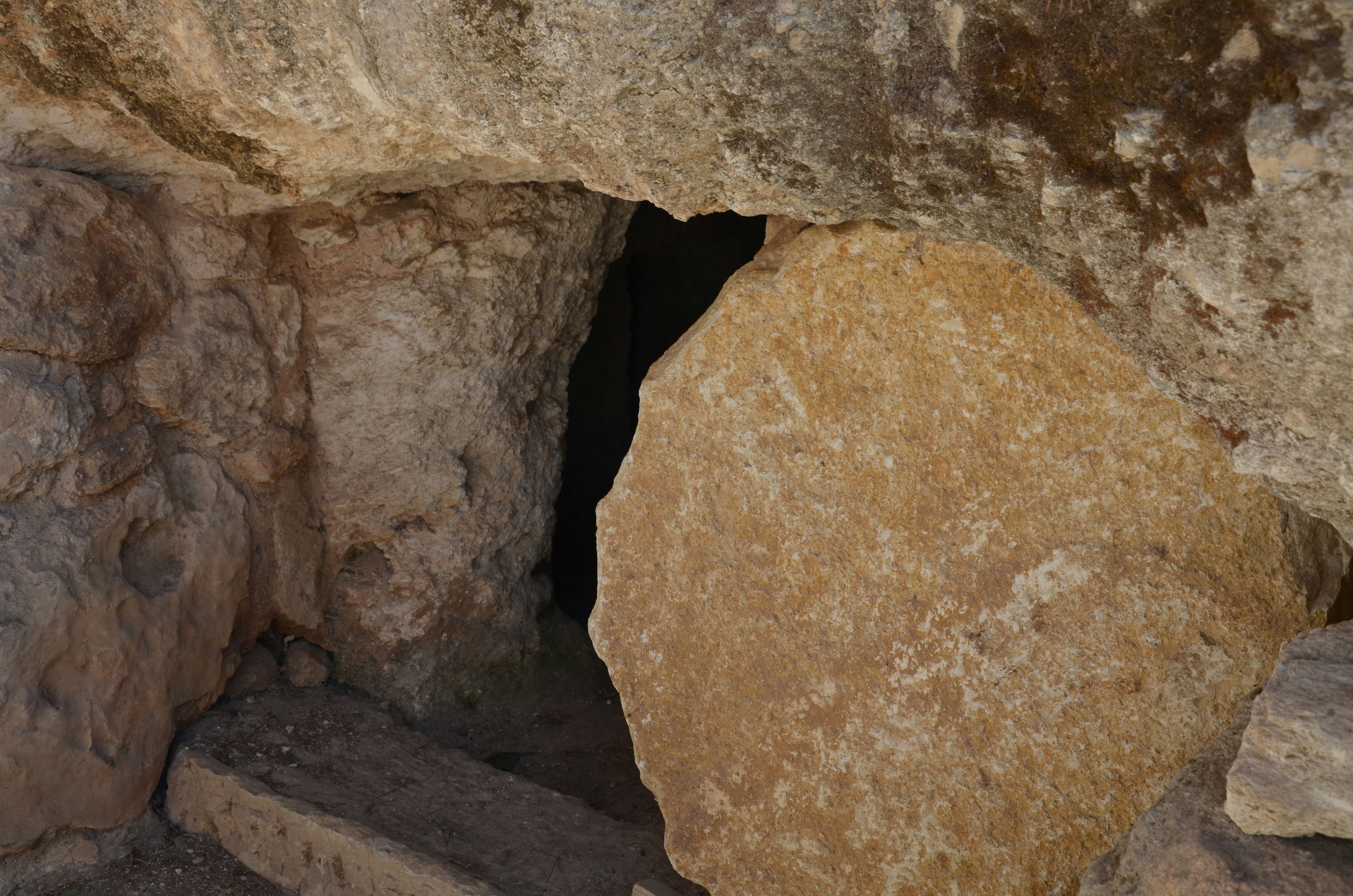
Holy Monday – Jesus Clears the Temple

Scripture – Jesus entered the Temple and began to drive out all the people buying and selling animals for sacrifice. He knocked over the tables of the money changers and the chairs of those selling doves. He said to them, “The Scriptures declare, ‘My Temple will be called a house of prayer,’ but you have turned it into a den of thieves!” (Matthew 21:12-13) 

Devotional Thought: What is the first thing you do when you arrive at the church building for worship? It’s probably different from what Jesus did on Holy Monday. That day, Jesus became angry and immediately started overturning the tables of the merchants and driving them out of the temple. This almost seems out of character for Jesus because we think of Him as a peacemaker. However, God is serious about worship. Jesus, being God the Son, realized that the merchants and the moneychangers were making it difficult for people to enter into the temple and worship so He took the appropriate steps to cleanse the temple in order to restore it as a house of prayer and worship. 

In the world of Marvel comics, Bruce Banner transformed into the Incredible Hulk whenever he became angry. This is not what happened to Jesus. He didn’t suddenly transform into a destructive creature while He wasn’t aware of His actions. He was in His right mind and in that moment, it was appropriate for Him to display His righteous anger because of this disruption of worship. Righteous anger is being angry about what makes God the Father angry. Because we are sinful, this is often hard for us to understand because we typically fall into sinful anger which is completely prideful and does not glorify God.

Many of the Jewish leaders were already angry with Jesus. He was well aware that His cleansing of the temple would not improve His relationship with them. He knew that in just a few days, the religious leaders would come to arrest Him. He knew that before Him lay a tremendous amount of pain before His own death on a cross. Even so, He continued to honor and glorify His heavenly Father. When all is said and done, we should strive not to be like the merchants who were distracting people from worship, but like Jesus who knew the heart of God and had the courage to take action. 

Prayer: Lord, thank You for showing us how important worship is to You when Jesus cleared the temple. Thank You that He didn’t back down even though it was so close to His crucifixion. Help me to never be a distraction or a hindrance to others when it is time to worship You. In Jesus’ name, Amen. 

Followup Activity: In your journal or on a piece of paper, make a list of ways you might intentionally or accidentally distract others from worshiping the Lord. Then, next to your first list, make another list of ways you can encourage others when they are worshiping the Lord. Then, pray and ask the Lord to help you always assist others when they come to worship the Lord. If you are leading your family through this devotion, encourage them to do this activity as a family.

*Image courtesy of Marek Studinski

**This devotion is part of an 8-day Holy Week devotional titled RENEWED. It is available as a free download from Celebration Church in New Orleans at http://www.celebrationchurch.org/library.

Palm Sunday – The Triumphal Entry (a devotion)

As Jesus and the disciples approached Jerusalem, they came to the town of Bethphage on the Mount of Olives. Jesus sent two of them on ahead. “Go into the village over there,” He said. “As soon as you enter it, you will see a donkey tied there, with its colt beside it. Untie them and bring them to Me. If anyone asks what you are doing, just say, ‘The Lord needs them,’ and he will immediately let you take them… 

The two disciples did as Jesus commanded. They brought the donkey and the colt to Him and threw their garments over the colt, and He sat on it. Most of the crowd spread their garments on the road ahead of Him, and others cut branches from the trees and spread them on the road. Jesus was in the center of the procession, and the people all around Him were shouting, “Praise God for the Son of David! Blessings on the one who comes in the name of the Lord! Praise God in highest heaven!”

The entire city of Jerusalem was in an uproar as He entered. “Who is this?” they asked. And the crowds replied, “It’s Jesus, the prophet from Nazareth in Galilee.” (Matthew 21:1-3, 6-11)

As Jesus rode into Jerusalem, people spread their cloaks before Him, acknowledging His royalty. On that donkey’s colt, He made public His claim as Messiah, fulfilling Zechariah 9:9 – “Rejoice, O people of Zion! Look, your King is coming to you. He is righteous and victorious, yet He is humble, riding on a donkey- riding on a donkey’s colt.” Many of the people, however, thought of Jesus as an earthly king who would lead them in a revolt against Rome. When Jesus did not meet their expectations, many of them turned on Him, trading their praise for condemnation – their worshipful “hosannas” for angry cries of “Crucify Him!”

The triumphal entry is the story of a King who came on a donkey instead of a horse. The truth is that Jesus Christ comes not to conquer by force as an earthly king but by love, grace, mercy, and personal sacrifice. His kingdom is not one of armies and splendor but of lowliness and servanthood. He comes not to conquer kingdoms and nations but hearts and minds. He brings peace not through might or politics but through reconciliation with God. The type of triumphal entry Jesus wants to make is one into our hearts where He reigns supremely over our lives in righteousness, peace, justice, and unity.

Prayer: Lord, You are the great King over all of the earth. As we remember the happenings of Palm Sunday, help us to invite You to make a triumphal entry into our hearts and lives as we continually humble ourselves before You in worship. In Jesus’ name, Amen. 

Followup Activity: Read Matthew 21:1-11 and reflect on the ways the people honored Jesus as He entered Jerusalem. Then, in your journal or on a piece of paper, make a list of all of the ways we can honor the Lord today. If you’re leading your family through this activity, consider leading them through a time of prayer where you engage in some of the worship practices you’ve listed on your paper. 

* Image courtesy of Tim Mossholder

* This devotion is part of an 8-day Holy Week devotional titled RENEWED. It is available as a free download from Celebration Church in New Orleans at http://www.celebrationchurch.org/library

Creative Good Friday Service (2025)

This is a basic plan for the Good Friday service we’re doing at Celebration Church in New Orleans. I hope you find it useful for your church.

Items Needed 

  • Blank piece of paper (¼ sheet) for every congregation member
  • One large cross 
  • Three large nails (approximately nine inches long)
  • One oversized hammer (short, miniature sledgehammer is acceptable)
  • 1-4 regular-sized hammers for leaders to nail sins to the cross
  • Smaller nails for nailing paper to cross

Order of Worship:

  • Welcome
  • Short Giving Talk and Offering Prayer 
    • Say something brief like this – “Our ushers are preparing now to receive the offering. We’re thankful for all of those who give, whether online or here in person. Your giving makes a difference. It’s Good Friday, the day we remember what Jesus did for us on the cross. He gave His life for us not because we’ve earned or deserved it but because He loves us. The Lord gave so freely to us that it’s easy to give back to Him and that’s what we’re doing now before we continue with the rest of the service. You can give using the offering envelopes or online at celebrationchurch.org. Let’s pray and then we’ll receive the offering.”
  • The Two Gardens Video – (During the Video, offering is taken and the cross is placed center stage.)

Good Friday Sermon

  • Spoken transition – Say something like, “Jesus said, “Not my will, but Yours be done.” His sacrifice on the cross was unprecedented in its selflessness, embodying a love that transcends human understanding by willingly taking on the sins of all humanity. This profound act of grace offered redemption and hope, transforming the narrative of sin and separation from God into one of reconciliation and eternal life. Through His death and resurrection, Jesus redefined the concept of sacrifice, establishing a new covenant that continues to inspire and change lives across generations. Simply put, He died so that we might live. This week, we’ve followed Jesus on a journey from His triumphal entry to His cleansing of the temple. From His disagreements with the Pharisees to His anointing at Bethany. We’ve reflected on how He washed the feet of His disciples only to have one of them betray Him. He was arrested, tried, and condemned to death. Tonight, we’re going to reflect on His crucifixion and the bloody price He paid for us. 
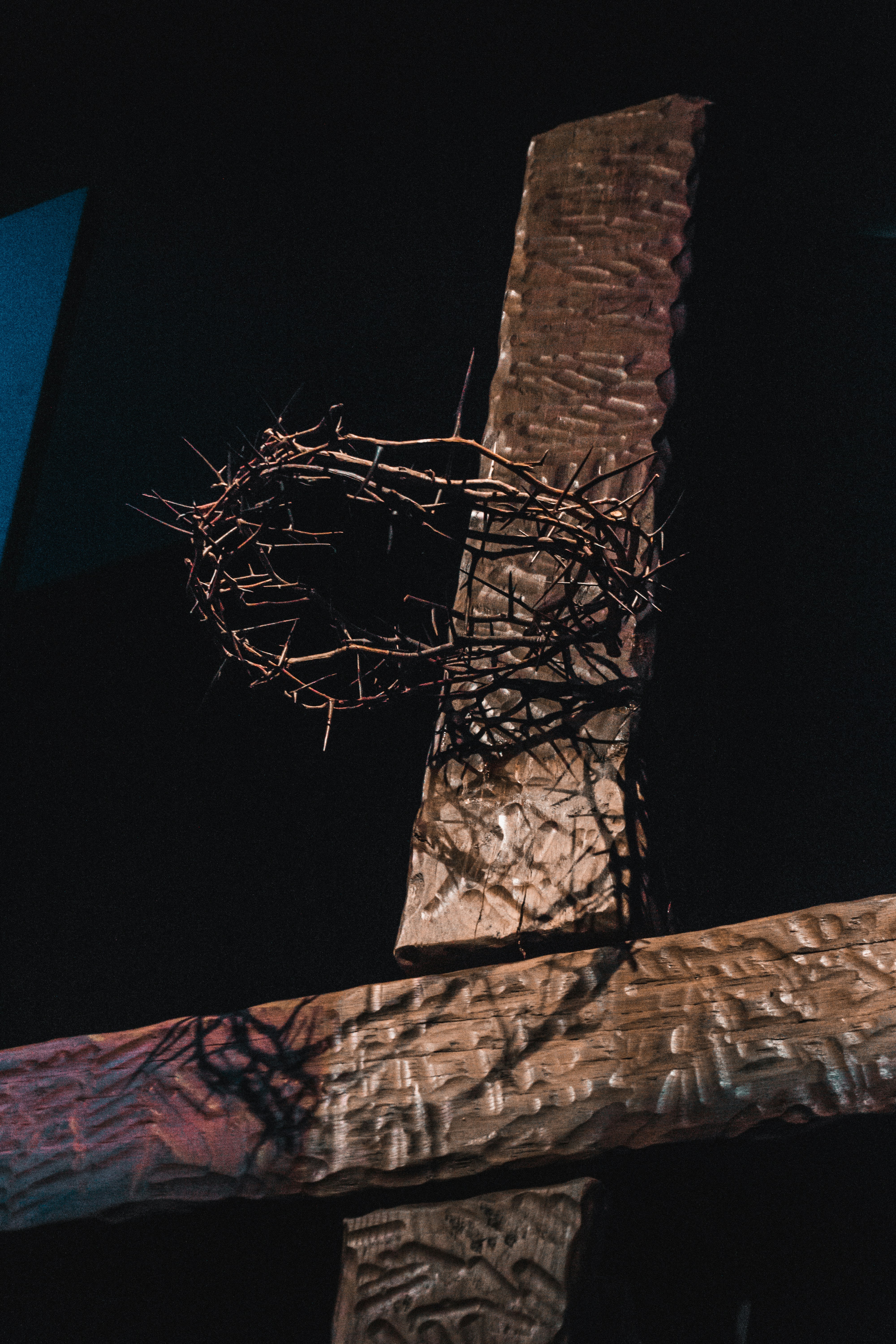
  • THE MOCKING – The Bible says, “The soldiers took Jesus into the courtyard of the governor’s headquarters and called out the entire regiment. They dressed Him in a purple robe, and they wove thorn branches into a crown and put it on His head. Then they saluted Him and taunted, “Hail! King of the Jews!” And they struck Him on the head with a reed stick, spit on Him, and dropped to their knees in mock worship.” (Mark 15:16-19)
  • Beyond the physical pain of the crown of thorns and their blows, further humiliation was heaped on Jesus as the soldiers dropped to their knees in “mock worship.” 
  • Psalm 95:6 says, “Come, let us worship and bow down. Let us kneel before the Lord our maker.” This is not what the soldiers were doing. Instead, they were mocking the Lord and the worship of Him. Worship is serious business to God, and He doesn’t like it when people take it lightly or make fun of it.
  • Before we judge the soldiers too harshly, let’s take a minute and consider when we’ve come before the Lord with a lack of sincerity in our hearts. Have we possibly grown so accustomed to approaching His throne with boldness that we now approach it with apathy? 
  • Before we move on, take a moment and ask the Lord to forgive you for when you’ve been guilty of your own form of mock worship.
  • THE CROSS (Have volunteers stand the cross up or lift it up where people can see it. You may have to lean it against the wall or the stage.)
  • “When they were finally tired of mocking Him, they took off the purple robe and put His own clothes on Him again. Then they led Him away to be crucified. A passerby named Simon, who was from Cyrene, was coming in from the countryside just then, and the soldiers forced him to carry Jesus’ cross. And they brought Jesus to a place called Golgotha, which means ‘place of the skull.’” (Mark 15:19-22) 
  • The Cross Was Large and Heavy – After His terrible beating, the weight of the cross must have been too much for Jesus because Simon of Cyrene had to help Him. It’s believed that the cross probably weighed around 165 lbs and was most likely eight to twelve feet high with a cross beam about six feet wide. Little is known about what type of tree Jesus was crucified on. Some legends say it was the dogwood tree, but this is doubtful. The fact is, it doesn’t really matter what type of tree the cross was made from. What matters is what happened on that cross. (Expound if needed)
  • We Don’t Worship the Cross. It was simply the instrument of death where Jesus was crucified. But we do worship the One who hung on that cross. The One who gave His life for us on the cross has transformed a symbol of death into a symbol of Divine Love. 
  • THE NAILS  – Then, the unthinkable happened. We read in the Bible “The soldiers nailed Him to the cross…” (Mark 15:24)
  • (Take the three nails and drive them into the cross where His hands and feet would have been – The point is to make noise with the hammer and nails. You can combine the hammering with the sharing of the next part if you want.)
  • The Nails Were Painful – The soldiers actually took each of His hands and physically nailed them to the cross, maybe through His wrists so He wouldn’t pull away. Then, they did the same thing to each of His feet. The pain of the nails going through His body and the blood pouring from these wounds were amplified by the weight of His body pulling against the nails. (Expound if necessary)
  • The Nails are Symbols of both Sin and Redemption – They represent the gravity of our sins, serving as a stark reminder of the pain and suffering caused by our disobedience. Yet, they also symbolize redemption, as Jesus willingly endured this torment to atone for our transgressions. We should all just take a minute and say, “Thank you, Jesus.”
  • Activity(Have the people reflect on their own sins for which Jesus was crucified. Then, have them write them out on the pieces of paper they were given in their bulletin shells upon entering.) – Note: Have the people hold on to their papers after writing. We will use them again later in the service.
  • Pray and thank the Lord for the pain and suffering He endured for our redemption
  • HIS DEATH – The Bible continues, “It was nine o’clock in the morning when they crucified Him… At noon, darkness fell across the whole land until three o’clock. Then, Jesus called out with a loud voice, ‘Eloi, Eloi, lema sabachthani?’ which means ‘My God, my God, why have You forsaken Me?’ Then Jesus uttered another loud cry and breathed His last. And the curtain in the sanctuary of the Temple was torn in two, from top to bottom. When the Roman officer who stood facing Him saw how He had died, he exclaimed, ‘This man truly was the Son of God!’” (Mark 15:25, 33-39)
  • In the same moment when the Jewish leaders were rejoicing in the death of Jesus, this Roman centurion proclaimed with reverence the glory of Jesus. He proclaimed that Jesus was the Son of God, which drives home the words of Jesus to Nicodemus earlier in His ministry. He said, “For this is how God loved the world: He gave His one and only Son, so that everyone who believes in Him will not perish but have eternal life.” (John 3:16)
  • What This Means For Us – “You were dead because of your sins and because your sinful nature was not yet cut away. Then God made you alive with Christ, for He forgave all our sins. He canceled the record of the charges against us and took it away by nailing it to the cross. (Colossians 2:13-14)
  • Through Jesus, we have redemption as we release our sins to Him.
  • Share a Personal or Shared Testimony/Gospel Presentation
  • Ask the following Question: What sins do you need to release to Jesus tonight?
  • Decision Response Activity – (Have the people bring their papers on which they wrote their sins and bring them forward to leaders to nail them to the cross while also picking up their bread and juice for communion)
  • Lead the people through Communion
  • Closing

* Photo courtesy of Alicia Quan

O Come All Ye Faithful – From Bonnie Prince Charlie to Twisted Sister

Adeste Fideles, is a Latin hymn translated O Come, All Ye Faithful. The official authorship has been given to John Francis Wade (1711-1786), whose name is included on most, if not all, of the earliest manuscripts. Even so, the lyrics and tune appear to be the result of a collaboration of several people over hundreds of years, although what we sing today is a 19th-century version of an 18th-century compilation.

Some historians believe Adeste Fideles is not actually about Christ, but is instead about Bonnie Prince Charlie, grandson of James II, England’s last Catholic king. In 1745, Bonnie Prince Charlie led a rebellion to restore the Catholic House of Stuart to the English throne. Fideles is believed to mean Faithful Catholic Jacobites. Bethlehem is also believed to be a term for England. If this is true, the song is a war cry shouting out, “Come and Behold Him, Born the King of the English.” 

More recently, others believe the 1980’s rock band Twisted Sister sampled the melody and chord structure of their hit, We’re Not Gonna Take It from O Come, All Ye Faithful. The melodies of the songs are very similar, but it’s purely coincidental. Jay Jay French, lead guitarist of Twisted Sister stated in a radio interview that the band discovered the similarities and recorded a version of O Come, All Ye Faithful for their Christmas album A Twisted Christmas. 

I don’t know about you, but I can ignore the possibility of O Come, All Ye Faithful having its origins with Bonnie Prince Charlie if it results in a song that God can use to get a rock group like Twisted Sister to sing “O Come, Let Us Adore Him, Christ the Lord!”

Click here to hear Adeste Fideles by Andrea Bocelli

Click here to hear O Come, All Ye Faithful by Tasha Cobbs

Click here to hear O Come, All Ye Faithful by Twisted Sister 

Jesus Numbers – Good Friday/Easter

2000 Years Ago

1 Savior

1 Betrayal

1 Ear Restored

1 Arrest

12 Disciples Run

1 Trial

1 Whipping Post

1 Lead Tipped Whip

39 Lashes

1 Crown of Thorns

1 Cross

1 Hill

3 Nails

5 Wounds

2 Thieves

1 Robe

6 Hours

7 Sayings

1 Mourning Mother

1 Ripped Curtain 

1 Borrowed Tomb

75 lbs of myrrh and aloes

3 Days Dead

1 Stone 

1 Seal 

2 Guards

2 White Robed Angels

0 Bodies in the Tomb

*Image courtesy of Vaishakh Pillai

Manger Throne, a New Classic

All across the nation and around the world, it’s beginning to look a lot like Christmas. However, it many houses of worship, even those with the best decorations, it doesn’t yet sound much like Christmas. There are many reasons for this (and I’ll write more in future posts) but one reason is that the sound and feel of many Christmas carols and songs are often quite different from many modern worship songs. Christmas carols are filled with nostalgia and wonder, yet many are written in mysterious sounding keys with varying time signatures and often have hard to understand lyrics. On the other hand, worship songs are often written in straightforward time signatures with predictable (I mean that in a good way) lyrics and (dare I say it) easier to play keys. 

It is possible to have the best of both worlds, but like many good things, it takes some effort. That’s why I’m always pleased to hear new Christmas worship songs that are strong musically and lyrically and quite frankly, work well for powerful worship experiences. One of my new favorites is the new Christmas anthem Manger Throne, written by Jonathan Smith and Tony Wood and released by Phil Wickham. 

Here’s what Wickham recently shared with CCM magazine: “More than a Christmas song, this is a worship song… Every Christmas season, when I take the time to think on it, I am amazed in a greater way of the moment when Creator stepped into creation. God in human flesh. Heaven walking on earth. Everything about how Jesus came was different than what we would have expected, and also far better. He met us right in our humanity.” 

Check out Manger Throne at one of the links below. 

*Click here for the official music video 

**Click here for the lyric video 

***Click here for ccm article mentioned in the post.

Merry Christmas!

*Image courtesy of ProChurch Tools

What’s Your Vibe?

A few years ago, I was at a worship ministry conference with some friends. The speakers were great. The breakouts were informative. The worship music was amazing. But I was conflicted in my thoughts, in my heart, and in my spirit. I found the picture above, taken during that conference. That’s me, front and center, in the midst of a thousand worshipers, with my hands in my pockets and my head down.

I think my introspection during that conference happened when I attended a post session gathering at a nearby hotel. I met one of the breakout speakers and spoke some about the topic on which he would be sharing. Then, he asked the question that I haven’t been able to forget.

He asked me, “Hey, what’s your vibe?”

“I’m sorry,” I said. “What?”

“What’s your church vibe?” he asked.

“I’m not sure I understand your question,” I replied.

He chuckled and said, “I mean, do you have a Hillsongs vibe, a Bethel vibe, an old Willow type vibe, a Vous Church vibe, or someone else? I mean, who are you trying to be like?”

Now, I don’t live in the dark ages. I know and admire all of those churches, but I’m not trying to be “like” any of them.

I guess I drifted off in thought some so he asked once again, “Come on, man. Who are you trying to be like?”

I smiled nervously and answered, “Jesus.”

He chuckled and quickly moved on to someone else with a different vibe.

As I write this, I’m at another conference. Once again, I’m conflicted and distant. Not because of the conference. It’s great and I’m learning a lot. But I can’t stop thinking about that conference a few years ago. I can’t help but wonder if I’m living up to my answer.

My prayer today is, “Lord, help me to always strive to be like You. Forgive me if I’ve ever reduced You or Your church to a vibe, a musical style, or a brand. You are my Lord. Help me die to myself daily, take up my cross, and follow You.”

Simon of Cyrene

Then they led Him away to be crucified. Along the way, they came across a man named Simon, who was from Cyrene, and the soldiers forced him to carry Jesus’ cross. And they went out to a place called Golgotha (which means “Place of the Skull”). (Matthew 27:31-32)

Jesus, weakened from the flogging, cannot make it up Golgotha’s hill. When this becomes obvious to the Roman soldiers, they command Simon of Cyrene to help Jesus. Simon bends to help and lifts the cross, places it on his own back, and looks directly at Jesus with the crown of thorns pressed into His forehead with blood streaming down His swollen face. Simon feels for the man, but can’t help but wonder, “What if they confuse us? What if they think that I’m Jesus since I’m carrying the cross and end up crucifying me?” But this doesn’t stop Simon from serving Jesus. Instead, he takes up the cross and follows Jesus to Golgotha.

But who was Simon of Cyrene? We know he was a real historical person who was there at a real historical moment in time. We know that Simon was from Cyrene, a city in North Africa, in today’s Libya. He was a foreigner, an African, but it’s not certain if he was Jew or Gentile because the name Simon was common for both Jews and Greeks. Finally, we know that Simon helped the Lord in His final moments by carrying His cross. In Luke, Simon is reported to have carried the cross behind Jesus as He walked to Golgotha. Luke is the only one of the Gospels that says Simon carried the cross behind Jesus. All the other Gospels that mention Simon simply say that he carried the cross. Could it be possible that Luke wants us to recall Luke 9:23 where Jesus said, “If any of you wants to be my follower, you must give up your own way, take up your cross daily, and follow me.”? Jesus had challenged His disciples with this scripture, but it was Simon of Cyrene who was available in the moment to serve the Lord. Though far from bearing the weight of our sin, Simon did at least bear the weight of the wooden cross. In that moment, Simon of Cyrene is a portrait of a true disciple of Jesus.

May we all be as true and faithful as Simon of Cyrene, ready to pick up our cross and follow Jesus at a moment’s notice.

Lord, thank You for the example of Simon of Cyrene. Please help me be ready to follow You wherever You may lead.

*Photo courtesy of James and Unsplash.com

The Political Dance of Pilate and the Jews

Now Jesus was standing before Pilate, the Roman governor. “Are you the king of the Jews?” the governor asked Him. Jesus replied, “You have said it.” But when the leading priests and the elders made their accusations against Him, Jesus remained silent. “Don’t you hear all these charges they are bringing against you?” Pilate demanded. But Jesus made no response to any of the charges, much to the governor’s surprise.” (Matthew 27:11-15)

If the story of the murder of Jesus weren’t so tragic, the scene here would be humorous in a dark sort of way. Pilate, the Roman Governor, and the Jews basically hate each other. However, they are forced to dance a strange dance of hated political bedfellows. Pilate doesn’t want to give them anything they want, however he must still keep the peace at all costs. The Jewish religious leaders don’t want Jesus to slip out of their hands, so they are forced to act like they have respect for Pilate. And then there’s Jesus. He is about to walk through the most tragic time of his entire life in order to bestow grace to the world, but He surprisingly remains silent and in total control. Of those in the scene, Jesus is the only one who does not react out of fear or jealousy. His path was completely determined by God’s will and His love for us. 

In the midst of the chaotic, well balanced, fear laden, hate driven dance between Pilate and the Jewish leaders, Jesus is silent, but still in complete control. He is Lord in His submission to the will of God and in the face of the hateful actions of His enemies. He refuses to be goaded into saving or protecting Himself. What is His plan of response to all that is happening? In spite of all that is happening, He dies for us – for you and for me. 

Prayer: Lord, I am in awe of Your restraint and of Your grace. Thank You for showing me that I too can be self-controlled when I fully submit to Your will. 

The Shepherds and the Savior – Interactive Christmas Sermon for Children

gareth-harper-dABKxsPTAEk-unsplash

(The following is an interactive children’s sermon for the Christmas season)

This year, I’m going to need some help in telling my Christmas story. Can I count on you all to help? Great…let’s practice first. When I say these words, I want you to follow my instructions. And every time you hear me say them in my story, you go ahead and respond…

SHEPHERD/S – Raise your hand and say (that’s me!)

ANGEL/S – Shake both hands back and forth over your head and say (Praise God!)

SHEEP – Fluff your hair and say (Baaaaaah)

GOOD NEWS – Make a fist and pump it shouting (Hooray!)

Let’s practice one more time…

SHEPHERD/S – Raise your hand and say (that’s me!)

ANGEL/S – Shake both hands back and forth over your head and say (Praise God!)

SHEEP – Fluff your hair and say (Baaaaaah)

GOOD NEWS – Make a fist and pump it shouting (Hooray!)

Ok – you think you have it?  Let’s begin:

I want to tell you a story – and YOU have a very important part to play.  Listen now as I share.

Many, many years ago, in the town of Bethlehem, there were some SHEPHERDS (that’s me!) guarding their SHEEP (Baaaah) at night in the field. 

It was like any other night. The sky was clear and full of stars. The SHEEP (Baaaaah) were quietly resting and the SHEPHERDS (that’s me!) were quietly talking.

When suddenly, out of nowhere, right in front of the SHEPHERDS (that’s me!) came an ANGEL (Praise God!)

“Ooooooooo!” said the SHEPHERDS (that’s me!) looking so frightened!

“Don’t be afraid” said the ANGEL (Praise God!) I’m here with GOOD NEWS (Hooray!) for you; 

“GOOD NEWS (Hooray) which will make everyone very happy!”

“I’ve come to tell you that a Savior has been born. His name is Jesus. You’ll know who he is because you’ll find him wrapped up in blankets, lying in a manger!” said the ANGEL (Praise God!)

“The Savior has been born!” said the SHEPHERDS! (that’s me!) That was very GOOD NEWS (Hooray!) The whole world had been waiting for the Savior to be born!

And with that the whole sky was filled with ANGELS (Praise God!) They sang “Praise God in heaven! Peace on earth to everyone who pleases God!”

Then it was quiet again, and all that was left in the field were the SHEPHERDS (that’s me!) and the SHEEP (Baaaaah).

“Let’s go and see if we can find this Savior named Jesus!’ the SHEPHERDS (that’s me!) said to each other.

They hurried off, leaving their SHEEP (Baaaaah) who were now fast asleep.

The SHEPHERDS (that’s me!) found Mary and Joseph in the manger, just like the ANGEL (Praise God) had said. With them, lying in the manger, just like the ANGEL (Praise God!) said, was Jesus.  

Mary and Joseph were hardly expecting any visitors that night; they certainly weren’t expecting to see any SHEPHERDS (that’s me!) come to their stable.

But the SHEPHERDS (that’s me) knew they had to tell someone! They just couldn’t go back to their SHEEP (Baaaah). They couldn’t keep GOOD NEWS (Hooray!) like this to themselves…they had to tell EVERYONE!

This kind of GOOD NEWS (Hooray!) was too special to keep quiet about – the SHEPHERDS (that’s me!) had to go and tell others. So off they went to Bethlehem, telling everyone about the birth of Jesus.  That was great!!! Thank you so much for helping me tell the Christmas Story – (give yourself a hand!)

But remember, when I told you that you had an important part to play in my story. The important part doesn’t stop here. It’s just beginning.  That first Christmas might have been over 2,000 years ago, but the GOOD NEWS (Hooray!) is something we still need to tell others about today, like the SHEPHERDS (that’s me!) did that first Christmas.

That’s right – all of us have a part to play…we all need to tell others about our Savior, Jesus. 

If you would be willing to tell others about Jesus, like the SHEPHERDS (that’s me!) did, raise your hand and say (“That’s me!).

Awesome! I knew I could count on you!

Merry Christmas.

(Photo courtesy of Gareth Harper of Unsplash)