Scripture – Carrying the cross by Himself, He went to the place called Place of the Skull. There they nailed Him to the cross. Two others were crucified with Him, one on either side, with Jesus between them… When the soldiers had crucified Jesus, they divided His clothes among the four of them. They also took His robe, but it was seamless, woven in one piece from top to bottom. So they said, “Rather than tearing it apart, let’s throw dice for it…”
Standing near the cross were Jesus’ mother, and His mother’s sister, Mary (the wife of Clopas), and Mary Magdalene. When Jesus saw His mother standing there beside the disciple He loved, He said to her, “Dear woman, here is your son.” And he said to this disciple, “Here is your mother.” And from then on this disciple took her into his home.”
Jesus knew that His mission was now finished, and to fulfill Scripture He said, “I am thirsty.” A jar of sour wine was sitting there, so they soaked a sponge in it, put it on a hyssop branch, and held it up to His lips. When Jesus had tasted it, He said, “It is finished!” Then He bowed His head and gave up His spirit.” (John 19:17-18, 23-24, 25-30)
Devotion – As we meditate on John 19 today, we find ourselves at the foot of the cross where Jesus, the Son of God, is crucified. This moment is a powerful reminder of the immense suffering He willingly endured out of His love for humanity. Jesus’ journey to Calvary was marked by humiliation, agony, and betrayal, yet His love remained steadfast.
In John 19:30, Jesus utters the words, “It is finished.” With these words, Jesus declared the completion of His mission to save us from our sins. The significance of His suffering cannot be overstated-it was a sacrifice made so that we might receive eternal life. Reflecting on the depth of Jesus’ love and the extent of His suffering invites us to consider the vastness of His grace. Despite the pain and suffering, His actions demonstrate a profound love that transcends human understanding. Through His death, we gain life. As you contemplate the significance of Good Friday, let these truths deepen your appreciation for Jesus’ sacrifice.
Reflection Questions:
What emotions do you experience when you envision Jesus on the cross, willingly taking on the burden of sin for humanity?
How does Jesus’ declaration, “It is finished,” impact your understanding of His work of salvation?
In what ways can you live out the love and grace that Jesus demonstrated through His suffering and sacrifice?
Prayer – Heavenly Father, as I reflect on the profound suffering of Jesus on the cross, I am overwhelmed by His boundless love for me. Thank You for the gift of salvation and for the sacrifice that was made on my behalf. Help me to live in a way that reflects Jesus’ love and grace to others. May my heart be forever grateful, and may I draw closer to You each day. In Jesus’ name, Amen.
Worship Activity – Make plans to attend a Good Friday service this evening. As you observe communion, reflect upon all Jesus has done for you.
*This devotion was originally written for “The Week that Changed Everything” Holy Week Devotional by Celebration Church NOLA
Scripture –The soldiers took Jesus into the courtyard of the governor’s headquarters and called out the entire regiment. They dressed Him in a purple robe, and they wove thorn branches into a crown and put it on His head.Then they saluted Him and taunted, “Hail! King of the Jews!” And they struck Him on the head with a reed stick, spit on Him, and dropped to their knees in mock worship.When they were finally tired of mocking him, they took off the purple robe and put His own clothes on Him again. Then they led Him away to be crucified.
And they brought Jesus to a place called Golgotha (which means “Place of the Skull”). Then the soldiers nailed Him to the cross. They divided His clothes and threw dice to decide who would get each piece. It was nine o’clock in the morning when they crucified Him… At noon, darkness fell across the whole land until three o’clock. Then at three o’clock Jesus called out with a loud voice, “Eloi, Eloi, lema sabachthani?” which means “My God, my God, why have You abandoned Me?” Then Jesus uttered another loud cry and breathed His last.And the curtain in the sanctuary of the Temple was torn in two, from top to bottom. When the Roman officer who stood facing Him saw how He had died, He exclaimed, “This Man truly was the Son of God!”(Mark 15:16-20, 22, 24-25, 33, 37-39)
Today is Good Friday. Over the years, this day has been called Holy Friday, Mourning Friday, High Friday, Silent Friday, and even Sorrowful Friday. The Danish are known to call it Long Friday, which is a suitable name for the day when Jesus spent multiple hours undergoing a mockery of a trial, merciless beatings, crucifixion, and death.
At the time, crucifixion was the type of execution reserved for serious criminals and slaves. Jesus, the Son of God, was flogged with a lead-tipped whip and forced to carry the very cross He would die upon. Upon His head was a crown of thorns meant to humiliate Him further while inflicting further pain. On the hill where He would die, the soldiers nailed Jesus to the cross and lifted Him up between two thieves. For six hours, Jesus bled and struggled to breathe as the crowds mocked Him. Halfway through His agony, sometime around noon, the sky grew dark. Before He died, Jesus cried out, “Father, in Your hands I commend My Spirit,” and then, He died.
Yes, it was certainly a long Friday. The Holy Son of God had been lifted up high on the cross so all could see His death. His followers mourned, and His mother was obviously sorrowful. Even though the crowd was loud, there were certainly times of silence, for many, there was nothing more to say. What’s so good about this Friday when Jesus suffered for hours and finally died on a cross?
Everything. The price was paid. Redemption had been won.
Prayer: Lord, thank You for Your sacrifice that paid the price for my sins. In Jesus’ name, Amen.
Follow-up Activity: Read Mark 15 on your own or with your family and then write a prayer to the Lord, thanking Him for the price He paid for our salvation.
Say something brief like this – “Our ushers are preparing now to receive the offering. We’re thankful for all of those who give, whether online or here in person. Your giving makes a difference. It’s Good Friday, the day we remember what Jesus did for us on the cross. He gave His life for us not because we’ve earned or deserved it but because He loves us. The Lord gave so freely to us that it’s easy to give back to Him and that’s what we’re doing now before we continue with the rest of the service. You can give using the offering envelopes or online at celebrationchurch.org. Let’s pray and then we’ll receive the offering.”
The Two Gardens Video –(During the Video, offering is taken and the cross is placed center stage.)
Good Friday Sermon
Spoken transition – Say something like, “Jesus said, “Not my will, but Yours be done.” His sacrifice on the cross was unprecedented in its selflessness, embodying a love that transcends human understanding by willingly taking on the sins of all humanity. This profound act of grace offered redemption and hope, transforming the narrative of sin and separation from God into one of reconciliation and eternal life. Through His death and resurrection, Jesus redefined the concept of sacrifice, establishing a new covenant that continues to inspire and change lives across generations. Simply put, He died so that we might live. This week, we’ve followed Jesus on a journey from His triumphal entry to His cleansing of the temple. From His disagreements with the Pharisees to His anointing at Bethany. We’ve reflected on how He washed the feet of His disciples only to have one of them betray Him. He was arrested, tried, and condemned to death. Tonight, we’re going to reflect on His crucifixion and the bloody price He paid for us.
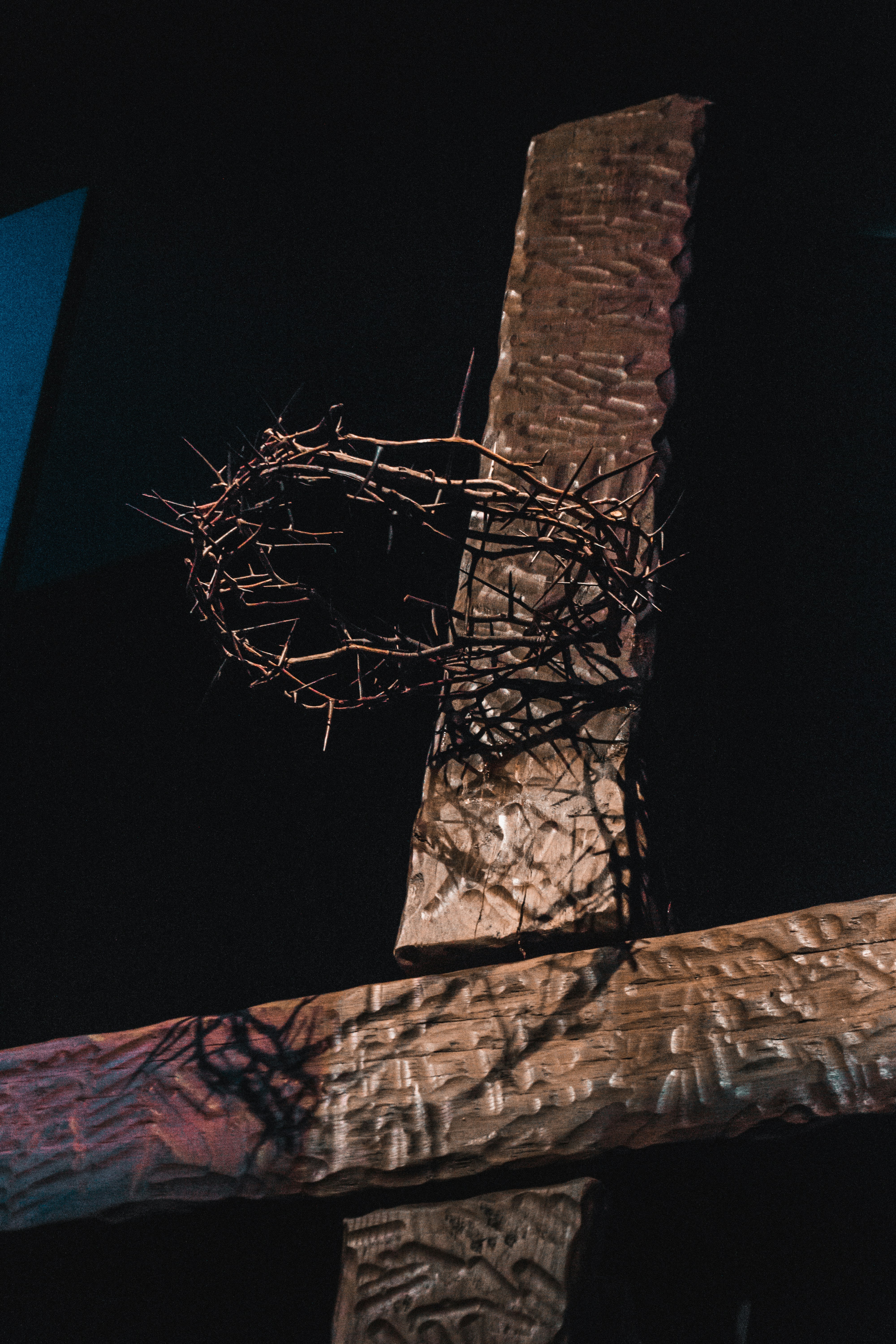
THE MOCKING – The Bible says, “The soldiers took Jesus into the courtyard of the governor’s headquarters and called out the entire regiment. They dressed Him in a purple robe, and they wove thorn branches into a crown and put it on His head. Then they saluted Him and taunted, “Hail! King of the Jews!” And they struck Him on the head with a reed stick, spit on Him, and dropped to their knees in mock worship.” (Mark 15:16-19)
Beyond the physical pain of the crown of thorns and their blows, further humiliation was heaped on Jesus as the soldiers dropped to their knees in “mock worship.”
Psalm 95:6 says, “Come, let us worship and bow down. Let us kneel before the Lord our maker.” This is not what the soldiers were doing. Instead, they were mocking the Lord and the worship of Him. Worship is serious business to God, and He doesn’t like it when people take it lightly or make fun of it.
Before we judge the soldiers too harshly, let’s take a minute and consider when we’ve come before the Lord with a lack of sincerity in our hearts. Have we possibly grown so accustomed to approaching His throne with boldness that we now approach it with apathy?
Before we move on, take a moment and ask the Lord to forgive you for when you’ve been guilty of your own form of mock worship.
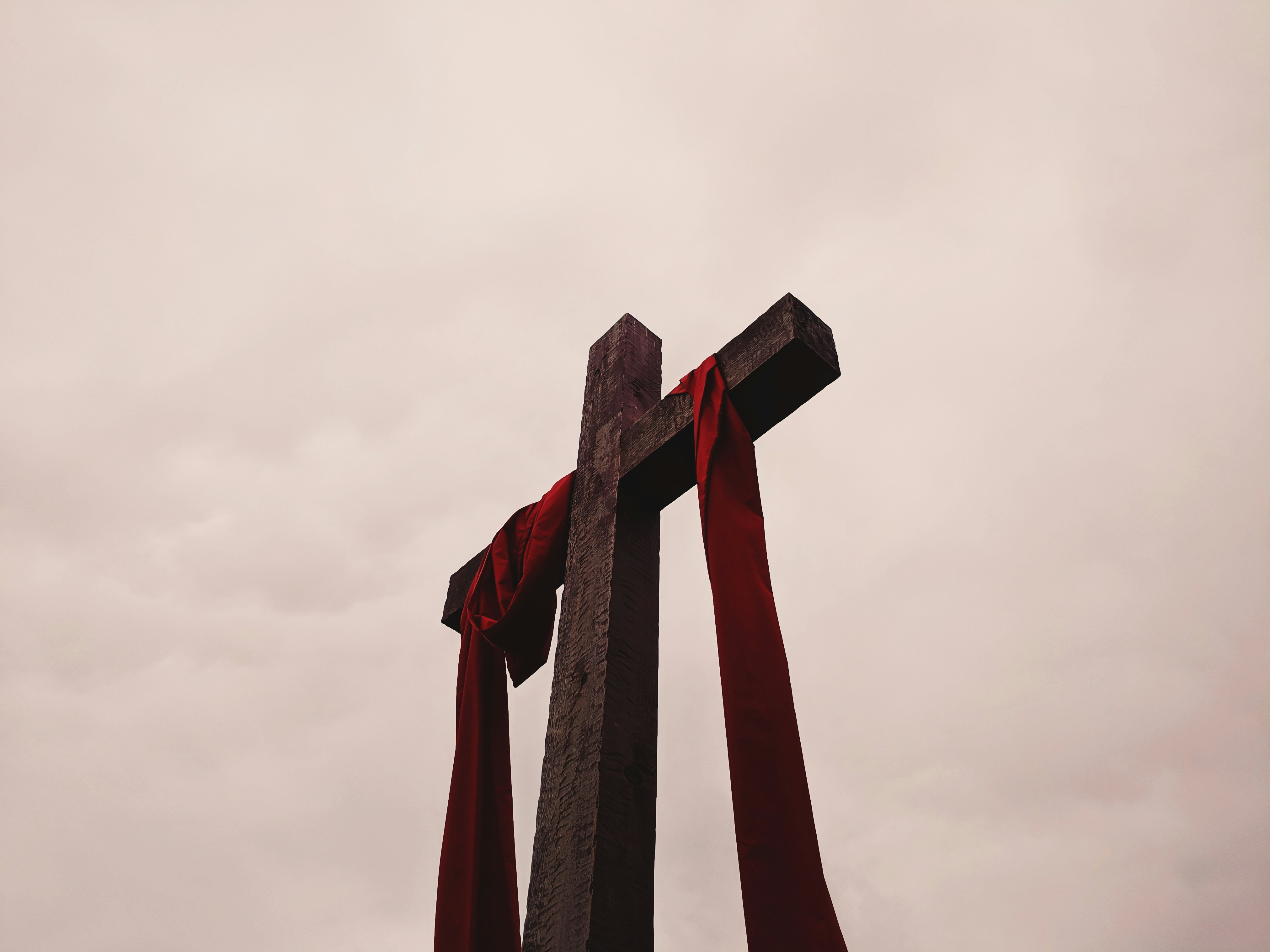
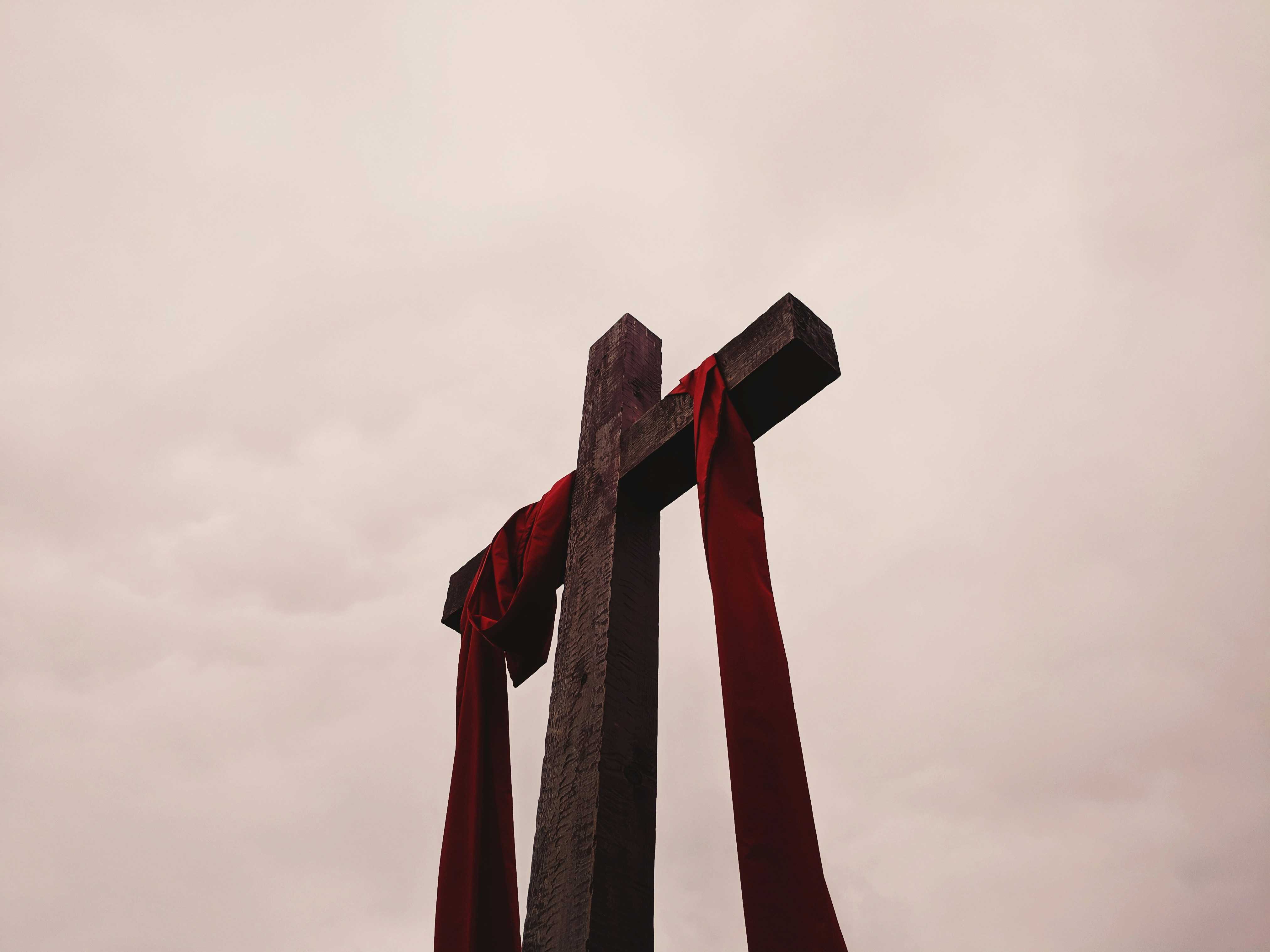
THE CROSS(Have volunteers stand the cross up or lift it up where people can see it. You may have to lean it against the wall or the stage.)
“When they were finally tired of mocking Him, they took off the purple robe and put His own clothes on Him again. Then they led Him away to be crucified. A passerby named Simon, who was from Cyrene, was coming in from the countryside just then, and the soldiers forced him to carry Jesus’ cross. And they brought Jesus to a place called Golgotha, which means ‘place of the skull.’” (Mark 15:19-22)
The Cross Was Large and Heavy – After His terrible beating, the weight of the cross must have been too much for Jesus because Simon of Cyrene had to help Him. It’s believed that the cross probably weighed around 165 lbs and was most likely eight to twelve feet high with a cross beam about six feet wide. Little is known about what type of tree Jesus was crucified on. Some legends say it was the dogwood tree, but this is doubtful. The fact is, it doesn’t really matter what type of tree the cross was made from. What matters is what happened on that cross. (Expound if needed)
We Don’t Worship the Cross. It was simply the instrument of death where Jesus was crucified. But we do worship the One who hung on that cross. The One who gave His life for us on the cross has transformed a symbol of death into a symbol of Divine Love.
THE NAILS – Then, the unthinkable happened. We read in the Bible “The soldiers nailed Him to the cross…” (Mark 15:24)
(Take the three nails and drive them into the cross where His hands and feet would have been – The point is to make noise with the hammer and nails. You can combine the hammering with the sharing of the next part if you want.)
The Nails Were Painful – The soldiers actually took each of His hands and physically nailed them to the cross, maybe through His wrists so He wouldn’t pull away. Then, they did the same thing to each of His feet. The pain of the nails going through His body and the blood pouring from these wounds were amplified by the weight of His body pulling against the nails. (Expound if necessary)
The Nails are Symbols of both Sin and Redemption – They represent the gravity of our sins, serving as a stark reminder of the pain and suffering caused by our disobedience. Yet, they also symbolize redemption, as Jesus willingly endured this torment to atone for our transgressions. We should all just take a minute and say, “Thank you, Jesus.”
Activity –(Have the people reflect on their own sins for which Jesus was crucified. Then, have them write them out on the pieces of paper they were given in their bulletin shells upon entering.) – Note: Have the people hold on to their papers after writing. We will use them again later in the service.
Pray and thank the Lord for the pain and suffering He endured for our redemption
HIS DEATH – The Bible continues, “It was nine o’clock in the morning when they crucified Him… At noon, darkness fell across the whole land until three o’clock. Then, Jesus called out with a loud voice, ‘Eloi, Eloi, lema sabachthani?’ which means ‘My God, my God, why have You forsaken Me?’ Then Jesus uttered another loud cry and breathed His last. And the curtain in the sanctuary of the Temple was torn in two, from top to bottom. When the Roman officer who stood facing Him saw how He had died, he exclaimed, ‘This man truly was the Son of God!’” (Mark 15:25, 33-39)
In the same moment when the Jewish leaders were rejoicing in the death of Jesus, this Roman centurion proclaimed with reverence the glory of Jesus. He proclaimed that Jesus was the Son of God, which drives home the words of Jesus to Nicodemus earlier in His ministry. He said, “For this is how God loved the world: He gave His one and only Son, so that everyone who believes in Him will not perish but have eternal life.” (John 3:16)
What This Means For Us – “You were dead because of your sins and because your sinful nature was not yet cut away. Then God made you alive with Christ, for He forgave all our sins. He canceled the record of the charges against us and took it away by nailing it to the cross. (Colossians 2:13-14)
Through Jesus, we have redemption as we release our sins to Him.
Share a Personal or Shared Testimony/Gospel Presentation
Ask the following Question: What sins do you need to release to Jesus tonight?
Decision Response Activity – (Have the people bring their papers on which they wrote their sins and bring them forward to leaders to nail them to the cross while also picking up their bread and juice for communion)
THE SEVEN LAST WORDS OF CHRIST – 2024 GOOD FRIDAY SERVICE OUTLINE
OPENING
Welcome
Suggested Song – “The Lion and the Lamb”
Suggested Song – “Hallelujah For the Cross”
Communion
Song (Repeated or new)
Offering and Transition
Offering Intro and Prayer
“This is the Cross” video from Hyper Pixels Media available at this link
Transition into theSeven Last Words of Christ
INTRO: Tonight, we remember the cross. In John 3:16, when Jesus said those words, “For God so loved the world, that He gave His only begotten Son, that whosoever believeth in Him should not perish, but have everlasting life,” He knew the price He was going to pay in order to fulfill that scripture. So tonight, before we rush into the celebration of the resurrection part of Easter, we need to remember what Christ did for us on the cross. Until we understand the significance of Good Friday, we can’t fully appreciate Easter Sunday. So tonight, we’re going to remember the final words Jesus spoke before His death so we can gain that full appreciation. You can follow along with us in your special insert in your worship guide.
FIRST WORD – FORGIVENESS
Spoken – We read in Luke 23 that the Roman soldiers took Jesus to Calvary, the place of the skull, and there they nailed Him to a cross and lifted Him up for all to see. These were strong men performing their duty, but I’m sure they weren’t concerned with being respectful to Jesus, the Son of God. But Jesus’ reaction to the soldiers was the first of His seven last words. He said, “Father, forgive them, for they don’t know what they are doing.” (Luke 23:34)
Prayer Activity – Jesus offered forgiveness to the very soldiers who took His life. Through His death, He offers forgiveness to us as well if we will repent of our sins. The Apostle John writes, “If we confess our sins, He is faithful and just to forgive us of our sins and to cleanse us from all unrighteousness.” Take a moment and ask the Lord to remind you of sins of which you need to ask Him for forgiveness. Once they come to mind, pray and ask His forgiveness. (Give them a moment to pray, then lead them in prayer of forgiveness).
SECOND WORD – SALVATION
Spoken – Jesus was crucified between two thieves. One of them scoffed at Jesus, saying “So You’re the Messiah, are you? Prove it by saving Yourself – and us, too, while You’re at it. But the other criminal protested, “Don’t you fear God even when you have been sentenced to die? We deserve to die for our crimes, but this man hasn’t done anything wrong.” Then he said, “Jesus, remember me when you come into Your Kingdom.”
Spoken – Then Jesus said the second of His seven last words. To the repentant thief, He said, “I assure you, today you will be with Me in paradise.” (Luke 23:43)
PRAYER ACTIVITY – Many of us rejoice when we think about how Jesus can give us access to Heaven. However, many of us also think about those people we know who we long to be in Heaven with us. Take a few seconds and think about those people you want to see in Heaven. (Give them a moment to do so)
In your worship guide (or on a piece of paper), write the names of those you know who you desire to see in Heaven. (Give them a moment to do so) Now, pray for each of them. (Give them time to pray then lead in prayer, asking the Lord to draw these people to Himself so they can be with us and Him in Heaven.)
THIRD WORD – RELATIONSHIP
Spoken – Even as Jesus was suffering on the cross, He was concerned for the needs of others. He forgave the soldiers, offered salvation to one of the thieves, but then, He saw His mother standing beside the disciple John. He had compassion for her.
Action/Spoken – The third of Jesus’ seven last words was spoken to His mother Mary and to His disciple John. To Mary, Jesus said, “Dear woman, here is your son.” And to John He said, “Here is your mother.” (John 19:26-27)
Action/Spoken – The Bible tells us that “From then on this disciple took her into his home.” (John 19:27). Apparently, a cherished bond developed between Mary and John, in a similar way as if John had been her son. Just as Jesus showed love for His mother and His friend, He also shows love for us by helping us establish lifelong relationships with those who will help us through this life. Take a moment and thank the Lord for the cherished friends and family He has surrounded you with. You can write their names in your insert.
(After a moment, lead the people in prayer, thanking God for our family/friends/church)
FOURTH WORD – DISTRESS
Spoken – The fourth of Jesus’ seven last words reminds us of His humanity. We read in John 19:28 – Jesus knew that His mission was now finished, and to fulfill Scripture, He said, “I am thirsty.”
Action/Spoken – Jesus truly suffered during the crucifixion. He was thirsty. He felt every lash, every thorn, and every nail. He endured it all because of our sin. An older Christian song asked the question, “Does He still feel the nails every time I fail? Can He hear the crowd cry “crucify” again. Am I causing Him pain? Then I know I’ve got to change. I just can’t stand the thought of hurting Him.”
Jesus went through physical distress because of our sin. Romans 5:8 says, But God demonstrates His love for us in this: while we were still sinners, Christ died for us.” He shed His blood for You and for me. Let’s stand together. Remember this and thank Him as we sing.
Spoken – The fifth of the seven last words of Christ is Abandonment. In the Gospel of Mark, we read At noon, darkness fell across the whole land until three o’clock. Then… Jesus called out with a loud voice, “Eloi, Eloi, lema sabachthani?” which means “My God, my God, why have you forsaken Me?” (Mark 15:33-34). Many of us at one time or another may have felt abandoned in one way or another. We may have felt forsaken. We may have felt like crying out to the Lord using those words of Jesus.
Engagement
If you would say that phrase of Jesus with me starting with “My God, My God” Say – “My God, my God, why have You forsaken Me?”
Say it again – “My God, my God, why have You forsaken Me?”
Say it one more time – “My God, my God, why have You forsaken Me?”
Action/Spoken – Saying those words out loud helps us realize the abandonment Jesus must have felt when he was temporarily separated from His Father. Imagine Him crying out to God the Father from the cross. He must have felt so alone when “God made Him who had no sin to be sin for us, so that in Him we might become the righteousness of God.” (2 Corinthians 5:21)
PRAYER – (Lead the people in a pastoral prayer, emphasizing our thankfulness to Jesus for the abandonment He must have endured while on the cross.)
SIXTH WORD – TRIUMPH
Object Needed – Slightly torn swatchof material representing the Temple curtainbefore the Holy of Holies
Spoken – The sixth of the seven last words Jesus spoke before His death was “It is finished.” (John19:30)Even though it is a sad moment because Jesus is about to die. A word that is synonymous with this phrase, in Jesus’ case, is Triumph.
Action/Spoken(Pick up the material). This swatch of curtain material is symbolic of the curtain in the temple in Jesus’ day. It separated the people from the Holy of holies. Matthew 27:51 reports that when Jesus breathed His last, “the curtain in the sanctuary of the Temple was torn in two, from top to bottom.” (Tear the material into two pieces) This symbolized the division between God and humanity being removed, signifying the completion of Jesus’ redemptive work and the direct access to God made possible through His sacrifice.
Prayer – Take a moment to thank Jesus for finishing His redemptive work for us on the cross. Surrender Yourself to live in obedience to His will. (Allow them to pray silently for a moment, then lead them in prayer)
SEVENTH WORD – RELEASE
Spoken – Finally, Jesus said, “Into Your hands I commend my Spirit.”It is a bittersweet moment because, although it was sad because of His death, it was also said in anticipation of His Reunion with His heavenly Father. (Luke 23:46)
PRAYER ACTIVITY – Jesus released His Spirit to His Heavenly Father. This is a good example for us all. We all have things we’re holding back from the Lord, things we should be releasing to Him today. Right where you are, bow your heads and ask the Lord, “Who or what do I need to release to You today? Then, pray and ask God to help you release those people or items to Him.” (Give them a moment to do this)
Now, in your worship guide is a separate blank sheet of paper. On it, go ahead and write out the people or things you need to release to the Lord today. As you finish, bring them to the foot of the cross, symbolizing that you are surrendering them to Him on this Good Friday.
Action –(Give time for people to do this. The way it is done at each campus will need to be determined because of traffic flow and space.
(Prayer of Thanksgiving transitioning to a Salvation and Rededication DECISION prayer) – (AFTER everyone has brought up their items, say a Pastor led Prayer thanking God for receiving all of these items we’ve released to Him and asking Him to help us remember as well. THEN transition into a decision time focusing on Salvation and Rededication in your own words)
CULMINATION
Spoken – Jesus commending His spirit was the sweet part, but Him breathing His last was the bitter part, especially for those around Him. We look at what He went through and remember the rest of the story, but those who were with Him at the time could only understand that Jesus was dead. Their Lord, their Messiah, had departed this life. We’ve remembered the seven last words of Christ tonight. Now, let’s remember what happened next as we sing.
Share remaining Easter Service times/Challenge people to bring others
Production Notes
This service was created for the 2024 Good Friday Services at Celebration Church in New Orleans. Please forgive any church specific references you might see.
We created an insert using the image at the top of this blog post as the entire inside of our worship guide. Kudos of Brenda Miranda from our staff for the drawing and for our marketing/communications department for working it into the service materials.
We used a piece of purple material to represent the curtain in the temple that was torn in two during the Sixth Word.
We also added a small piece of blank paper (1/4 sheet) for the exercise during the Seventh Word
A cross at the front is best. If a large cross is not available, a smaller version is sufficient.
Have a keyboardist or guitarist play behind the presentations for effect.
At noon, darkness fell across the whole land until three o’clock.At about three o’clock, Jesus called out with a loud voice, “Eli, Eli, lema sabachthani?” which means “My God, my God, why have You abandoned Me?”Some of the bystanders misunderstood and thought He was calling for the prophet Elijah.One of them ran and filled a sponge with sour wine, holding it up to Him on a reed stick so He could drink.But the rest said, “Wait! Let’s see whether Elijah comes to save Him.”Then Jesus shouted out again, and He released his spirit.At that moment the curtain in the sanctuary of the Temple was torn in two, from top to bottom. The earth shook, rocks split apart,and tombs opened. The bodies of many godly men and women who had died were raised from the dead.They left the cemetery after Jesus’ resurrection, went into the holy city of Jerusalem, and appeared to many people.
The Roman officer and the other soldiers at the crucifixion were terrified by the earthquake and all that had happened. They said, “This man truly was the Son of God!” (Matthew 27:45-54)
Good Friday evokes different feelings from different people. Today’s devotional thought is an excerpt from a sermon by S.M. Lockridge, who was a prominent African-American preacher known for his dynamic sermons, including this one titled “It’s Friday.”
It’s Friday. Jesus is praying. Peter’s a sleeping. Judas is betraying. But Sunday’s coming.
It’s Friday. Pilate’s struggling. The council is conspiring. The crowd is vilifying. They don’t even know that Sunday’s coming.
It’s Friday. The disciples are running like sheep without a shepherd. Mary’s crying. Peter is denying. But they don’t know that Sunday’s coming.
It’s Friday. The Romans beat my Jesus. They robed Him in scarlet. They crowned Him with thorns. But they don’t know that Sunday’s coming.
It’s Friday. See Jesus walking to Calvary. His blood dripping. His body stumbling. And His spirit’s burdened. But you see, it’s only Friday. Sunday’s coming.
It’s Friday. The world’s winning. People are sinning. And evil’s grinning.
It’s Friday. The soldiers nail my Savior’s hands to the cross. They nail my Savior’s feet to the cross. And then they raise Him up next to criminals. It’s Friday. But let me tell you something – Sunday’s coming.
It’s Friday. The disciples are questioning. What has happened to their King. And the Pharisees are celebrating that their scheming has been achieved. But they don’t know it’s only Friday. Sunday’s coming.
It’s Friday. He’s hanging on the cross. Feeling forsaken by His Father. Left alone and dying. Can nobody save Him? Oh, it’s Friday. But Sunday’s coming.
It’s Friday. The earth trembles. The sky grows dark. My King yields His spirit. It’s Friday.
Hope is lost. Death has won. Sin has conquered and Satan’s just laughing.
It’s Friday. Jesus is buried. A soldier stands guard. And a rock is rolled into place. But it’s Friday. It is only Friday. Sunday is coming!
Prayer: Lord, don’t let me despair on this Good Friday. Help me remember that Easter Sunday is coming.
So Pilate released Barabbas to them. He ordered Jesus flogged with a lead-tipped whip, then turned Him over to the Roman soldiers to be crucified. Some of the governor’s soldiers took Jesus into their headquarters and called out the entire regiment. They stripped Him and put a scarlet robe on Him. They wove thorn branches into a crown and put it on His head, and they placed a reed stick in His right hand as a scepter. Then they knelt before Him in mockery and taunted, “Hail! King of the Jews!” And they spit on him and grabbed the stick and struck Him on the head with it. (Matthew 27:26-30)
Some might call it the beginning of the end. Condemned by Pilate, the punishment of Jesus begins. The Roman soldiers take Jesus to the Praetorium where they bind Him to the whipping post, securing His hands over His head, and exposing His back. The soldiers proceed to lash Him with a three pronged, lead tipped whip for 40 lashes. Their intention is to weaken Him physically before His crucifixion so death will come sooner. To further humiliate Him, they fashion a crown of thorns and shove it down onto His head. They spit on Him. They slapped His face. They mocked Him by crying out, “Hail! King of the Jews!”
Interestingly enough, what the Roman soldiers thought was mockery was actually truth. Jesus was King of the Jews, but to the Romans, He was a criminal to be disposed of. Jesus did not respond to their mockery and He absorbed their blows without complaint. In doing so, He was fulfilling Isaiah 53:3-5: “He was despised and rejected- a man of sorrows, acquainted with deepest grief. We turned our backs on Him and looked the other way. He was despised, and we did not care. Yet it was our weaknesses He carried; it was our sorrows that weighed Him down. And we thought His troubles were a punishment from God, a punishment for His own sins! But He was pierced for our rebellion, crushed for our sins. He was beaten so we could be whole. He was whipped so we could be healed.”
Within this physical flogging and mocking, we catch a glimpse of how foul our sins are to God. What was justifiable for us, punishment for our rebelliousness, He, an innocent man, the Son of God, took upon His own body because He loved us. We cannot appreciate how foul our sin must be to the Lord. Reflect for a moment on the punishment Jesus received in the Praetorium. That is how detestable our sin is to God. Jesus, His Son endured the brutality of the Roman soldiers so that we might be made whole. He endured physical, emotional, and spiritual degradation for our healing.
Prayer: Lord, thank You for Your grace and mercy. Thank You for enduring the lashes, the mockery, and the abuse for me.
Here’s a Good Friday Service Script based around Matthew 27 that be used either live or online. This service is around 28-30 minutes long and has room for the addition of songs and a more traditional sermon. I hope you find it helpful.
Narrator: I recently spoke with a man who wanted to join our church. He said, “I like the sermons, the music, the people. The location is perfect for me and I just became a part of a friendly life group.” “Then, what’s holding you back,” I asked. “There is one problem,” he replied. “I just don’t know what to do with Jesus. I believe in God, but it seems to me that Jesus is an entirely different subject. What should I do?”
That statement, “I just don’t know what to do with Jesus” has plagued different people for thousands of years. Jesus changes things. Mention God or angels or spirituality and people will smile and nod politely. Mention the name of Jesus and people might cry tears of joy or shout curses in anger. People throughout history have often thought, “I just don’t know what to do with Jesus.”
The Roman governor Pilate was one of those people.
Jesus Before Pilate Section
(Readers stand in a line. They can either memorize their lines, read from scripts or have cameras focus on them as they read from teleprompters.)
Reader One: After His arrest, Jesus stood before Pilate, the Roman governor.
Reader Two: (speaks as if he is Pilate)Are you the king of the Jews?
Reader Three: (speaks as if he is Jesus) You have said it.
Reader Four: But when the leading priests and the elders made their accusations against him, Jesus remained silent.
Reader Two: Don’t you hear all these charges they are bringing against you?
Reader One: But Jesus made no response to any of the charges, much to the governor’s surprise. Now it was Pilate’s custom each year during the Passover celebration to release one prisoner to the crowd-anyone they wanted.
Reader Four: This year there was a notorious prisoner named Barabbas. As the crowds gathered before Pilate’s house that morning, he asked,
Reader Two: Which do you want me to release – Barabbas, or Jesus the Messiah?
Reader Four: (agitated) Just then, Pilate’s wife sent him this message: “Leave that innocent man alone. I suffered through a terrible nightmare about him last night.”
Reader One: Meanwhile, the leading priests and the elders persuaded the crowd to ask for Barabbas to be released and for Jesus to be put to death. Pilate asked again,
Reader Two: Which of these two do you want me to release to you?
Readers One, Three and Four: (shouting) Barabbas!
Reader Two: Then what should I do with Jesus?
Readers One, Three and Four:(shouting) Crucify him!
Reader Two: Why? What crime has he committed?
Readers One, Three and Four: (Shouting) Crucify him!
Reader One: Pilate saw that he wasn’t getting anywhere and that a riot was developing. So he sent for a bowl of water and washed his hands before the crowd.
(show b-roll of Pilate washing his hands in a bowl)
Reader Two: I am innocent of this man’s blood. The responsibility is yours!
Readers One, Three and Four: We’ll take the responsibility for his death.
Reader One: So Pilate released Barabbas to them. He ordered Jesus flogged with a lead-tipped whip, then turned him over to the Roman soldiers to be crucified.
(show b-roll of Jesus being tied down for the flogging)
Transition 1
Narrator: (Washes his own hands in a basin of water) Pilate washed his hands in front of the people because he wanted to claim personal innocence regarding the death of Jesus. Whether he did this for his personal convictions or to appease his wife, he sentenced “the king of the Jews” to be crucified because he didn’t know what to do with this Jesus. The soldiers, on the other hand, seemed to have no question about what to do with Jesus. They tied Jesus to a whipping post, flogged him with a lead tipped whip, and then began to mock him.
The Soldiers Mock Jesus Section
Reader One: Some of the governor’s soldiers took Jesus into their headquarters and called out the entire regiment.
Reader Two: They stripped him and put a scarlet robe on him. They wove thorn branches into a crown and put it on his head, and they placed a reed stick in his right hand as a scepter.
Reader Three: Then they knelt before him in mockery and taunted,
All: (kneel in a mocking fashion and cry out in unison)“Hail! King of the Jews!”
Reader Four: And they spit on him and grabbed the stick and struck him on the head with it.
When they were finally tired of mocking him, they took off the robe and put his own clothes on him again.
All: Then they led him away to be crucified.
Transition 2
Narrator: (Holding a small cross in his hands) It was then that our bleeding, beaten Savior was forced to carry the cross upon which he would be crucified to the place of his own crucifixion. This was done to humiliate him and to wear him down even more. The cross could have been 3 to 4 meters high with a crossbeam another two meters wide. Depending on the thickness of the beams, it could have easily weighed between 170 and 300 lbs. The winding route Jesus carried his cross would have been from the former Antonia Fortress to what is now the Church of Holy Sepulchre. That’s a distance of about 600 meters or just over one third of a mile.
The CrucifixionSection
(Crucifixion b-roll throughout)
Reader Four: Along the way, they came across a man named Simon, who was from Cyrene, and the soldiers forced him to carry Jesus’ cross. And they went out to a place called Golgotha (which means the ‘place of the skull.)
Reader Three: After they had nailed him to the cross, the soldiers gambled for his clothes by throwing dice. Then they sat around and kept guard as he hung there.
Reader One: A sign was fastened above Jesus’ head, announcing the charge against him. It read:
All: (Slightly Louder) This is Jesus, the King of the Jews.
Reader Four: Two revolutionaries were crucified with him, one on his right and one on his left. The people passing by shouted abusing and vulgar statements, shaking their heads in mockery.
Readers One: Look at you now!
Reader Two: You said you were going to destroy the Temple and rebuild it in three days.
Reader Two:Well then, if you are the Son of God, save yourself and come down from the cross!”
Reader Four: The leading priests, the teachers of the religious law, and the elders also mocked Jesus.
Reader Two: “He saved others,” they scoffed, “but he can’t save himself!
Reader Three: So he is the King of Israel, is he? Let him come down from the cross right now, and we will believe in him!
Reader One: He trusted God, so let God rescue him now if he wants him! For he said, “I am the Son of God.”
Reader Three: Even the revolutionaries who were crucified with him ridiculed him in the same way.
Transition 3
Narrator: (holding long nails in his hands)This time must have been a very confusing time. For Jesus, he had found his friends sleeping while anxiety blood tears stained the ground around him. Most had abandoned him upon his arrest. Peter had denied him. The crowds, some of whom he had taught and fed, cried out for his crucifixion. Then He was mercilessly crucified and even those being crucified with him, those dealing with the same pain as He, were mocking and ridiculing Him. They all seemed to know what to do with Jesus. And now, God the Father knew what to do as well. He was going to allow His only Son to die.
The Death of Jesus
(Cross b-roll throughout)
Reader One: (slowly, determined) At noon, darkness fell across the whole land. At three o’clock, Jesus called out with a loud voice,
Reader Three: (shouting as if Jesus on the cross)Eli, Eli, lema sabachthani? My God, my God, why have you forsaken me?
Reader Two: Some of the bystanders misunderstood and thought he was calling for the prophet Elijah.
Reader One: One of them ran and filled a sponge with sour wine, holding it up to him on a reed stick so he could drink.
Reader Four: But the rest said, “Wait! Let’s see whether Elijah comes to save him.”
Reader Three: Then Jesus shouted out again, and he released his spirit.
Reader Four: At that moment the curtain in the sanctuary of the Temple was torn in two, from top to bottom.
Reader One:The earth shook, rocks split apart, and tombs opened.
Reader Two: The bodies of many godly men and women who had died were raised from the dead.
Reader Three: They left the cemetery after Jesus’ resurrection, went into the holy city of Jerusalem, and appeared to many people.
Reader Four: The Roman officer and the soldiers at the crucifixion were terrified by the earthquake and all that had happened. They said,
Reader One: (emphasis on man)Surely this man was the Son of God!
Readers One and Two: (emphasis on was) Surely this man was the Son of God!
All: (emphasis on Son of God) Surely this man was the Son of God!
Sermon and Decision Time(time will vary based off of comments and decision time from pastor)
Pastor: What will you do with this Jesus? That does seem to be the question, doesn’t it? Will you abandon him like many of his disciples? Will you deny him like Peter? Will you condemn him like the Pharisees? Will you wash your hands of him like Pilate? Will you mock him like the soldiers? Or Will you dare to trust Him….? (continue to present Gospel and promise of resurrection)
BETRAYED – Jesus anguished through His prayer, knowing what was about to happen. He was betrayed with a kiss by one of His disciples, a friend, or at least a pretend friend named Judas Iscariot. Judas had spent three years with Jesus. Three years. Jesus had commissioned him, fed him, loved him, taught him, cared for him, and invested in him, but Judas betrayed him for thirty pieces of silver.
It sounds like a lot of money but it was only enough to buy a small field.
DENIED – Jesus was arrested and taken away. Peter followed, at a distance, to the home of the high priest, but had to stay outside the gate until a woman opened it for him. As he entered, the woman asked Peter, “You’re not one of that man’s disciples, are you?”
“No,” he said, “I am not.”
Because it was cold, the household servants and the guards made a fire. They stood around it, warming themselves, and Peter stood with them, warming himself. Once again, someone asked Peter, “You’re not one of his disciples, are you?”
He denied it once again, saying, “No, I am not.”
Soon after, one of the slaves of the high priest, asked, “Didn’t I see you out there in the olive grove with Jesus?” And for the third time, Peter denied it.
And the rooster crowed.
CONDEMNED – Jesus was taken to Pilate, the Roman governor, who asked, “Are you the king of the Jews?”
Jesus replied, “You have said it.”
But when the leading priests and the elders made their accusations against him, Jesus remained silent, much to the governor’s surprise.
It was Pilate’s custom each year during Passover to release one prisoner to the crowd—anyone they wanted. This year there was a notorious prisoner named Barabbas.
As the crowds gathered before Pilate’s house that morning, he asked them, “Which one do you want me to release to you—Barabbas or Jesus?”
Meanwhile, the leading priests and the elders persuaded the crowd to ask for Barabbas to be released and for Jesus to be put to death.
So Pilate asked the crowd, “Then what should I do with Jesus?”
“Crucify Him!” they shouted.
“Why?” Pilate demanded. “What has He done?”
But they shouted all the louder.
Then Pilate sent for a bowl of water and washed his hands before the crowd, saying, “I am innocent of this man’s blood.”
So Pilate released Barabbas to the people. He ordered Jesus to be scourged, then turned him over to the Roman soldiers to be crucified.
SCOURGED – Then the Bible says, “They took Him and had Him scourged.” Now, scourging was such that it often killed the victim. But Jesus was a young and strong man in his early thirties. He was in good physical condition. That could be why He didn’t die from the scourging. They stripped Jesus nearly naked, and shackled His hands over His head. Then soldiers stood on either side of Him and whipped Him brutally with what’s called a flagrum or a cat o’ nine tails. It was a wooden handle that had long straps of leather protruding from it. At the end of each strap was a ball of either metal or stone, and that would tenderize the human flesh. Sometimes there were hooks at the end, usually made of metal.
The soldiers took turns doing their job, inflicting as much pain as possible on Jesus.
At this point, for Jesus, the process of death has begun.
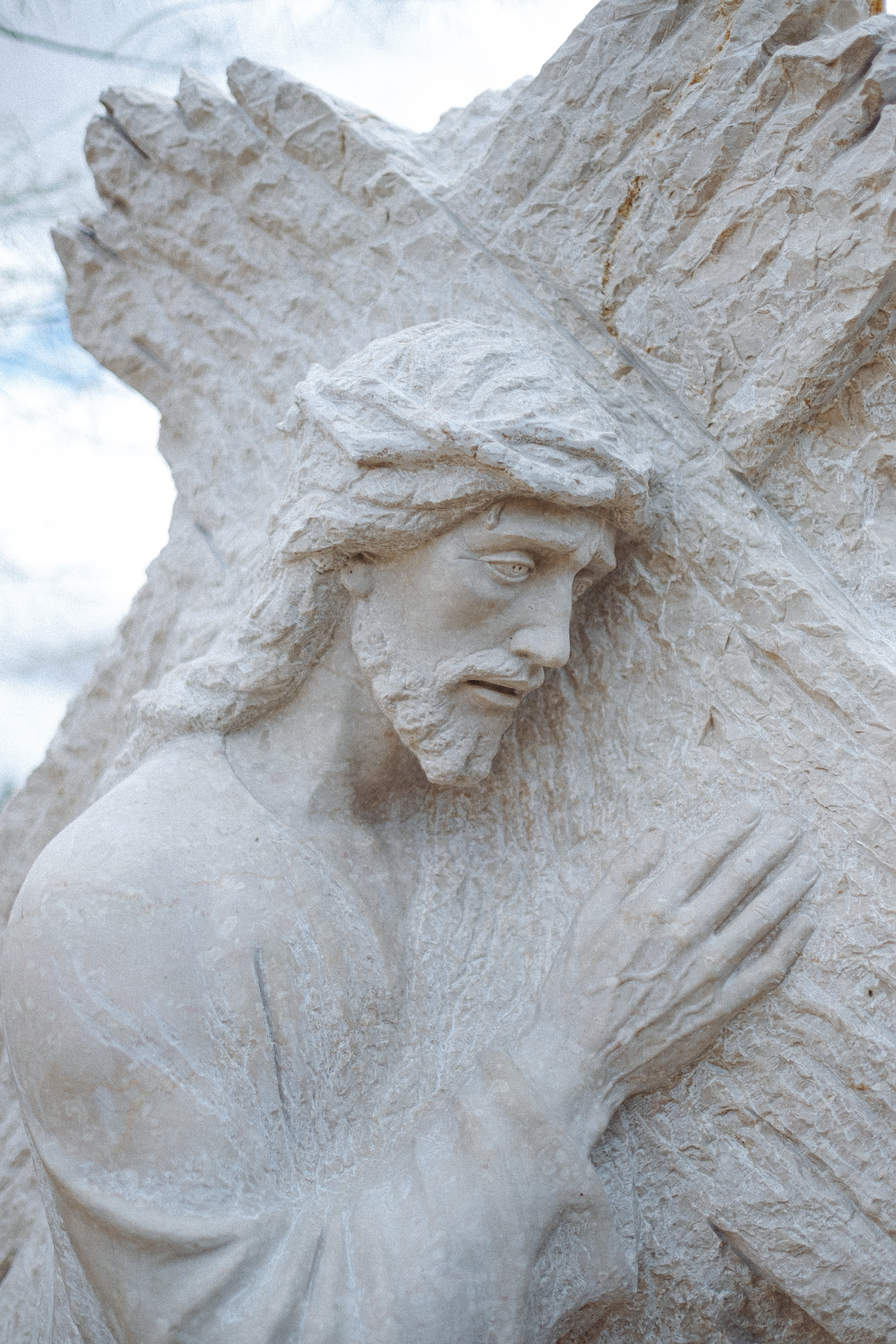
CRUCIFIED – Jesus was forced to carry His cross to the place of death. The cross was an enormous wooden beam that you would use to secure a roof in an ancient home. This was recycled timber. Other men had carried it to their own crucifixion. It was covered with their tears and their blood, and their sweat.
On the way, Jesus was so exhausted that He collapsed under the weight of the cross. Simon of Cyrene, a bystander, was commanded to help Him carry the cross to the place of crucifixion. And then, this Carpenter who Himself had driven many nails, had the equivalent of railroad spikes driven through His hands and feet.
Jesus’ cross was then lifted up and dropped into the ground, shaking His body violently.
From the cross, Jesus cried out, “My God, my God, why have You forsaken me?”
In that moment, something legal, something spiritual, something eternal happened. Jesus traded places with us. 2 Corinthians 5:21 says: “For God made Christ, who never sinned, to be the offering for our sin, so that we could be made right with God through Christ.” Adam and Eve, in the Garden, substituted themselves for God and introduced sin to mankind. But here, in this place God substituted Himself for us, defeating the power of sin.
Then Jesus cried out, “It is finished!” and then He died.
His last words might have been hard to understand, but they were triumphant just the same. Salvation through Him was available. It was finished.
Jesus died on that Friday, paying the price for our sin.
His mother cried. His disciples scattered. His enemies laughed. His followers mourned.
It happened on a Friday. Christ was killed on a Friday. God displayed His love on a Friday.




 JohnJFrady.com