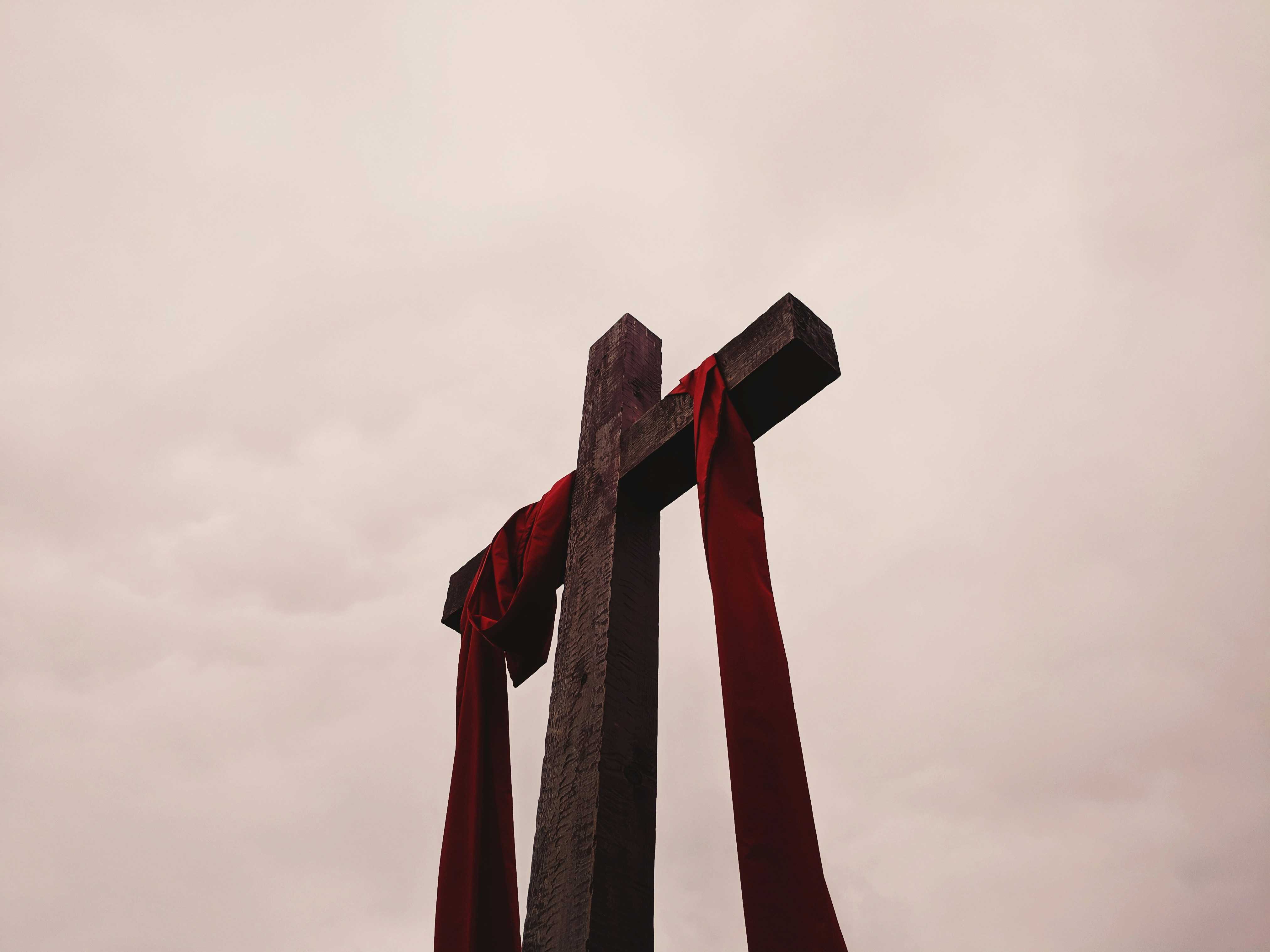
Night of Worship based on the ACTS Acrostic

The following outline was arranged for the church where I serve. It is based on the ACTS acrostic (Adoration, Confession, Thanksgiving, and Supplication) and the worship practices of King David. Please use creativity and flexibility as you plan out your transitions between songs, scriptures, and corporate prayer. I pray it will bless you as it has me.

Opening Worship Song suggestions

Adoration Section

  • Ancient Prayer of David – “O Lord, the God of our ancestor Israel, may You be praised forever and ever! Yours, O Lord, is the greatness, the power, the glory, the victory, and the majesty. Everything in the heavens and on the earth is Yours, O Lord, and this is Your kingdom. We adore You as the One who is over all things. Wealth and honor come from You alone, for You rule over everything. Power and might are in Your hand, and at Your discretion people are made great and given strength.” 1 Chronicles 29:10-12
  • Scriptural Background/Devotional Thought – King David prayed these words in front of the entire assembly as the Israelis received offerings from the people in preparation so David’s son Solomon would have the resources to build a temple for the Lord. As we prepare to enter a time of prayer and fasting, we need to spend time praising and adoring the Lord. 
  • Prayer Activity – Get into groups and everyone shares one or two attributes of God with others in the group. Then, pray as a group, praising God for who He is.
  • Worship Song SuggestionsThe Goodness of God, Been So Good

Confession Section

  • Confessional Prayer of David – “Have mercy on me, O God, because of Your unfailing love. Because of Your great compassion, blot out the stain of my sins. Wash me clean from my guilt. Purify me from my sin. For I recognize my rebellion; it haunts me day and night. Against You, and You alone, have I sinned; I have done what is evil in Your sight. You will be proved right in what You say, and Your judgment against me is just. For I was born a sinner-yes, from the moment my mother conceived me. But you desire honesty from the womb, teaching me wisdom even there. Purify me from my sins, and I will be clean; wash me, and I will be whiter than snow. Oh, give me back my joy again; You have broken me-now let me rejoice. Don’t keep looking at my sins. Remove the stain of my guilt. Create in me a clean heart, O God. Renew a loyal spirit within me. Do not banish me from Your presence, and don’t take Your Holy Spirit from me. Restore to me the joy of Your salvation, and make me willing to obey You.” Psalm 51:1-12
  • Scripture Background/Devotional Thought – Psalm 51 is the confessional prayer of King David. He is filled with guilt and shame over his indiscretions with Bathsheba and planning the demise of her husband Uriah the Hittite. Sometimes, even someone considered to be “a man after God’s own heart” can be guilty of crimes. In truth, we have all sinned in one way or another. Isaiah 53:6 says, “All of us, like sheep, have strayed away. We have left God’s paths to follow our own. Yet the Lord laid on Him the sins of us all.” When we realize our sin, we should, like David, confess our sin to the Lord. We have the promise of His forgiveness in 1 John 1:9 – If we confess our sins, He is faithful and just and will forgive us our sins and cleanse us from all unrighteousness.”
  • Creative Element/Prayer Activity – Pray individually for the Lord to show you ways you have failed the Lord, then write out all that come to mind on one piece of paper. Then, confess what you’ve written to the Lord.
  • Worship Song SuggestionsLord, I Need You, Run to the Father

Thanksgiving Section

  • David’s Psalm of ThanksgivingShout with joy to the Lord, all the earth! Worship the Lord the gladness. Come before Him, singing with joy. Acknowledge that the Lord is God! He made us, and we are His. We are His people, the sheep of His pasture. Enter His gates with thanksgiving; go into His courts with praise. Give thanks to Him and praise His name. For the Lord is good. His unfailing love continues forever, and His faithfulness continues to each generation. Psalm 100:1-5
  • Scriptural Background/Devotional Thought – The temple was a special house for the praise and worship of God in Jerusalem. There was a wall all the way around it. As King David wrote this, especially in verse 4, he was instructing people to literally give thanks to the Lord as they walked through the actual gates in the wall. He is telling them that when they come to the temple, they need to be about telling God how great He truly is. 
  • Creative Element/Prayer Activity – Pull out the paper with items you’ve confessed to the Lord. Thank the Lord for forgiving you of each item, then tear up the paper and dispose of them in trash receptacles at the front of the worship center. Pray and thank God for His forgiveness. 
  • Worship Song suggestionsGratitude, I Thank God

Supplication Section

  • Ancient Prayer of David – “Bend down, O Lord, and hear my prayer; answer me, for I need Your help. Protect me, for I am devoted to You. Save me, for I serve You and trust You. You are my God. Be merciful to me, O Lord, for I am calling on You constantly. Give me happiness, O Lord, for I give myself to You. O Lord, You are so good, so ready to forgive, so full of unfailing love for all who ask for Your help. Listen closely to my prayer, O Lord; hear my urgent cry. I will call to You whenever I’m in trouble, and You will answer me. No pagan god is like You, O Lord. None can do what You do! All the nations You made will come and bow before You, Lord; they will praise Your holy name. For You are great and perform wonderful deeds. You alone are God.” Psalm 86:1-10
  • Scriptural Background/Devotional Thought – It’s hard to place the timing of this Psalm, but it is obvious that David is requesting help from the Lord. It should be noted that at least seven times throughout the chapter, David refers to God as “Adonai” which means “Master.” This shows his submission to the Lord, but also shows his dependence on the Lord. This must have been at the forefront of his thoughts as he made his requests to God. “Supplication” is the word we use for asking God in a humble and earnest manner. This comes best after we’ve acknowledged who He is, confessed our sins, and thanked Him for all He has done.  
  • Worship Song SuggestionsBattle Belongs, More than Able

Prayer Activity – Go back to your prayer groups you were in at the beginning. Share prayer requests of which you intend to lift up to the Lord during our time of prayer and fasting. Then, pray with your group until everyone has shared and every request has been prayed for. Music will play during this prayer time and will continue until everyone has finished. Allow this to be the end of the night of worship. 

*Song selections may vary as the original songs were chosen in January 2024. Photo courtesy of JoJo

The Ancient Christmas Eve Carol

The original author of O Come, O Come Emmanuel is unknown, but it was most likely an 8th or 9th century monk or nun. Roughly 1000 years later, an Anglican priest named John Mason Neale discovered the song while reading Psalterium Cationum Catholicorum, an ancient book of Latin poetry and music. 

Neale lived in the Madeira Islands near the continent of Africa, where he had started an orphanage, a school for girls, and a ministry to reclaim prostitutes. He spoke many languages, including Latin, and was able to translate O Come, O Come Emmanuel into English. He first played and sang it for the people he served, who were considered the lowest of society. It was so well received that Neale included the song in his 1851 collection titled Mediaeval Hymns and Sequences.

The song is written as if you are in the first century and you are awaiting the actual birth of the Messiah. An anticipation is there for what Jesus would bring. The original Latin text contains seven antiphons (verses) which work together to help the reader or singer focus on the coming Christmas. Most modern versions do not include all seven and rarely in the same order as the original. Here are those verses in order and their related meanings:

  • O Sapentia (Wisdom)
  • O Adonai (Hebrew for God)
  • O Radix Jesse (Root of Jesse) 
  • O Clavis David (Key of David)
  • O Oriens (Dayspring)
  • O Rex genitium (King of the Gentiles)
  • O Emmanuel (God with Us)

You can see from the order above that the 8th and 9th century Christians who declared these verses sang them in the opposite order than most people today. Back then, they wouldn’t sing the “O Come, O Come Emmanuel” verse until Christmas Eve. They did this because it was the fulfillment of the song and of the expectation of the Messiah. 

The original Latin text creates a reverse acrostic which is not fulfilled or seen until the last verse is sung. When the ancient worshipers finally sang this verse on Christmas Eve, the reverse acrostic was solved for all the see. The message it proclaimed was “I shall be with you tomorrow.”

Click Here to Hear “O Come, O Come Emmanuel sung by Maverick City

*Image courtesy of Kelly Sekkema

**This is a repost from Dec 13, 2022 by request

Christmas Candles

As Christmas approaches, churches often plan services where congregations of all sizes and all ages hold lighted candles and pass the flame to others as they sing carols. While this practice brings concern to fire marshals, church facilities personnel, and parents of small participating children, it can also be extremely meaningful. 

But I sometimes wonder why. What is the significance of candles at Christmas? 

Although candles were often used in ancient winter solstice celebrations as a way of remembering that spring would soon come, Christians most likely picked up the practice of using candles from Judaism where candles were used in ancient services for various purposes. As unspiritual as it may sound, candles were probably first used as a source of illumination (not the spiritual kind). 

At some point, in early Christian worship, someone realized the light of the candle could easily symbolize Jesus who once said, “I am the light of the world. If you follow me, you won’t have to walk in darkness, because you will have the light that leads to life.” (John 8:12)

Over the years, people began to associate candlelight with various spiritual practices. In Orthodox traditions, members were encouraged to place small votive candles in small sandboxes which symbolized a spirit of prayer within the church. To Catholic and Protestant clergy alike, candlelight often represented the power and the presence of God, akin to the pillar of fire that led the Israelites in Exodus. To others, candles represented their prayers being lifted to the Lord, symbolizing their lives as offerings to Him, being slowly consumed in their Christian service. And at Christmas in the Middle Ages, a large lit candle was used to represent the star of Bethlehem. 

It can be a moving experience to be a part of a service when the lights are lowered, a carol is sung, and the candle flame is passed from believer to believer. It is certainly visually stimulating to see a worship center filled with countless numbers of candles, filling the darkness with light. If that light carries meaning, it can be an even greater experience (especially if you can keep from dripping burning wax on your hands)

Merry Christmas.

*Image courtesy of Zoran Kokanovic

Manger Throne, a New Classic

All across the nation and around the world, it’s beginning to look a lot like Christmas. However, it many houses of worship, even those with the best decorations, it doesn’t yet sound much like Christmas. There are many reasons for this (and I’ll write more in future posts) but one reason is that the sound and feel of many Christmas carols and songs are often quite different from many modern worship songs. Christmas carols are filled with nostalgia and wonder, yet many are written in mysterious sounding keys with varying time signatures and often have hard to understand lyrics. On the other hand, worship songs are often written in straightforward time signatures with predictable (I mean that in a good way) lyrics and (dare I say it) easier to play keys. 

It is possible to have the best of both worlds, but like many good things, it takes some effort. That’s why I’m always pleased to hear new Christmas worship songs that are strong musically and lyrically and quite frankly, work well for powerful worship experiences. One of my new favorites is the new Christmas anthem Manger Throne, written by Jonathan Smith and Tony Wood and released by Phil Wickham. 

Here’s what Wickham recently shared with CCM magazine: “More than a Christmas song, this is a worship song… Every Christmas season, when I take the time to think on it, I am amazed in a greater way of the moment when Creator stepped into creation. God in human flesh. Heaven walking on earth. Everything about how Jesus came was different than what we would have expected, and also far better. He met us right in our humanity.” 

Check out Manger Throne at one of the links below. 

*Click here for the official music video 

**Click here for the lyric video 

***Click here for ccm article mentioned in the post.

Merry Christmas!

*Image courtesy of ProChurch Tools

Not By Bread Alone

In recent years, I’ve written about Christmas services, traditions, and worship practices. I’ve shared the origins of Christmas carols and posted pictures from family and church celebrations. I’ve never even written a short note about white bread. 

Until now. 

In 1942, Ellen Barbara Segner created Little Miss Sunbeam for the Quality Bakers of America. The character was based on a young girl Segner observed playing in New York’s Washington Square Park. Over the years, she produced over 30 oil paintings of Little Miss Sunbeam for the company in its marketing

For well over 60 years, the Quality Bakers of America has changed its bread packaging just after Thanksgiving to add an image of Little Miss Sunbeam bowing her head in prayer. Next to her, the phrase “Not by bread alone” is written. This is a portion of a quote from Jesus who, in Matthew 4:4, said “It is written: Man shall not live by bread alone, but by every word which proceeds from the mouth of God.” This packaging usually remains until early in the new year.

The Quality Bakers of America’s blog states that the annual temporary change in marketing “serves as a gentle nudge to look beyond the material aspects of life. It encourages consumers to reflect on the spiritual nourishment that goes hand in hand with the festive season.”

I don’t know anything about the Quality Bakers of America. Their executives and employees may simply be continuing the packaging for tradition’s sake or as a marketing technique. Regardless, the image and message has reminded millions at Christmas time that people need more than the meeting of physical needs to truly live. 

We need the “bread of life.”

We need Jesus.

*Image courtesy of the Quality Bakers of America

**Special thanks to my friend Dr. Shantrell Byrd

Who is the Center of Your Nativity Scene?

A few years ago, my wife invited a mom and her preschool daughter to our home to help decorate for Christmas. She asked the young girl if she would place the Nativity scene figures in a small stable that was sitting on an end table near our sofa. The little girl smiled upon hearing the opportunity. She looked carefully at each piece before placing the Baby Jesus figure, who was of course lying in a manger, in the center of the stable. Then, she slowly placed Mary and Joseph, the animals, the shepherds, the wise men, and finally, the angel.

Sounds pretty normal, right? Most people would probably use the same process.

Except… 

Instead of facing the figures outward, this young girl placed them facing the center of the stable.

I remember thinking, “What has she done? These characters aren’t facing the people who will be looking at the nativity scene. They look like they’re just focused on Jesus.”

Then, I realized that she had it right. Jesus is the center of the story. It’s all about Him. Why would the figures look at anything or anyone else but Him? 

That’s a good life lesson for us all as well. This year, let’s fix our eyes on Jesus. Let’s make Christmas all about Him.

Is Christmas Really the Birthday of Jesus?

I hear the question every December: “Is Christmas Really Jesus’ Birthday?”

In short, yes and no. 

The argument, as I see it, is less about Christmas and more about December 25th. 

Many people believe that Christmas is actually based on Saturnalia, a pagan festival for Saturn, the Roman god of agriculture and time. This festival began as a single day held on December 17 yet by the first century before Christ, it had expanded to a seven day festival. Saturnalia was a holiday for everyone, even the enslaved. Homes were decorated with wreaths and greenery. Saturnalia led to another Roman holiday connected to the winter solstice which recognized the birthday of the Roman sun god Sol Invictus.

On the other hand, some theologians believe that the Annunciation (when the angel Gabriel shared with Mary that she would give birth to the Son of God) took place on March 25. Therefore, since the average term of a human pregnancy is 9 months, the due date for the Messiah must have been December 25. 

The Roman Emperor Constantine was raised in the cult of the Unconquered Sun God and most likely celebrated Saturnalia and worshiped Sol Invictus. However, Constantine converted to Christianity in 312. Shortly after, he declared it the official religion of the Roman empire. He made a conscious effort in turning the culture of his day away from paganism and toward Christ. Because of his influence, western Christians began celebrating Christmas (Christ Mass) on December 25 in 336. Constantine’s efforts were continued by Pope Julius 1st, who declared in 385 that Christmas, the celebration of the birth of Jesus, would be observed on December 25. 

So, when was Jesus born? Lee Strobel, author of The Case For Christmas, states that it must have been in the spring because shepherds were watching their flocks by night, which they would have done in the spring when ewes bore their young. 

That makes sense to me. 

But does it really matter? 

Several years ago, my wife wished our niece a happy birthday on her actual birthday. “Thank you,” she replied, “But my mom changed my birthday this year so tell me again this coming Saturday.” Her mother didn’t really change her birthday, just the time of the celebration of her birthday. But we still had cake and presents and sang “Happy Birthday” to her on the day of celebration.

Point being, the date didn’t change the importance of our niece’s birthday. In a similar way, we celebrate the birth of Jesus on the 25th of December, knowing full well He could have just as well been in March, April, or August. Celebrating the birth of Jesus is what’s important, not the date. 

But what about those practices that came along with Saturnalia? Are we somehow worshiping the sun god as we hang our wreaths, drape our garland, go caroling in our neighborhoods, and exchange gifts? 

I believe the answer lies in intentions.

It’s doubtful, at least to me, that the ancient Roman Christians were trying to trick us all into worshiping the sun. They were most likely seeking an alternative to Saturnalia and wanted to focus on Jesus instead of the pagan god, so they began celebrating Christmas instead. Overtime, the intent of Saturnalia was overtaken by the celebration of Jesus’ birth. In a sense, this festive time of the year was redeemed by these early saints.

There are probably some people who hang their decorations and celebrate Saturnalia instead of Christmas, but that is not my intent. I imagine it’s not your intent either. 

So, Merry Christmas and Happy Birthday, Jesus.

*Image courtesy of Jonathan Borba

2023 Good Friday Service Outline

Each year on Good Friday at Celebration Church in New Orleans, we do a more interactive type of service with various dramatic elements. I typically share the outline on my blog after the service happens for reference by others. I hope you find it helpful, or at least interesting.

2023 Good Friday Service Outline

Welcome

UPFRONT WORSHIP MUSIC SECTION

Prayer 

PASSOVER TO LAST SUPPER SECTION 

1200 Years Video (Video produced by Celebration Church New Orleans – the link is to the left, Script below)

At least 1200 years before Jesus was born

The people of Israel cried out to the Lord

They had been in bondage for 400 years….

400 years.

God heard their cries 

And intervened

He delivered them by the leadership of Moses through a series of plagues:

Water turning to blood, 

Frogs, lice, flies,

Livestock pestilence, boils, 

Hail, locusts, and darkness

Nasty stuff… Harsh plagues… But then… 

The final plague  

An angel of death came to every home unless the family had sacrificed a lamb

And splattered its blood on their doorposts and side beams. 

If that had been done, the death angel Passed Over them. 

And they were safe.

The message of Passover was clear 

To be delivered from judgment, a death was required.

But the death of a substitute was acceptable

From then on in Israel 

Every single sacrifice served as a reminder 

That our God can deliver us from judgment 

through the death of a substitute. 

However, no animal sacrifice was sufficient for eternal forgiveness

So a sacrificial system was begun. 

Over the centuries, the sacrifices continued by the millions 

They continued while the Jews 

While the whole world

Waited for the perfect sacrifice 

Over 1200 years later, that sacrifice was made 

It happened on a Friday, 

What we call Good Friday, 

When Jesus, 

the Son of God, 

the Lamb of God

Was offered as a sacrifice for us all on the cross

To be delivered from judgment, a death was required

For the wages of sin is death

But the sacrifice of the innocent substitute’s blood was eternally acceptable.

And the gift of God was eternal life 

Through that perfect, sinless, beautiful, sacrificial Lamb,

Who shed His blood for You and for me.

For our eternal forgiveness.

While we were yet sinners,

Christ died for us

At the cross 

And there to our hearts was His blood applied

Glory to His name.

SongThank You, Jesus, For the Blood Applied (First verse and chorus)

COMMUNION SECTION

(Music continues behind speaker) 

Communion Introduction: How many of you are thankful that the Lord has made a way that we could be brought out of darkness into glorious light? When John the Baptist saw Jesus, he cried, “Look the Lamb of God who takes away the sin of the world.” (John 1:29) We’re about to observe a special time of worship where we remember how Jesus, as the Lamb of God, paid the price for our sin on the cross. Some people call this observance communion. Some people call it the Lord’s Supper. Some people call it the Lord’s Table. Whatever you call it, one thing is certain. It’s about Him. It’s His communion. It’s His Supper. It’s His communion. He instituted it at the Last Supper while He was observing Passover with His disciples the night before He was betrayed. 

The Bible says that “When the time came, Jesus and the apostles sat down together at the table. Jesus said, ‘I have been very eager to eat this Passover meal with you before my suffering begins” (Luke 22:14-15) 

Jesus had been with His disciples for three years so He must have celebrated Passover with them before. But this time, Jesus took it further. Instead of a sacrificed animal being the focus of remembrance, He was the focus of remembrance. 

The Bible says, “He took some bread and gave thanks to God for it. Then he broke it in pieces and gave it to the disciples, saying, ‘This is my body, which is given for you. Do this in remembrance of me.’” (Luke 22:14-15)

(Lead the people to take the bread)

After supper he took another cup of wine and said, ‘This cup is the new covenant between God and his people – an agreement confirmed with my blood, which is poured out for you.” Do this in remembrance of me. (Luke 22:19-20)

(Lead the people to take the juice – give them instructions about their cups)

Pray (Thanking God for His body and His blood)

Song Continues – Thank You, Jesus, For the Blood Applied (Song continues through tag)

GARDEN SECTION

Speaker: The Bible teaches us that “Accompanied by the disciples, Jesus left the upstairs room and went as usual to the Mount of Olives. There He told them, ‘Pray that you will not give in to temptation.’ He walked away, about a stone’s throw, and knelt down and prayed, ‘Father, if you are willing, please take this cup of suffering away from me. Yet I want Your will to be done, not mine.’ Then an angel from heaven appeared and strengthened Him. He prayed more fervently, and He was in such agony of spirit that His sweat fell to the ground like great drops of blood. (Luke 22:39-44)

Is it possible for someone to sweat blood? It’s very rare, but it is possible. The condition is called hematidrosis. It happens when extreme physical or emotional stress causes blood vessels that surround the sweat glands to rupture and blood is lost through the sweat glands. That’s the type of anguish Jesus was going through. 

Can you imagine the type of anguish Jesus was going through? He knew what was about to happen if everything continued. He knew He was the sinless Lamb of God. He knew He was about to be betrayed and denied by His closest friends. He knew He was about to be wounded for our transgressions and bruised for our iniquities. If it would have been us, we would have run away. But He didn’t. Instead, He submitted to His Father’s will. 

GARDEN TO THE CROSS SECTION

What happened next must have seemed like a hurricane of activity:

(Read through the next section, only expounding when necessary)

  • While Jesus was in agony, His disciples were asleep.
  • Except for Judas, who appeared with a mob and betrayed Jesus with a kiss
  • Jesus was arrested and taken to the high priest’s house where Peter, the Rock, denied Him three times before the rooster crowed.
  • Then Jesus was blindfolded and was mocked and beaten by the guards who cried out, “Prophesy! Who hit you?”
  • He was given a mockery of a trial before Pilate who said, “I find no basis for your charges against Him.
  • But when given the choice to release Him, the crowd shouted “Crucify Him! Crucify Him!”
  • He was whipped, He was beaten 
  • A Crown of Thorns was shoved on His head.
  • He was forced to carry the very cross on which He was to be crucified.

CROSS SECTION

The Bible says that, “When they came to the place called the Skull, they crucified Him there, along with the criminals – one on His right, the other on His left.” (Luke 23:32)

Crucifixion often meant binding or nailing someone to a cross and letting them die slowly. This is what they did with Jesus. They took three nails (hold the nails out), possibly like this, and nailed Him to the cross. 

  • They drove a nail through one hand into the cross (hit the nails together three times)
  • They drove another nail through his other hand into the cross (hit the nails together three times)
  • Finally, they drove a final nail through his feet into the cross (hit the nails together three times)

The cross was raised and Jesus hung there for the world to see. 

The Bible says, “It was now about noon, and darkness came over the whole land until three in the afternoon, for the sun stopped shining. And the curtain of the temple was torn in two. Jesus called out with a loud voice, ‘Father, into your hands I commit my spirit.’ When He had said this, He breathed His last.” (Luke 22:44-46 ESV)

Jesus was dead. The Lamb of God who takes away the sin of the world was sacrificed there for you and for me. He lived a totally sinless life and was a sacrifice worthy of eternal forgiveness. So, come to the cross and behold the Lamb.

The Cross Video (Video created by Passion City Church – linked to the left)

(When the video ends, the decision Song Behold the Lamb begins.

DECISION TIME

From the time of the first Passover, the Israelites understood God can deliver us from judgment for our sin through the sacrifice of a substitute, even though no animal sacrifice was sufficient for eternal forgiveness. Over 1200 years later, John the Baptist pointed to Jesus and said, “Behold the Lamb of God who takes away the sin of the world.” (John 1:29) Jesus gave Himself as a sacrifice on the Cross so we could be forgiven of our sins and live with Him forever. We all have a need to come to the cross and behold the Lamb.

  • We all have a need for Him – “For everyone has sinned; we all fall short of God’s glorious standard.” (Romans 3:23)
  • We all deserve punishment for our sin, but God has made a way for us“For the wages of sin is death but the free gift of God is eternal life through Christ Jesus our Lord.” (Romans 6:23)
  • He gave His Son for us because He loves us – “But God showed His great love for us by sending Christ to die for us while we were still sinners” (Romans 5:8)
  • Admit to God that you are a sinner – If we confess our sins, He is faithful and just to forgive us our sins and to cleanse us from all unrighteousness.” (1 John 1:9)
  • We must confess with our mouths and believe in our hearts – “If you openly declare that Jesus is Lord and believe in your heart that God raised Him for the dead, you will be saved.” (Romans 10:9)
  • We must surrender ourselves to the Lord, making Him Lord of our lives“If any of you wants to be My follower, you must give up your own way, take up your cross, and follow Me.” (Matthew 16:24) 

Salvation Prayer

Surrender/Decision Section 

(Band continues playing/singing Behold the Lamb)

Jesus surrendered Himself for you. What will you surrender of yourself for Him? 

  • Will you give your life to Him as Savior and Lord?
  • Will you finally surrender those sinful habits to Him?
  • Will you start tithing or giving to the Lord?
  • Will you be willing to serve Him however He might ask?
  • Will you honor Him with your relationships?
  • Will you surrender to Him by finally sharing His love with your family?
  • Will you be honest at work, or with your taxes, or with your spouse?
  • Will you surrender yourself to vocational Christian service?

Is there something else you are willing to surrender to the Lord today? While the music plays, take time to pray, thanking the Lord for His sacrifice and asking Him what you should give to Him. Then, if you’re willing, write it out on your special Good Friday Communication Card you received when you entered tonight. 

(End by singing the chorus of Behold the Lamb)

Prayer (closing out decision song and praying for offering)  

Offering is taken during Closing Remarks 

Celebrative Closing Song –

* Image courtesy of Dylan McLeod

** Special Thanks to the Pastors and Congregation of Celebration Church

The Selfish Decree of St. Patrick

On March 25, 433, St. Patrick stepped onto the shores of Slane, Ireland. He immediately demanded the opportunity to speak. His speech went something like this:

“Good people of the Emerald Isle! Henceforth on March 17th, or upon the weekend closest to that date, the rivers of at least one major city should be dyed green in my honor. People without the knowledge that the 3 leafed shamrock represents the Holy Trinity should wear them proudly, along with shiny green top hats. I decree that everyone should skip church in order to attend parades where green beads and cabbages will be thrown to the massive crowds who have gathered to celebrate the anniversary of my death! Oh, and children not wearing green shall be pinched unmercilessly. Ok, that’s it. Where’s the Guinness? Let’s all get sloshed!”

Ok, so that’s not exactly what happened. Here’s a more accurate account:

St. Patrick was born to Italian parents, residing in Scotland, in the year 387. When he was 14 years old, he was kidnapped by Irish pirates, taken to Ireland, and forced to serve as a shepherd. While there, he learned the language and the customs of the people. He also spent much time in prayer and dedicated to Jesus.  Six years after his capture, he escaped captivity and begged a ship captain to give him passage. Even as he was escaping, he had a dream where the people of Ireland were calling out to him, saying, “We beg you, holy youth, to come and walk among us once more.”

Upon his return to England, Patrick began his studies for the priesthood and was later named as Bishop Patrick. He was then given the task of converting Ireland for the glory of God. He did arrive in Slane, Ireland in 433, and set about sharing the gospel with everyone he met. One legend says one Chief named Dichu tried to kill Patrick, but discovered that his arm was unable to move. Once he prayed to Patrick to give his life to Jesus, his arm relaxed and could move again. 

Patrick preached the Gospel across Ireland, living the life of a missionary and converting thousands. He planted churches across the entire island, training priests and overseers to lead them. St. Patrick served for the remainder of his life in Ireland, living most of them in poverty and finally passing away on March 17, 461.  

The following unselfish prayer is attributed to St. Patrick:

I arise today through the strength of heaven;

Light of the sun, splendor of fire, speed of lightning, depth of the sea,

Stability of the earth, firmness of the rock.

I arise today through God’s strength to pilot me;

God’s might to uphold me, God’s wisdom to guide me, 

God’s eye to look before me, God’s ear to hear me,

God’s word to speak for me, God’s hand to guard me,

God’s way to lie before me, God’s shield to protect me,

God’s hosts to save me afar and anear, Alone or in a multitude.

Christ shield me today against wounding.

Christ with me, Christ before me, Christ behind me,

Christ in me, Christ beneath me, Christ above me,

Christ on my right, Christ on my left,

Christ when I lie down, Christ when I sit down,

Christ in the heart of everyone who thinks of me,

Christ in the mouth of everyone who speaks of me,

Christ in the eye that sees me, Christ in the ear that hears me.

I arise today through the mighty strength of the Lord of creation.

May we all be so focused on Christ as was St. Patrick.

*Image courtesy of Sergio Mena Ferreia

What’s Your Vibe?

A few years ago, I was at a worship ministry conference with some friends. The speakers were great. The breakouts were informative. The worship music was amazing. But I was conflicted in my thoughts, in my heart, and in my spirit. I found the picture above, taken during that conference. That’s me, front and center, in the midst of a thousand worshipers, with my hands in my pockets and my head down.

I think my introspection during that conference happened when I attended a post session gathering at a nearby hotel. I met one of the breakout speakers and spoke some about the topic on which he would be sharing. Then, he asked the question that I haven’t been able to forget.

He asked me, “Hey, what’s your vibe?”

“I’m sorry,” I said. “What?”

“What’s your church vibe?” he asked.

“I’m not sure I understand your question,” I replied.

He chuckled and said, “I mean, do you have a Hillsongs vibe, a Bethel vibe, an old Willow type vibe, a Vous Church vibe, or someone else? I mean, who are you trying to be like?”

Now, I don’t live in the dark ages. I know and admire all of those churches, but I’m not trying to be “like” any of them.

I guess I drifted off in thought some so he asked once again, “Come on, man. Who are you trying to be like?”

I smiled nervously and answered, “Jesus.”

He chuckled and quickly moved on to someone else with a different vibe.

As I write this, I’m at another conference. Once again, I’m conflicted and distant. Not because of the conference. It’s great and I’m learning a lot. But I can’t stop thinking about that conference a few years ago. I can’t help but wonder if I’m living up to my answer.

My prayer today is, “Lord, help me to always strive to be like You. Forgive me if I’ve ever reduced You or Your church to a vibe, a musical style, or a brand. You are my Lord. Help me die to myself daily, take up my cross, and follow You.”