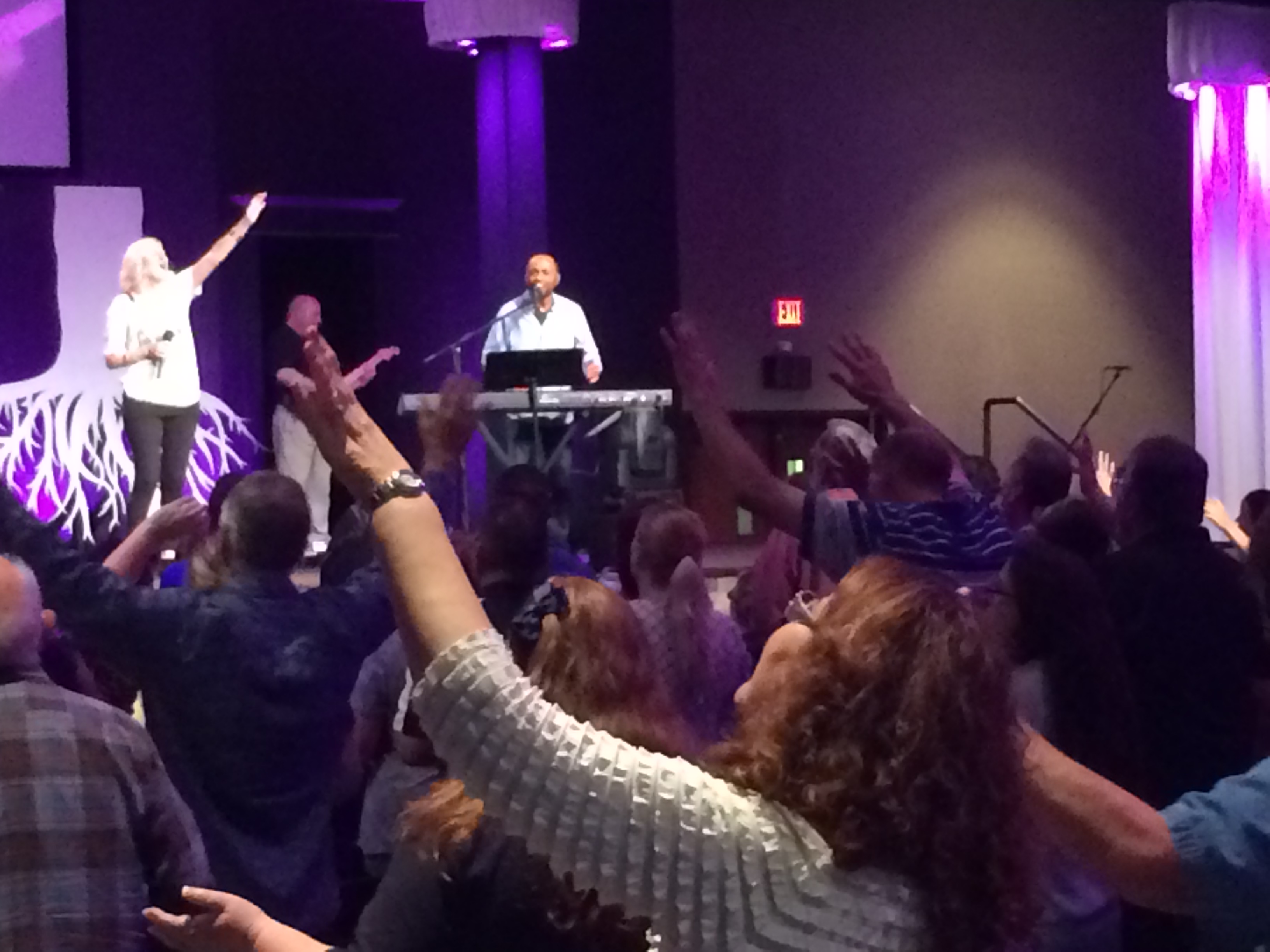
Good Friday Service Outline – Full Script

Many churches, including ours, have found a renewed interest in celebrating Good Friday. In many ways, since Easter has become more of a reaching service (which I believe it should be), Good Friday has become more of a Believer’s Easter Weekend Service.

At Celebration Church, many found this year’s service to be extremely meaningful and a few have asked me for the outline. It’s included in it’s entirety below. Let me know if you have questions, comments, or suggestions for future services.

2015 Good Friday Service Outline

Pre-Service Music and Slides

Musical Worship

  • Song – 5

Good Friday? video plays as soon as people are seated – 3:16

  • Suggested Song – “Your Love, So High”

Welcome – Greeting/Communication Cards/Prayer – 3 (Instrumental music continues)

Campus Pastor or Campus Representative: 5

When many of us think about the Last Supper, we envision Leonardo da Vinci’s Last Supper painting (fresco) which he finished in 1498. (Show image of fresco)

Leonardo_da_Vinci_-_Ultima_cena_-_ca_1975

  • The original work was 15’ x 29’ and took 3 years to complete.
  • It was not painted on the ceiling or walls of one of the grand cathedrals of the day, but instead was painted on the wall of the refectory of Santa Maria delle Grazie in Milan, Italy. The modern translation of a refectory is a dining hall. In fact, the tablecloth, knives, forks, glassware, and china were all similar to those in use by the monks residing in the monastery in that time period. It was almost as if Leonardo da Vinci wanted those dining to feel as if they were dining with Jesus, helping them realize that what He did for them so many years ago was still relevant in their world.
  • The body and blood of Jesus, offered up to pay the price for the sins of the world, is relevant to us in the 21st century as well. He gave His life for us so that we might live with Him and in Him and He in us.
  • The monks in Milan must have felt like Jesus was right there with them as they ate every meal. Tonight, we are going to celebrate a meal together, just as the disciples did and as the monks in Milan did, and Jesus will be right here with us as well. We know that He is omnipresent, meaning He is everywhere, so we know He is with us right now.
  • Before we celebrate communion, let’s celebrate His presence with us tonight. Let’s invite the Holy Spirit to be present with us even now.

Suggested Song about the presence of the Lord – 5  – “Holy Spirit, You Are Welcome Here”

Spoken – The Bible says this about the night of the Last Supper…

Scripture: – Now the Festival of Unleavened Bread arrived, when the Passover Lamb is sacrificed. Jesus sent Peter and John ahead and said, “Go and prepare the Passover meal, so we can eat it together.”

“Where do you want us to prepare it?” they asked him.

He replied, “As soon as you enter Jerusalem, a man carrying a pitcher of water will meet you. Follow him. At the house he enters, say to the owner, ‘The Teacher asks: Where is the guest room where I can eat the Passover meal with my disciples?’ He will take you upstairs to a large room that is already set up. That is where you should prepare our meal.” They went off to the city and found everything just as Jesus had said, and they prepared the Passover meal there. (Luke 22:7-13)

Spoken: What happened then might have looked something like this: 

(Play first 4 minutes and 9 seconds of video)

(Music begins as soon as the video ends)

Intro to the Lord’s Supper: – 4 He has kept that promise to us. Tonight, we are going to remember the Lord’s death for us as He commanded us in that moment we just saw portrayed.

(Give instructions on coming forward to receive)

Serving of the Bread/Juice with song (Consider using real unleavened bread and juice. Have a table onstage with the bread and the juice for the campus pastor.)

Time of personal examination and reflection – 3 – (Something like this) The Apostle Paul tells us in 1 Corinthians 11 that we should examine ourselves before eating the bread and drinking the cup. You see, on the very night He was betrayed, Jesus, knowing what was about to happen, gave bread and wine to his disciples and taught them that it represented His body. So, now, when we partake of the bread and juice, we proclaim, we remember, we celebrate His death, until He returns. So now, if you would, please hold up the bread and the juice before you. Look at them. They represent the body and blood of Jesus. Now, take a moment and think about your own life. Is there anything you need to get right with the Lord before you participate in the Lord’s Supper?

(Music plays while the Campus Pastor gives the people a moment to examine themselves)

Taking of the Bread/Juice with song which continues after the Lord’s Supper is taken and prayer is said – 3

Say:  That same evening, Jesus went to the Garden of Gethsemane to pray. While he was there, he was betrayed by Judas Iscariot, who led Roman soldiers there so they might arrest him. He then went through a mockery of a trial, was publicly flogged, then sentenced to death by crucifixion.

Read:  “Carrying the cross by himself, he went to the place called the Place of the Skull. There they nailed him to the cross. Two others were crucified with him, one on either side, with Jesus between them. And Pilate posted a sign on the cross that read, “Jesus of Nazareth, the King of the Jews… Jesus knew that his mission was now finished, and to fulfill scripture he said, “I am thirsty.” A jar of sour wine was sitting there, so they soaked a sponge in it, put it on a hyssop branch, and held it up to his lips. When Jesus had tasted it, he said, “It is finished!” Then he bowed his head and released his spirit.” John 19:17-20, 28-30

For The Cross Song by Brian Johnson – Special Video Song Presentation with scenes of the crucifixion, resurrection, and ascension. (We downloaded the multi-tracks straight from Bethel Music and set them to a video which presented the words in a creative way mixed with scenes from the crucifixion.) Here’s a link to the song by itself: – 

Message – IN A MOMENT

Spoken: At the time of Jesus’ death, it must have seemed like the purpose of his life was unfulfilled. Fortunately, in that moment, God provided 3 miraculous signs, pointing toward the ultimate miracle which would take place on Sunday.

At the moment of Jesus Death: God Ripped The Temple Veil In Two

“Then Jesus shouted out again, and he released his spirit. At that moment the curtain in the sanctuary of the Temple was torn in two, from top to bottom…” Matthew 27:50-51

  • In the temple, behind the veil was the Holy of Holies, the innermost sanctuary where the ark of the covenant rested. Filling the Holy of Holies was the Shekinah glory of God, the visible tangible presence of the Lord. Only the high priest could enter and only once a year and then only to offer the blood of the sacrifice for the sins of Israel.
  • The veil was massive and was designed to separate man from the presence of God. It was sixty feet high, thirty feet wide, and ten inches thick. It was so heavy that it took 300 priests to hang it.
  • The very moment Jesus died, this curtain was torn in two from top to bottom, as if it were a piece of paper.

(Show image of veil torn in two)

veil torn

  • This could only be done by God and is a sign that the way is now opened for anyone and everyone to enter into the presence of God through the sacrifice of the Messiah.

At the moment of Jesus Death: God Shook the Earth, Split Rocks, and Opened Tombs

“Then Jesus shouted out again, and he released his spirit. At that moment…The earth shook, rocks split apart, and tombs opened.” Matthew 27:50-51

  • The second miraculous sign was a supernatural earthquake and the splitting of rocks which must have created much devastation around Jerusalem. God was making another statement about Jesus to the world.
  • It reflected the “earth-shaking” revelation that had just taken place with the splitting of the curtain. Through the death of the Son of God, the way had been cleared for sinful man to enter the company of the holy God. Centuries before, when God gave the Law to Moses on Mount Sinai, the earth shook because the Law was meant to shake people up. Here, the earth is shaking again—this time not to shake man up, but to shake him loose. To get him to wake up from his sin and sleep of apathy. We can be free! The sin that enslaves us has be paid for and forgiven. The veil is rent. Redemption’s price has been paid!
  • Because of the earthquake, the tombs were opened and deep fissures were created. The death of the Savior had and is still having a splitting open of tombs impact on mankind. Those dead in their sin can now escape their living death.
  • The splitting of the rocks and the resulting opening of tombs was evidently a preview of the final resurrection, guaranteed by the imminent resurrection of Jesus from the dead.

At the moment of Jesus Death: God Raised Holy People From the Dead

“At that moment…the bodies of many godly men and women who had died were raised from the dead. They left the cemetery after Jesus’ resurrection, went into the holy city of Jerusalem, and appeared to many people.” Matthew 27:51-53

  • These saints appeared to many as confirming witnesses to the reality of Jesus’ resurrection. Their appearance in bodily form testified to Christ resurrection and to God’s promise to raise all those who put their trust in Christ.
  • These chosen saints who were resurrected after Jesus arose on Easter Sunday began to walk around the Holy City. What a sight it would have been to see people who had been dead for years walking around Jerusalem.

Conclusion

After seeing all of these things, “The Roman officer and the other soldiers at the crucifixion were terrified by the earthquake and all that had happened. They said, ‘This man truly was the Son of God!’” (Matthew 27:54)

Paul summed it all up when he wrote the following words about Jesus:

“Though he was God, he did not think of equality with God as something to cling to. Instead, he gave up his divine privileges; he took the humble position of a slave and was born as a human being. When he appeared in human form, he humbled himself in obedience to God and died a criminal’s death on a cross. Therefore, God elevated him to the place of highest honor and gave him the name above all other names, that at the name of Jesus every knee should bow, in heaven and on earth and under the earth, and every tongue declare that Jesus Christ is Lord, to the glory of God the Father.” Philippians 2:6-11

Are you ready to make that decision today?

Decision Time and Song – 

Suggested Song – Chorus of “We Thank You For The Cross”

Offering/Baptisms – 

Closing Song – 

Why Many Worship Leaders Don’t Like (Or Are Afraid Of) Christmas Carols

frustrated

Christmas is a special time of year for many Christians as they gather to celebrate the mystery that is the birth of our Savior. However, for many worship leaders, the Christmas season is a mystery, a conundrum, an enigma, for an entirely different reason:  Christmas carols.

For many years, a decade or more, I noticed a decline in the singing of Christmas carols in churches across America. Even though I’m beginning to see that trend reverse, there is still a resistance to Christmas carols from some worship leaders.

Here are a few reasons why:

  • Christmas Carols are often written in traditional, hymnlike styles and basically sound old. This can be a inward struggle for some worship leaders who strive most of the year to create or maintain a modern style only to feel like they’ve been jerked back hundreds of years by one month every year. Many feel like they are caving into their stylistic principles just because it’s Christmas.
  • Christmas Carols are often written in key or time signatures unusual to worship leaders and instrumentalists, therefore making them more difficult to play and forcing preparation times to go longer. Worship leaders are often puzzled as to how to lead people into the presence of God when their team is struggling with figuring out the music.
  • Christmas Carols have the dual problem of being wordy and containing antiquated lyrics, making them less relevant to many congregations. To compound the problem, most churches typically only sing them at Christmas, so worship leaders, singers, and congregation members find it easy to forget the words while finding it hard to decipher them. Being tied to the music or a confidence monitor for words often makes it difficult for a worship leader to lead others in worship.
  •  Christmas Carols change chords often, sometimes containing 3 to 4 chords per measure. This compounds the problem for worship leaders and their teams when they are already struggling with an overabundance of unusual key and time signatures and unusual lyrics. Because of this, worship teams are sometimes frustrated, glued to the music or lead sheet, and completely self-focused, making it extremely difficult to lead people deeper into worship.
  •  Sometimes, Christmas Carols just don’t appeal to people and they can’t explain why. I asked one worship leader why he never led Christmas Carols and he answered, “Because they’re stupid and I hate them.”

piano

So what are worship leaders to do? Should they just quit singing Christmas carols and ignore the Christmas season altogether? Should they completely cave in and go traditional for one month of every year? Is there anyway to strike a balance with modern worship music and Christmas carols?

I did a quick survey of a few worship leaders I know who are successfully integrating carols into their times of musical worship. Here are a few of their answers:

  • “When possible, simplify and rewrite the chord progressions by allowing for less harmonic movement. For example, some hymns and carols may have 3 or 4 chords per measure of music. Try reducing it to 1 or 2 when possible.”
  • “Mash them up. Think through how to combine Christmas Carols and worship songs that can be sung in conjunction with each other. This can be done by adding in the chorus of a new or favorite worship song as a tag to a Christmas Carol or vice versa.”
  • “Update the carols musically and creatively with production elements, different arrangements, varying instrumentation, modernizing the chords while keeping the melody, mashing them up with current worship songs, and writing extra choruses and bridges with modern words.”
  • “Don’t wait until right before the service to prepare. Find an arrangement with a demonstration your team can listen to throughout the week. Provide the music or lead sheets for them in advance and ask them to come to practice prepared to worship.”
  • “Use mashups. Every Christmas song we’ve done this year has been a mashup with other songs our congregation already knows well. This way, the song isn’t such a shock to the system for everyone involved, including the musicians onstage. It makes the music easier to play, even familiar in some situations. It’s actually been really exciting for me to find interesting ways to combine new and old songs in a fun way. I the fact that it forces me to think in creative ways…”
  • “Have a rehearsal before your pre-service runthrough to prepare your Christmas songs. Taking time to work through songs without the pressure of a service starting in an hour or less gives the worship team time to perfect the songs, allowing them to feel more natural to you.”

worship leader

To millions of people, the Christmas season, Christmas carols, and Christmas songs provide a reminder that God loved the world so much that He gave us Jesus. In this hectic world, Christmas carols can slow us down, help us forget about our frustrating pace of life, and remind us of the real meaning of Christmas. Hopefully, the suggestions above can help worship leaders and worship teams not be frustrated while preparing to lead people in times of worship utilizing carols in the Christmas season.

(Special thanks to my worship leader friends for their input)

The interesting origin of the tune for “Jesus Loves the Little Children”

Jesus loves the little children

While watching the old classic movie The Old Maid this evening, I heard a brass band playing the tune to the song I’ve always known as Jesus Loves The Little Children.  You may remember the song from your childhood.

Jesus loves the little children,

All the children of the world,

Red and yellow, black and white,

They are precious in His sight,

Jesus loves the little children of the world.

It’s a song that teaches the great truth that Jesus does indeed love everyone in the world, especially the children.  What’s interesting is that the tune was originally written by George F. Root for one of the most popular songs of the American Civil War.  The name of the song was Tramp! Tramp! Tramp!  Root wrote the song from a prisoner’s point of view, hoping to give hope to the Union prisoners of war.  The words were as follows:

Tramp, tramp, tramp, the boys are marching,

Cheer up comrades they will come,

And beneath the starry flag

We shall breathe the air again,

Of the freeland in our own beloved home.

From Here To Eternity: Improving Relations Between the Preacher and the Visuals Technician

projector

A few years ago, the church where I serve hosted a gathering of pastors for inspiration and encouragement.  For one session, a famous author and speaker, known for his ministry with teens and young adults, was to give the featured address.  He arrived shortly before the event with his young intern following close behind him.  After brief introductions, the intern handed me a thumb drive containing the speaker’s slides for his presentation.  He followed me to our media booth where I handed the thumb drive to our visual technician, who in turn, quickly loaded the speaker’s 300 plus slide presentation.

“Wow!” said the technician.  “He’s knows this is just one session, right?”

“Yes, he does,” replied the smiling intern, “But you had probably better let me run his presentation.  He’s very particular about his timing and sometimes snaps at the operator.”

“Really?” asked the technician as he gladly surrendered his seat.

“Yes,” said the intern.  “I wouldn’t want you to be embarrassed.”

The presentation began and the intern followed the speaker flawlessly, at least in my opinion.  So, I leaned back in my chair ready to be inspired by this famous author’s presentation.

“I’m always extremely supportive of young people,” he said.  “I have a very important ministry of encouragement for young college students.  It’s more vital than ever for us to invest our lives in the next generation.”

Suddenly, the speaker glanced at the screen then glared at the intern.  His entire demeanor changed.  He was just shy of yelling as he said, “Ok, Buddy, you’re falling behind.  When I say the word that matches the slide, you have to put it up immediately with no hesitation.  Now, pay attention, stop falling behind, and follow me!”

The young intern was mortified as hundreds of eyes locked onto him.  He swallowed hard and nodded his head affirmatively.

The speaker continued:  As I was saying, we have to invest in the next generation with encouragement.  I do this myself as…

Even though it’s been several years since that incident, whenever that speaker’s name is mentioned amongst our pastoral staff, the story of him chewing out his own intern in the midst of his speech about how to encourage young people always becomes part of the conversation.

The rude author story may seem like an exception rather than the rule, but I’ve been in multiple services and events where there were extremely awkward moments between the person on stage and the visuals technicians.  Sometimes I have been the speaker.  Sometimes I have been the visuals technician.  Most of the time, I have been somewhere in between, sensing the enormous awkwardness of the moment and feeling bad for both parties.

Here are three brief awkward moments I received from my social media friends:

My husband was preaching and the tech was trying to wave him down during the sermon because he didn’t introduce a video on the schedule.  My husband had decided on the fly to nix the video due to time constraints and the tech had not worked with him long enough to pick up on his nonverbal cues.   

I was at a women’s conference when the speaker was advancing her own slides with a clicker, but she kept telling the visuals technicians, in front of several hundred ladies, that they were falling behind her.  She forgot she was her own visuals technician.

Back in the day when we used overhead projectors, I was speaking when suddenly, everyone in the congregation started laughing.  Apparently, a roach was inside the machine and was being magnified for the entire congregation to see.  The operator was looking down at her shoes, clueless as to what was happening.

overheadprojector

Even though awkward moments do exist, the truth is that a visuals technician is of vital importance to the preaching pastor.  The visuals technician partners with the pastor throughout his entire presentation, enhancing every scripture read and every point made.   

In hopes of Improving relations between the stage and the media booth, here are

5 Tips for pastors when working with visual technicians.

  1.  Be appreciative.  They are volunteering their time to help you communicate.  Because they are operating behind the scenes, they are most often never acknowledged unless something is going wrong.  Take time to acknowledge them both privately and publicly.
  2.  Be informed.  Learn the name of the visuals program they are operating.  If they are running Propresenter, call it Propresenter.  If it’s EasyWorship, call it EasyWorship.  If it’s Powerpoint, call it Powerpoint.  Even though it might be difficult to understand, it can come across as demeaning to the operator if you reduce it (in their eyes) to an older form of visual presentation they haven’t used in years.  If you’re daring, take time to learn the programs strengths and shortcomings.  Doing so will help you better communicate with your visuals technician.
  3.  Be understanding.  The visuals technician wants to do a good job for you and for the Lord.  One technician I know shared this with me:  “If something is not right, calling the tech team out NEVER helps. You can be assured they are already desperately looking for a solution. They will either find it, or they won’t, and often, they are at the mercy of an equipment failure which takes time to overcome. In any case, tech people do tech because they love making stuff work and getting stuff right. If they didn’t have that passion, they wouldn’t be there.  So, the preacher should be able to trust they are already doing everything they can to fix the problem.
  4.  Be informative. The visuals team wants you to communicate your plans for your sermon with them.  One visuals technician once told me, “Communication is very important.  We need to know what’s in his head so we can illustrate what he’s trying to say.”
  5.  Be patient.  In the end, no matter how many times the visuals technician reads and highlights your sermon outline and no matter how many times they review your slides and videos, they do not know your sermon as well as you do.    

Propresenter

To be fair, some visual technicians aren’t always the best at fostering good relationships with pastors either.  At the end of one worship service I attended, the pastor privately asked the visuals technician to keep some type of ongoing message on the screens until everyone had left the building.  Understanding this meant he had to stay until everyone else left the building, the technician projected a slide with the following message:  THE SERVICE IS OVER!  EVERYONE GET OUT!

So, in hopes of improving relations between the media booth and the stage, here are

5 Tips for visual technicians when serving with pastors.

  1.  Be respectful.  Offer them the level of respect that is due their position.  Often, the person speaking is the lead pastor of the church.  While he wants his message and presentation to go well, he has lots of other worship service items going through his mind.  He is concerned about children’s ministry volunteers, the church budget, the condition of marriages in the church, and connecting with visitors and first time guests, not to mention church members dealing with sickness, depression, and addictions.  Cut him some slack.  He’s got a lot going on.  Because of all of these items, he’s counting on you to help him with his presentation.  So, show him respect by paying close attention to what he’s saying.
  2.  Be informed.  Know the name of the sermon the pastor is preaching.  Do your best to read his outline and study notes prior to the service.  Don’t be afraid to ask him specific questions regarding the timing of slides, graphics, or videos.  The lead pastor at the church where I serve prints his notes for the visuals technician and highlights the areas where he is expecting certain pictures or videos to appear.  If your pastor is willing to do the same, it can be an extreme help to you.  And if he is willing to take the time to prepare highlighted notes, the least you can do is take the time to review his notes.  
  3.  Be understanding.  Remember that the pastor has spent multiple hours developing the content they are delivering.  They’ve spent time seeking the Lord over the words they have to say.  They’ve struggled with whether or not they have the right title.  They’ve searched for quality creative stories and object lessons.  So, remember, the sermon they are sharing is a big deal to them and to the people sitting in the worship center.
  4.  Be obedient.  If your pastor wants you to put up a picture of pig eating an orange in Cafe du Monde in the New Orleans French Quarter, put up the best picture of a pig eating an orange in Cafe Du Monde in the New Orleans French Quarter you can find.  (If you find one, send it to me)  Remember, the one speaking is the one responsible for the content of the sermon, not you.  Unless he’s mistakenly included a picture that is immoral or ungodly, your responsibility is to display the content and help make it as awesome as possible.  
  5.  Be patient.  Odds are, unless your pastor is a former tech person, he doesn’t spend time reading about visual production systems.  So, if he calls your visuals presentation software by the wrong name, forgive him and move on.  You are his partner is presenting the Word of God to hundreds if not thousands of people.  That’s much more important than whether or not he says the name (or even knows) the correct version of your presentation software.

In the end, both preachers and visual technicians are people.  And people make mistakes.  People miscommunicate.  People fail to listen.  People say the wrong things and people press the wrong buttons.  Preachers are people.  Visual technicians are people.  Problems and mistakes will arise.  The important thing is to work through the issues and try to continually improve your presentation and your relationship.

IMG_0436

Why Church Greeters Are Important

handshake

Not long ago, I noticed a church billboard I had not seen before.  It had the name and address of the church with a picture of their smiling pastor and his wife.  The following words were displayed across the bottom:

The friendly church with the friendly pastor

“Well,” I thought, “That certainly sounds like a friendly church. I should visit there some weekend when I’m free.”

Ironically, at that moment I was on my way to visit another church in town for their regular Sunday evening service.  One of my friends was going to be leading the musical worship and had invited me to observe and participate.

My friend, let’s call him Mack, had warned me not to tell anyone where I was from.  He told me his church was internally focused and did not trust pastors, leaders, members of other churches, or guests of any kind.  I thought this was a little strange, but I guaranteed Mack that I wouldn’t speak with anyone about who I was or what church I was from.  I even decided to dress down for the evening.  (Not the best decision)  I suppose I was trying to look like someone who decided to attend the service on the spur of the moment.

I arrived at the church building about 10 minutes before the start of the service.  The building looked deserted, but I walked through the empty foyer and found the worship center without encountering another human being.  As I entered, the worship team was just breaking from their pre-service music run-through.  Mack came and shook my hand, but none of the others on the team spoke to me.  After interacting with Mack, I took a seat near the back row of pews and waited for the service to begin.

After a couple of minutes, a man in a suit entered and spotted me from across the room.  He immediately headed my way.

“Ah,” I thought, “He must be coming to greet me.”

I was wrong.

“Hello,” he said without extending his hand for me to shake.  “I’m the associate pastor here.”

“Nice to meet you, Pastor” I said.  “My name is John.”

“Ok,” he replied, putting his hands on his hips.

“This is a very nice church building,” I said, trying to make conversation.

“Yes.  Why did you come tonight, John?”

I was somewhat taken aback.  I was dressed down, but I didn’t look like a homeless person.  I replied, “Oh, I know Mack and he told me he was singing tonight.  I had the night off so I thought I’d come hear the music.”

Suspicious-eyes

The man looked me over cautiously.  I expected him to shoot me the I’m watching you hand signals, but instead, he replied, “I guess that’s ok.”

“Thank you,” I answered, not knowing what else I could possibly say.

Without another word, He shifted on his shiny black loafers and walked away.

“Man,” I thought, “I should have gone to visit the friendly church with the friendly pastor.”

I wish I could tell you the pastor redeemed the church with his sermon, but I left shortly after the music ended.  Up to this point, I’ve never returned, much to Mack’s dismay.  Every so often, when I drive past the building, I shake my head, remembering my dreadful experience.

And then I wonder…

  • How often have people gone unwelcomed in the church where I serve?
  • How many guests have felt like the foyer of my church building was deserted?
  • How often have our church leaders failed to have someone greeting guests as they enter to worship?
  • How often have I been guilty of turning away visitors by my words, actions, or disposition?

The answers to all of these questions should help us all remember why it’s important to build a culture of friendliness in our churches, especially surrounding our worship services.  This is one reason why church greeter teams play such a vital role in vibrant, growing churches.

Greeters are groups of church members (or regular attenders) who work cooperatively to ensure that every person (first time guest, regular visitor/attender, or long term member) entering the church facility is welcomed warmly and directed sufficiently.

When I think of church greeters, I can’t help but think of Wal-Mart.  Many Wal-Mart stores around the country hire greeters to stand at the door in their blue vests with the sole purpose of greeting people as they walk through the door.  So, you may ask, what does this accomplish for Wal-Mart?

A lot.

  1. A friendly welcome at the door helps the customer feel (at least the slightest bit) welcomed, can serve to put them in a better mood so they have a more pleasant shopping experience.
  2. The Wal-Mart greeter is an instant source of information to the customer entering.  It doesn’t matter if the person wants to know how to find sporting goods, electronics, home office, or the nearest restroom.  The Wal-Mart greeter, often with the words How May I Help You? written across their back, is a plethora of knowledge, especially when you don’t have it.
  3. Wal-Mart is known for hiring Senior Adults as front door greeters which creates positive feelings (for some at least) for a company which hires people in this demographic group to fulfill these roles.

willie

Church greeters accomplish a lot for the church as well.  Here are just a few of their responsibilities:

  • Monitoring the cleanliness of the gathering place entryway.
  • Opening the door for guests and greeting them as they enter.
  • Passing out worship guides to people as they enter the worship service.
  • Assisting the church ushers, pastors, and staff with unforeseen emergencies.
  • Helping guests know where to go for the worship service, children’s ministry, or restroom.

All of these tasks are extremely important, but not one of these tasks fully describes the full realm of responsibilities fulfilled by the church greeters.  I think a better description of church greeters was made by Dr. Nelson L. Price in the following:

Greeters are the personification, the representative, the exemplar, that is, the church embodied.  Their very presence is the first living impression of the church body.  Greeters need to realize they are more than themselves.  They are the style and spirit of the church in human form.  Greeters are the Ambassadors of the Door.  They are the gatekeepers in the House of the Lord; the envoy of the Lord of the House.*

Well said, Dr. Price.

Church greeters aren’t just bulletin passers, information sharers, door openers, and direction givers.  They most often serve as the church’s first contact with the unsaved, unchurched, curious, misguided, broken, hopeful and hurting people who enter our places of worship.  Church greeters provide a tremendous service for the Kingdom of God that impacts people for Christ just as much as the Sunday morning preacher or worship leader.

Imagine how different my story at the beginning of this article would have been if I had been greeted warmly, given a welcome packet or worship guide, and directed to the worship center.  Their friendliness would have impacted everyone in the building.  I might have stayed for the sermon and left with a smile referring to them as the friendly church with the friendly pastor.

*Nelson L Price, The Importance of Church Greeters 

IMG_0436


Why Pastors Should Keep Track of Weekend Worship Attendances

boy-in-church-RULING

I recently had the opportunity to dialogue with a few pastors about the importance of tracking weekend worship service attendance numbers.

In our conversation, it seemed everyone agreed that weekend attendance:

  • Is the most obvious measure of success.
  • Is fairly easy to track.
  • Is easily understood by most church leaders.

However, as we were moving on to the topic of excellence, one pastor, who may have been playing Devil’s advocate (not literally), asked the following question:

How can we justify counting people in our worship services when King David got into so much trouble with the Lord when he conducted a census?  

He was referring to a story in 2 Samuel 24.  The scripture indicates that the Lord was angry with Israel and caused the king to want to count the people of Israel and Judah.  The parallel passage in 1 Chronicles 21 actually reports that it was Satan who caused David to take a census.  However it took place, it’s possible that David’s sin was not the counting, but pride associated with the numbers.  Joab even tries to stop David from ordering the census by saying:

May the Lord your God let you live to see a hundred times as many people as there are now!  But why, my lord the king, do you want to do this?  2 Samuel 24:3 NLT

After reading both accounts, it seems that King David might have been:

  • Putting his trust in the numbers of his people rather than in the Lord.
  • Taking his eyes off of the Lord when earthly success seemed evident to all.
  • Stealing the glory of what the Lord had done for himself.

Whatever the reason, before the Lord’s punishment of David for the census was completed, a 3 day plague swept through Israel killing 70,000 people.  (One could easily wonder how they knew the number of people who perished without enduring more punishment for counting).  I’ve made lots of mistakes about lots of things in church work, but never anything that’s caused even one death (that I know of), much less 70,000.

So is it wrong to keep track of your worship service attendances?

Interestingly enough, until that pastor asked that question, I had never compared knowing the attendance in a worship service with King David taking a census of Israel.  It could be because many of the churches I attended while growing up posted the weekend attendance in the worship center for everyone to see.  Another reason may be because the Bible is filled with examples of people counting.

OLYMPUS DIGITAL CAMERA

Here are a few examples:

  • The total number of Jacob’s descendants moving to Egypt was 70 (Exodus 1:5).
  • The Levites killed about 3,000 of the Israelite brothers after the incident with the golden calf (Exodus 32:28).
  • On the day the Israelites crossed the Jordan River, about 40,000 were equipped for war and crossed to the plains of Jericho (Joshua 4:13).
  • The 4th book of the Bible is titled Numbers.
  • The Lord limited Gideon’s Army to 300 when he attacked the Midianite camp  (Judges 7:1-8).
  • Solomon accumulated 1,400 chariots and 12,000 horsemen (1 Kings 10:26).
  • Jesus broke bread and fed 5,000 men plus women and children (Mark 6:44) and then later fed about 4,000 men plus women and children (Mark 8:8).
  • On the day of Pentecost, 3000 were added to the number of believers in one day (Acts 2:41).

How did Jacob know he had 70 family members with him when he moved to Egypt?  You can bet with a family that large they stopped to count everyone before journeying forward each day.

How did Gideon know the Lord had left him with only 300 men to help in attacking the Midianite camp?  Someone must have counted.

How did Jesus and the disciples know that there were 5,000 men present when Jesus broke the bread and fish?  One of the disciples must have counted.  They would want to know because that’s a whole lot of people to serve even if the food is being miraculously multiplied.

Still not convinced?

I asked my social media friends why it would be important to count worship service attendees each week.  Here are a few answers I received.

Counting your weekly attendance helps you celebrate what the Lord has done and also helps keep you accountable for pastoring the people with whom God has blessed you.

– You count your offering, right?  Why wouldn’t you be as faithful with the people resources God has entrusted you with?

– Tracking and then studying the numbers can help you spot trends and know your congregation…  It can also help you see decline before it is full-blown.  Numbers in organizations are like numbers on a growth chart for a child in development.  They’re indicators of what’s working and what isn’t.

It can be used for message traction.  One church I was in before learned that too much effort went into teaching series openers.  There was a large (15%) spike in attendance for the first message compared to the others.  It helped us re-tool how the series were put together.

– I’m responsible for the team setting up for communion each month and let me tell you, counting is important.  Our church attendance kept rising, but no one ever told me so I didn’t buy enough supplies.  Do you know how embarrassing it is to have to tell congregation members they can’t participate in the Lord’s Supper because you’ve run out of juice?

– Being able to look at trends and seeing low attendance periods helps church leadership know when they need to step up marketing, promotions, etc…  It also helps to know that sometimes a slump is just prime vacation time.

While being surrounded by so great a cloud of witnesses to the benefits of tracking attendance, I must say that keeping track of worship service attendance numbers is not only beneficial, but is an absolute must for any pastor desiring to serve and lead in a thriving, healthy ministry.

All this being said, here are some practical steps to remember when keeping track of attendance:

1.  Tell the truth.  If all of your attendance numbers begin with the phrase Evangelistically speaking we had… something needs to change.  Lying about your attendance is like cheating on your eye exam.  You’re only hurting yourself.

2.  Count in the second half of the service.  It’s my experience that the number of people you have in the building at the beginning of your service is no indication of how will be there by the end of the service.  (This is a different problem for a different article).  For accuracy, have someone count in the second half of the sermon.  People are normally seated during this time and they’re easier to count anyway.

3.  Create an easily accessible graph for your own reference.  Doing so will allow you to compare attendances quickly and efficiently.

4.  Compare attendances from season to season, year to year, and finally Sunday to Sunday.  Consider the why’s regarding your trends.

willie_nelson_300-ce334a713e79fc578ae600e305ad72bc67b5be21-s6-c30

Willie Nelson once said When I started counting my blessings, my whole life turned around.  It’s uncertain if keeping track of your ongoing weekend church attendance will turn your whole life around.  However, it is certain that those you are counting are God’s blessings for you to evangelize, disciple, and lead.  Keeping accurate, ongoing attendance records will help you achieve these goals.


Happy counting!  

I Hate This Part of the Service

I Hate This Part Of the Service:  How to Improve Your Offering Introductions

Nervous-speaker

Pastor Bob smiled awkwardly at his people.  “All right, folk! It’s time for the offering. So, let’s all give the kind of money that folds instead of jingles.”

Polite smiles appeared across the congregation at Pastor Bob’s slight attempt at humor. Mistaking their facial expressions for complete agreement, he continued. “While our ushers are preparing to collect, let’s pray.”

While Pastor Bob is praying, thanking God for “both the gift and the giver,” inwardly he was thinking, “I hate this part of the service.”

Pastor Bob may not aware that many of his congregation members also cringe at his offering humor and wonder why they should give after his lame appeal for funds. And while he’s inwardly praying for God to multiple the meager giving of those in the seats, his people are ironically thinking, “I hate this part of the service.”

Every weekend, pastors around the world ask their people to give to the Lord through their church. Often, those times are awkward for everyone involved. The pastor comes across, to both the congregation and himself, as a slick car salesman instead of a holy man of God. As a result, the people fumble with their phones as he fumbles with his words.

But what if it could be different? What if the offering introduction could become an engaging, vision-casting, worshipful part of the service?  offering-plate

Realistically, in many (if not most) churches, the offering introduction is terrible. And there’s a simple explanation. In churches around the planet, pastors and worship leaders spend hours and hours preparing their sermons, worship music and illustrations. Those same well meaning leaders spend minutes and minutes (if not seconds and seconds) preparing their offering introduction. Honestly, most leaders who introduce the offering simply wing it with no preparation at all.

That’s why it’s so terrible.

Three years ago, the pastors on staff where I serve set out to make it better. We decided to be more intentional about what we said before the offering. We decided to stop shooting from the hip.

Here are a few lessons we’ve learned:

  1. It works best if we script out the offering introduction from start to finish. In other words, we plan ahead for everything that is said.
  2. We attempt to tie some of the offering introductions to vision. We try to help people understand how people’s lives will be impacted because of their giving.
  3. We often turn the offering introduction into a story. Whether it’s personal or biblical, it often helps to present it in story form, which most often increases engagement.
  4. We often try to connect the offering introduction to a holiday or current event. Whether it’s Thanksgiving, the Superbowl, or the Sunday after a natural disaster, use what people are thinking about anyway.
  5. Sometimes, we use an object lesson for the offering introduction. Unique physical objects really capture people’s attention because they’re different.
  6. As often as possible, we try to illustrate the purpose of giving with video testimonies from missionaries helped supported financially by the church.
  7. Whenever possible, we frame the offering introduction with pictures. A picture really can be worth a thousand words. Sometimes, if presented well, they can also be worth thousands of dollars.

Here’s an example of a good offering introduction:

We’re about to collect our offering. While our ushers are preparing to collect, I’d like to show you a picture of wind farm. (Show picture on screen)

Wind farms like these now produce almost 3% of the world’s energy usage. Many of you may have seen farms like these in your travels.

Have you ever wondered how these windmills are able to capture the wind’s energy? Here’s a brief explanation: A wind turbine blade works like an airplane wing. When air passes around both sides of the uniquely shaped blade, the uneven pressure causes it to spin. Those blades are attached to a shaft, which turns about 18 revolutions per minute, which doesn’t seem like much at first. However, the shaft is connected to a series of gears, which increases the movement to about 1800 revolutions per minute. At that speed, a generator can produce a lot of electricity as long as the wind is consistent.

You may be thinking, “What does this have to do with the offering?” I’m glad you asked. Sometimes people think the small amount of money they give doesn’t matter. Like the large shaft that only turns 18 times a minute, they think their gift is not making much of a difference. Fortunately, God blesses the offerings given by individuals and allows the church to connect it with the gifts of others, multiplying it in various ways producing amazing results.

The secret is faithful and consistent giving.

Let’s pray.

Conclusion

This type of offering introduction won’t work in every context, but it will work perfectly in others. Some pastors love to write their own “giving talks” while others find them online. The secret is finding the style(s) that works best in your respective church and spending the necessary time perfecting it in both content and delivery.

If you have other suggestions about how to improve offering introductions, please share in the comments section.

So what about Pastor Bob?

Because it concerns money, some of his people may always feel uncomfortable during the offering (especially those who never give). But if he spends time developing his offering introduction, it’s possible that both Pastor Bob and his congregation may finally stop hating that part of the service.

IMG_0437

Stop the Worship! Let’s Pray…

praying-with-open-hands

How to More Effectively Connect Musical Worship and Prayer

It may sound like a silly question, but have you ever found it distracting when someone stands up to pray in the middle of a worship song set?  I have.

Think about it.  Your morning’s already been a hassle, you’re walking into the church building much later than you intended, you get your kids situated for children’s ministry, and you finally find a seat in the worship center in the during the first song (at least you think it’s the first song).  It takes you a song or two to stop thinking about the pressures of your life, and then, just when you get into a spirit of worship, some staff member comes out, stops everything, and says “Let’s pray.”

Someone’s probably asking right now, “What’s the problem?  Isn’t prayer a part of worship?”

Absolutely.

Too often the worship music and prayer are totally disconnected from one another.  As church leaders, pastors, worship leaders, and pray-ers, we must take time to connect the musical worship and the prayer taking place within the worship set without destroying to the flow of worship.

To take it further, both singing and prayer are worship.  Both can lead us to the throne of God.  Both allow us to exalt and petition the Lord.  Both are important.  That being said, how much better would the entire time of corporate worship be if they didn’t function independently of one another.

That’s why worship leaders, pastors, and prayers need to take appropriate time making the spoken prayer during a worship set fit into the flow of the musical worship.  If this doesn’t happen, there is a disconnect between the two.

It’s like we’re screaming out, “Stop the Worship!  Let’s pray.”  

Breakthrough!

I don’t want that to happen in the worship services where I’m leading, producing, or participating.

Do you?

So what are some ways we can more effectively transition from worship music into prayer?

  1.  Micro-Testimony – Before the prayer leader prays, making a 30 second connection between the theme of the song or the service and the prayer can be most helpful.  This allows the prayer person to seamlessly personalize the worship, connect or reconnect disengaged people to what is happening while adding purpose to the prayer.

Here’s an example sent to me by a friend of mine:

“I had a tough week emotionally.  However, God reminded me through my Bible reading this morning that “His grace is sufficient for me.”  You see, not only does God’s Word sustain us, but it proves that He knows exactly where we are and what we are feeling.  Let’s pray.”

  1.  Scripture – Before the actual prayer, quoting or reading scripture that relates to both the musical worship and the prayer brings both connection and spiritual validity to both song and prayer.  We are blessed to have the Word of God.  We should use it, not only in our preaching, but in our prayer leading as well.

In Isaiah 55:11 (NLT), we read the following words of God:

It is the same with My Word.  I send it out, and it always produces fruit.  It will accomplish all I want it to, and it will prosper everywhere I send it.

If sharing God’s Word always produces fruit and will accomplish all God wants it to in a given moment, it only makes sense to use it wisely in times of corporate worship.

A great scripture to use before praying in worship is Psalm 97:1-6 (seen below in the NLT), especially if you’re focusing on the greatness or holiness of the Lord.

The Lord reigns, let the earth be glad; let the distant shores rejoice.  Clouds and thick darkness surround Him;  Righteousness and justice are the foundation of His throne.  Fire goes before Him and consumes His foes on every side.  His lightning lights up the world;  the earth sees and trembles.  The mountains melt like wax before the Lord, before the Lord of all the earth.  The heavens proclaim His righteousness and all peoples will see His glory!

  1.  Praying within a song.  To some worshipers, it may sometimes seem as if prayer breaks up the flow of worship because it always takes place between two songs.  If this is where the prayer always takes place within the worship set, the prayer person and worship leader should work together to find the perfect place within a worship song where the prayer can happen with the instrumental music playing in the background.  Then, following the prayer, the worship leader can move right back into the worship song seamlessly.  Even though this takes more coordination, it can certainly be worth the effort.
  2.  Music intensity.  The musical worship leader and prayer person should coordinate with each other to ensure that the music flows with the prayer.  If the prayer person builds in volume and intensity, the music should build in volume and intensity to create a dynamic, electric atmosphere.  If the prayer becomes more reflective and intimate, the music should diminish in volume and intensity to create a more intimate setting.  The more this becomes the practice with the prayer person, the worship leader and the worship team, the more the worship team will be able to follow the prayer person naturally if the Holy Spirit leads them in different ways during the prayer.

So what’s the secret?

  1.  Preparation.

The person praying must prepare ahead of time.  Preparing to pray something meaningful for 30-90 seconds usually takes longer than most people are willing to spend.  An unprepared prayer spoken on the fly can ruin hours of preparation from the worship and technology teams.  However, a well planned prayer creates a launching pad for a great God moment in our services.

The worship leader and team must be prepared for what is going to happen in the prayer time.  If the music and prayer emphasis doesn’t work together, everyone in the worship center can tell.  However, if the worship team knows what is going to happen, it can help build a spirit of anticipation throughout the worship center that is contagious.

Take the time to prepare your prayer and you will see results.

  1.  Prayer.  

It may seem silly to hear that you need to pray about how you are going to pray.  Isn’t prayer simply “talking with God?”

Yes, it is.  But praying during a worship set is also a powerful tool God has given us to lead people deeper into His presence.  He wants us to “dialogue” with Him about the best way to do this for a particular worship moment.

Besides, if a prayer is important enough to pray before tens, hundreds, or even thousands of people, isn’t it important enough to pray about?

In case anyone’s wondering, the answer is “yes.”

If you have further thoughts about how to more effectively connect musical worship and prayer, I’d love to hear your comments.  

IMG_0437

The Beauty of the Garden Spoken Word

Here’s a link to a Spoken Word written and performed by Niko Snead for the Good Friday Services at Celebration Church.  The video was filmed and edited by Javier Acosta.  Great job Niko and Javi.

The Beauty of the Garden

Related Post:  2014 Celebration Church full Good Friday script