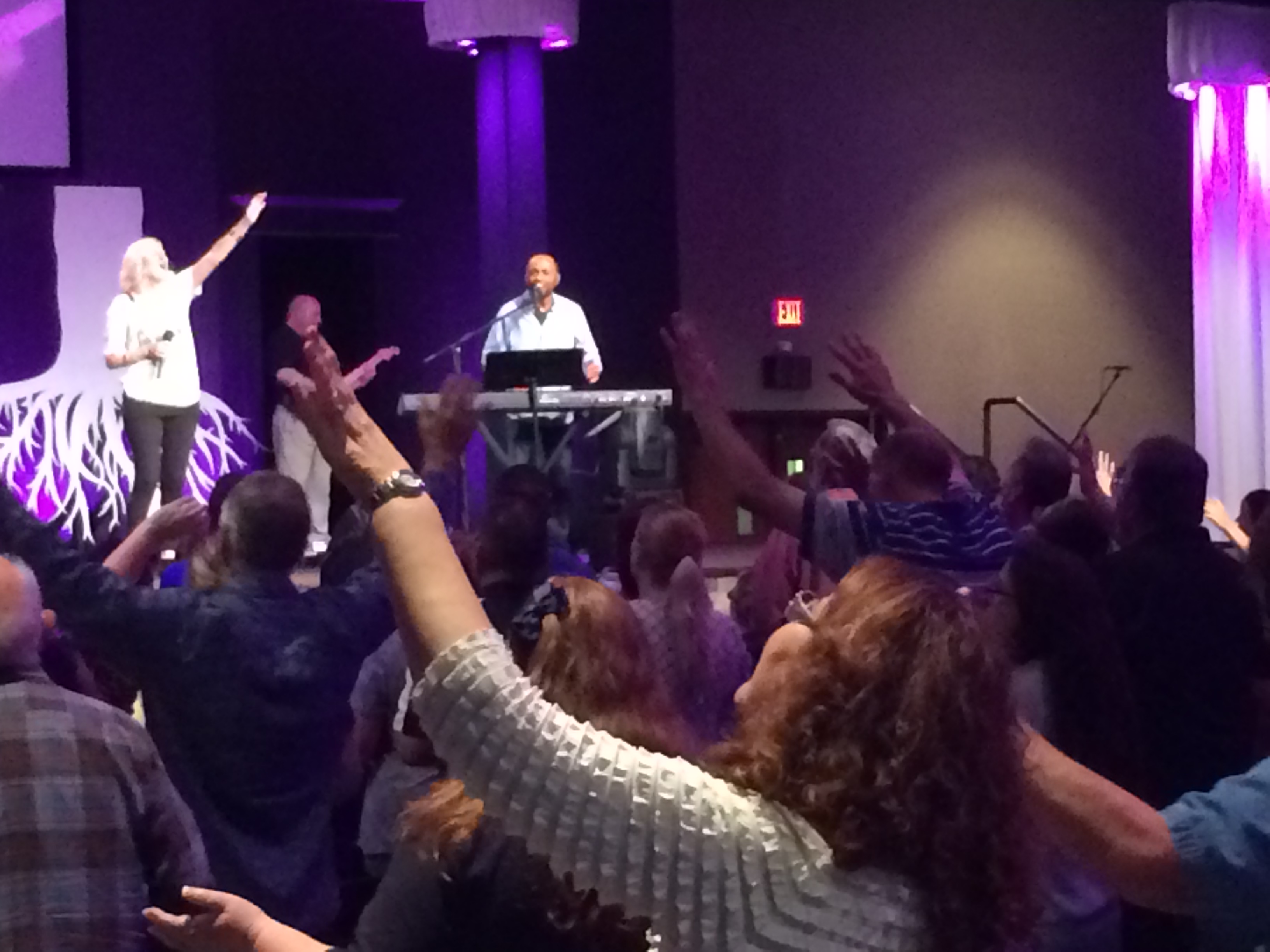
Night of Worship and Prayer Outline based on Paul’s Prayers for the Ephesians

IMG_4157

Opening 

  • 3 Song Worship Set (Freedom, Open Up The Heavens, Holy Spirit)
  • Prayer Welcoming The Presence of the Holy Spirit, Asking God To Work In The Hearts and Lives of Those Present
  • Welcome and Offering Prayer
  • Offering as service continues

BLESSING Section

  • (Read Ephesians 1:15-18 to the congregation as if you are praying it over them.Ever since I first heard of your strong faith in the Lord Jesus and your love for God’s people everywhere, I have not stopped thanking God for you. I pray for you constantly, asking God, the glorious Father of our Lord Jesus Christ, to give you spiritual wisdom and insight so that you might grow in your knowledge of God. I pray that your hearts will be flooded with light so that you can understand the confident hope he has given to those he called—his holy people who are his rich and glorious inheritance.”
  • Make any comments you desire regarding the scripture.
  • Direct the people to spend a moment in personal prayer, instructing them to share their personal needs with the Lord. Then direct them to tell the Lord what they are hoping to hear from Him during this prayer service.
  • Pray for the people, asking God to bless them before the worship music continues.

Song – God, I Look To You

GREATNESS OF GOD’S POWER Section

  • Read Ephesians 1:19-23 – “I also pray that you will understand the incredible greatness of God’s power for us who believe him. This is the same mighty power that raised Christ from the dead and seated him in the place of honor at God’s right hand in the heavenly realms. Now he is far above any ruler or authority or power or leader or anything else—not only in this world but also in the world to come. God has put all things under the authority of Christ and has made him head over all things for the benefit of the church. And the church is his body; it is made full and complete by Christ, who fills all things everywhere with himself.”
  • Make any comments you desire regarding the scripture
  • Pray for the people, that they would experience the greatness of God’s power 

Song About The Greatness of God’s Power – Overcome

EMPOWERMENT AND GROWTH Section

  • Read Ephesians 3:14-17 – When I think of all this, I fall to my knees and pray to the Father, the Creator of everything in heaven and on earth. I pray that from his glorious, unlimited resources he will empower you with inner strength through his Spirit. Then Christ will make his home in your hearts as you trust in him. Your roots will grow down into God’s love and keep you strong.
  • Make any comments you wish to add to the scripture
  • Call People to the Front as Pastors/Staff/Key Leaders Pray For Their Empowerment and Growth

Song About Growing In Christ – Here’s My Heart

UNDERSTANDING AND EXPERIENCING THE FULLNESS OF GOD’S LOVE Section

    • Read Ephesians 3:18-19 – And may you have the power to understand, as all God’s people should, how wide, how long, how high, and how deep his love is. May you experience the love of Christ, though it is too great to understand fully. Then you will be made complete with all the fullness of life and power that comes from God.
  • Make any comments you wish to add to the scripture
  • Lead the People to Pray For Each Other to understand and experience the fullness of God’s love before the worship music continues.

Song About The Love of God – Your Love So High

CONCLUSION

    • Read Ephesians 3:20-21 – Now all glory to God, who is able, through his mighty power at work within us, to accomplish infinitely more than we might ask or think. Glory to him in the church and in Christ Jesus through all generations forever and ever! Amen.
  • Upbeat Closing Prayer by Campus Pastor
  • Upbeat Closing Song – I Give You Glory!


What Happens When Church Ushers Don’t Know Their Team Members

IMG_0436

I once visited a large church in another city on a Saturday evening. When I entered the foyer, a man frantically ran up to me and said, “Thank God, you’re here! Follow me.” I smiled and followed him into a side room, leaving my wife to find her own seat.

“Ok,” he said. “I need you to cover Section F at the end of the service.”

“Section F?” I asked. “Where is that?”

He quickly handed me a map and replied, “You must have missed our training meeting.”

“Uh, well, yeah, I wasn’t there,” I replied. “It’s probably because I…”

“It doesn’t matter now,” he interrupted, “At the end of the service, when the music begins to play behind the pastor, come back here for the elements.”

“The elements?” I asked. “Are we going to serve communion?”

The man rolled his eyes.

“Yes,” he replied. “This is the Communion Room.”

“Oh, sorry,” I replied. “I didn’t know.”

“Well,” he replied, rather annoyed, “That’s what happens when you miss training meetings.”

“I’m sorry,” I replied, “It’s just that I…”

“Just come back here when the music starts and we’ll give you what you need, ok?”

“Will do,” I said as I left for the service, map in hand.

As the service began, I confirmed where Section F was from a man standing near the sound booth.

Finally, I found my wife sitting close to the back of the worship center.

“Where have you been?” she asked.

“With this guy who serves here,” I replied. “He asked me to help serve Communion.”

“Do you know him?” she asked.

“No,” I replied. “I don’t know anyone here.”

“Did you tell him you were just visiting?”

“I tried, but he wouldn’t listen.”

At the end of the sermon, the music played and I returned to the communion room as instructed. While there, I was given a bucket filled with disposable communion packets including both the juice and the bread.

I quickly made my way to Section F where I stood and imitated the actions of the man in Section E in front of me. Within three minutes, I had served everyone in my section and returned my bucket and remaining elements to the Communion Room.

“Thanks,” said the man in charge when I returned the bucket. “By the way, how long have you been a part of this church?”

“I’m not a part,” I replied. “I’m just visiting. This is actually my first time.”

“Really?” he asked. “And we asked you to serve Communion?”

“Yeah,” I said with a smile. “I just figured your church was really into the concept of Open Communion. Have a great day.”

“You too,” he said. “Oh, and one more thing.”

“Yeah?”

“Don’t tell anyone about this, ok? It’s kind of embarrassing.”

“I won’t.”

The Most Common Mistake Church Sound Engineers Make

soundboard

Being a church sound engineer is sometimes a thankless job.

Most people only notice these committed members of the worship team if they’ve made a mistake (or if the system malfunctions).

And, oh, people love to point out sound mistakes and malfunctions.

They never get a break.

And they’re not about to now. (Sorry, guys)

The most common mistake, in my opinion, that church sound engineers make is only focusing on the music.

Very often, musicians receive pristine treatment while the speaker’s mic and pack receive little or no attention. In many churches (and conferences and camps), the sound engineer leaves his post when the speaker begins in order to chat with the musicians.

Worship services are often designed, from beginning to end, to lead to a common goal, which are most often communicated in the sermon. If that’s the case, isn’t it obvious that the words spoken in a worship service should be as clear as the music that is played?

Meet Challenges Together, Celebrate With Bacon

bacon

I looked across the kitchen and thought, “I’m not sure we’re going to pull this off.”

While on our annual staff retreat, the worship ministry team had the responsibility for cooking breakfast for the rest of staff. We had grandiose plans of preparing 72 eggs, 120 pancakes, 72 biscuits, a variety of fresh fruit, assorted yogurts, prepackaged granola bars, milk, juice, coffee, and (cue the music) 10 lbs of bacon.

We were prepared to knock it out quickly with the retreat center’s oven, stove top, microwaves, and electric griddles. Sounds reasonable, right?

However, when we arrived, there was no oven, there was no stove top, and the microwaves were broken. Our alternative equipment was a Crock Pot, two older electric griddles, and two coffee pots.

So, an hour before breakfast, we started cooking, using every outlet we could find, which worked well for about five minutes, when we threw a breaker.

Quickly, we rearranged the kitchen, borrowed a few cooking items, started cooking bacon in the dining hall, moved the coffee to the meeting room, found the breaker room, reset the breaker, and continued cooking.

We spent the next hour working as a team, taking care of issues as we found them and resetting the breaker from time to time. Right on time, our delicious meal was presented to the rest of the staff. As they enjoyed their meal, I felt a surge of satisfaction and munched a piece of bacon to celebrate.

At the end of the retreat, when we were asked to share our best memory from the retreat, I said that mine was making breakfast with our team. We’re used to overcoming the odds (and the clock) in worship services, but this was a real team building exercise for us, with better results than a professional ropes course.

Working as a team through difficult situations will either tear you apart or bring you closer together. Why not use them (or even create them) to bring you closer together.

Solomon, the wise son of King David, once wrote, Two people are better off than one, for they can help each other succeed. If one person falls, the other can reach out and help. But someone who falls alone is in real trouble. Likewise, two people lying close together can keep each other warm. But how can one be warm alone? A person standing alone can be attacked and defeated, but two can stand back-to-back and conquer. Three are even better, for a triple-braided cord is not easily broken.

My advice to all of us is this:

  • Do hard things together.
  • Create challenges.
  • Work together.
  • Be victorious.
  • Celebrate with bacon

Why People Skip Church on Father’s Day

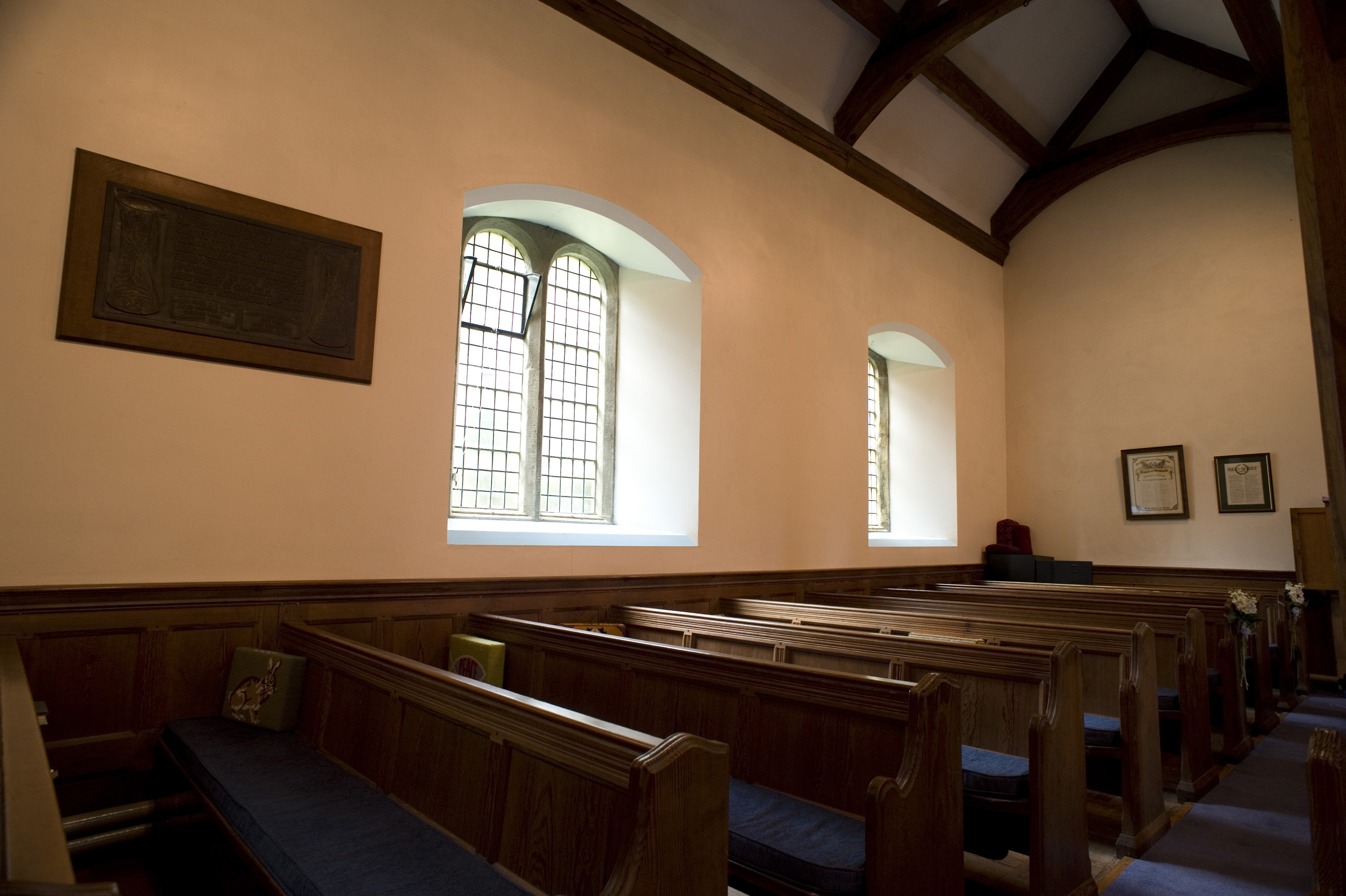
the inside of a rural english church

Father’s Day worship services can be lots of fun with special giveaways, man-centered services, funny videos, and cool testimonies. Unfortunately, Father’s Day Weekend is very often a weekend when people skip church.

Father’s Day most often means “Dad’s Choice” Weekend

Let’s be honest, on the top ten list of what most men want to do on Father’s Day, going to church doesn’t usually make the cut. Moms and children often tell dads, “This is your day, Dad! We can do whatever you want to do today!” Given this option, most dads won’t set aside their breakfast in bed and say, “Ok. Everyone up, get dressed, and get in the car! We’re going to church!”

Men Are Afraid They’re Going To Be Lectured

Think about it. Churches often use mother’s day to shower love on moms. Often, these same churches use father’s day to tell men to step it up and be a man. Writer David Murrow, the Director of Church For Men, in his article The Futility of Father’s Day Services*, has reported that only 4% of pastors consider Father’s Day as a high attendance weekend. Murrow attributes one cause to the pastoral beating up of men on Father’s Day. He writes “Can you imagine a pastor standing up on Mother’s Day and saying, ‘Women, I know you’ve messed up your families – but it’s never too late to become a great mother.’ Any minister who said these things about women would be out of a job by Monday morning.”

Father’s Day For Many Is A Day of Grief

As Father’s Day approaches, not everyone is wondering about whether to get Dad a goofy tie, golf club, baseball cap, or fishing equipment. Many dread the approach of the day, the entire day itself, and the commercialism and celebration that is connected with it because of difficult circumstances. Here are just a few issues people deal with on Father’s Day:

  1. Widows
  2. Widowers
  3. Orphans
  4. Children (of all ages) who have lost their Fathers (and Grandfathers)
  5. Parents who have lost their Children
  6. Single Men
  7. Single Women
  8. Wives and Children of Abusive or Dysfunctional Fathers
  9. Men and Women who are Childless
  10. Recently Separated or Divorced Men and Women
  11. Children of the Recently Divorced or Separated
  12. The Critically Ill and Their Families
  13. Father’s estranged from their children
  14. Children estranged from their fathers

A Few Practical Ways The Church Help Make Father’s Day Better?

  • Make it fun! Why should the day we celebrate dads be boring.
  • Use discernment and be sensitive to those who might be hurting on Father’s Day.
  • Don’t beat up on men in your Father’s Day’s Services. Honor them, challenge them respectfully, and move on.
  • If you have Fathers stand to be prayed for, consider having all men stand instead of only Fathers. You can still pray for the fathers, but you can also pray for all men present to be godly examples to the next generation.
  • If you show a Father’s Day video, make it a funny one. It helps break the tension. Save the sap for Mother’s Day.
  • If you give a gift on Father’s Day, give it to all men and not just those who are dads.

There are lots of reasons for fathers, men, couples, singles, and children to skip church on Father’s Day. It’s our job as pastors and church leaders to give them positive reasons to come to worship services on these days. Let’s be the church to those in need on Father’s Day.

IMG_0436

The Importance of Worship Service Transitions

awk-moment

It’s frightening to say, but one of the most crucial parts of the worship service is often the most neglected. It’s not the sermon, the music, or even the offering, but it’s what connects them all together. The transitions.

Nothing can be more awkward for those on the stage and in the seats than for a transition to go awry. Suddenly, in the eyes of those attending the worship service, the person speaking moves from being a spiritual guide leading others on a worship journey to a time wasting unprepared idiot.

Earlier in my ministry, I didn’t give much thought to worship transitions. In the traditional churches where I was raised, you did one thing, stopped it completely, and then moved on to the next item on the agenda. In these settings, the Pastor or Music Minister often served like a formal emcee at an evening debutante ball. If someone were singing, he would announce that person’s name and the song they were singing. Then, the announced person would act slightly surprised, stand slowly, and then dramatically walk to the podium.

What a waste of time. People don’t put up with that in today’s world unless it’s a group of children doing some type of presentation.

There are many transition times in worship, but here are some questions surrounding six major transitions of which the worship planner should be aware.

  • Beginnings How are you going to begin? Will you build momentum toward your start time, will you simply begin with a bang, or will you ease in subtly?
  • Musical – What will the transitions be between the musical elements within your service? Will your songs flow together seamlessly or will you break completely between songs?
  • Congregational – How will you use congregational elements to help you transition in the worship service? Will you have them greet one in the service? Will you direct them to sit or will you let them figure it out? Will you hope for or direct congregational applause following songs, videos, or speakers to help kill the dead space?
  • Video – How will you use video features, bumpers, announcements, and commercials to help create smooth transitions from one element to another? Will you announce the visual elements or will you just go to it?
  • Spoken – What spoken transitions will you add into your worship services to help you transition smoothly from one element to the other? Will you use a verbal announcement, a prayer, a brief monologue, or a spoken word in these times?
  • Endings – How are you going to end your service? Will you build to a climax and let everyone out with a bang? Will you end with ongoing prayer and altar ministry and allow everyone to leave as they desire?

It may seem trivial to give major focus to transitional items such as these. Shouldn’t we just focus on the content of the main parts of the service and wing it in between?

Not at all.

Charles Dickens once wrote, “There is surely something charming in seeing the smallest things done so thoroughly.” He was writing about a button. Shouldn’t the same be said of our worship services?

IMG_0436

8 Simple Tips For Better Writing

write

No matter what your vocation, use these simple tips to improve your writing.

  1. Lead with your main idea – Let people know your subject upfront. If you don’t, they’ll stop reading.
  2. Good writing is concise. It can certainly be creative, but it should be free of superfluous adjectives and unnecessary details. More is not always better. Sometimes it’s just more and often it’s less.
  3. Avoid using “that” as often as possible. Even though it is sometimes useful when adding some type of description, the sentence can most often become more powerful by moving the description to before the noun.
  4. Condense what you’ve written, then do it again. This will help your writing be tighter and more interesting.
  5. Use a thesaurus to help you find the perfect word. Mark Twain once said, “The difference between the right word and the almost right word is the difference between lightning and a lightning bug.”
  6. Overused clichés are as common as dirt. Good writers avoid them like the plague.
  7. Read more and your writing will naturally improve.
  8. Use Spell Check and Grammar Check. It’s free and instantly available. Duh.

9 Mistakes Worship Attendance Counters Make

images1

Larry Osbourne once said, “If churches spent as much time counting faces as they did dollars, they wouldn’t have a growth problem.”

One of the best ways to track growth or decline in church attendance is by counting those in worship service attendance. However, people often ask, does it really matter if we get a count of everyone? The answer is “Yes. You should count everyone because everyone counts.”

No matter if the counting is done by ushers, deacons, staff, or pastors in church, there are nine common errors I’ve noticed which often cause worship attendance figures to be skewed.

  1. They count to get it done instead of to really know. This often happens when the job is delegated to someone who doesn’t understand the importance of really knowing the actual count. An easy solution may be taking a few minutes to explain the purpose behind counting to those involved.
  2. They count too early in the service. For many congregations, the number of people in attendance at the beginning of the service is no indication of how many people will be there by the end. I suggest waiting until the musical worship is over and the sermon begins (if the service is typical) before counting. The difference may be drastic.
  3. They only count those inside the actual worship center. Consider creating a counting chart listing all of the areas needing to be counted. This may include your worship center sections, tech booths, green rooms, the main foyer, prayer room, etc…
  4. They estimate instead of counting. I believe this is what most pastors do across America. It simply isn’t reliable (or honest). Estimating crowds instead of actually counting them can cause the actual number to be grossly deflated or overinflated. One way to spot if your counters are estimating is if the numbers they turn in are rounded numbers like 200, 250, 120, etc…
  5. They either miss or don’t count infants and children with adults. If everyone counts, count everybody. I’ve heard one church leader say “We mean all, and that’s all all means.” Children and infants count as people, even if they aren’t in the infant, toddler, preschool, or elementary rooms.
  6. When counting children’s attendance, they don’t count the adults in the room. Turn about is fair play for the children’s attendance. Adults (or teenagers) are in attendance as well, so count them.
  7. They use a faulty clicker. Clickers can be great tools for use when counting, however besides being distracting (because of the clicking sound) they sometimes get stuck so the clicks go 1,2,3,4,4,4,4,5,6,7,7… One way to correct this problem is by purchasing a digital clicker which seems to be more reliable. They are also much quieter.
  8. They forget to count the people on stage. This is an easy oversight, but forgetting to count those on stage often means you miss counting pastors, band members, speakers, singers, etc…
  9. They forget to count themselves. Remember, we count everyone because everyone counts, even you.

clickers

Related Posts:

We Ain’t No Professionals Ain’t Cutting It Anymore

I Am Greater Than You

10 Reasons You Should Go To Church

church

When I was a young Christian, I used to pray Psalm 27:4 which says, “One thing have I desired of the Lord, that will I seek after; that I may dwell in the house of the Lord all the days of my life.”

I had no idea He would take me so literally. Since coming to Christ almost three decades ago, I’ve spent most of that time serving in churches and ministries, mostly in worship ministry.

One thing I’ve noticed during that time is that often, even the most devout Christians, for one reason or the other, fall away from attending worship services on a regular basis.

So, in response, here’s my list of ten reasons you should go to church:

1. Christian Fellowship goes two ways: with God and with others. (1 John 1:3)

2. It’s one of the greatest habits (Hebrews 10:25)

3. For the opportunity to use your spiritual gifts to help others. (1 Peter 4:10)

4. Accountability. (Hebrews 13:17)

5. There are no self-sufficient Christians. (1 Corinthians 12:21)

6. To make a joyful noise unto the Lord! (Psalm 100)

7. To “devote yourself to the apostles teaching, to the breaking of bread, and to prayer.” (Acts 2:42)

8. To pray for others and to be prayed for (Matthew 18:19)

9. To express your love for God publicly (Psalm 22:22)

10. It’s what Jesus did (Luke 14:6)

There are possibly hundreds of other reasons to attend worship services (and small group meetings). Any that come to your mind today? If so, leave a comment.

IMG_0436

P.S. If you live in the New Orleans area as I do, Easter’s a great time to start or restart attending worship. Let me invite you now to attend one of the 30 Easter Worship Services at Celebration Church. For times and locations, click Here

“We Ain’t No Professionals” Ain’t Cutting It Anymore!

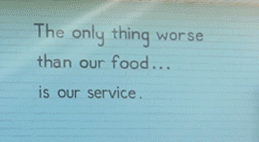
I saw a sign on a restaurant the other day proclaiming “The Only Thing Worse Than Our Food Is Our Service.” Unfortunately, I’d already ordered the pancakes.

reverse-marketing-tic-toc-diner

The sign was right.

“I ain’t no professional” is a phrase I’ve heard once too often in my life in various capacities. I think it’s safe to say that if “You ain’t no professional then there ain’t no need to say it. Everyone already knows.”

The difference between the amateur and the professional is simple. The professional is willing to roll up his sleeves and go to work.

The word professional is defined by Google dictionary as someone engaged in a specified activity as one’s main paid occupation rather than as a pastime.” This means the person is serious about it and is willing to work hard.

My profession for most of my life has been ministry. I’d be lying if I said I was always professional in every position I ever had. I sometimes found myself in places where I didn’t know what to do or who to trust and I often let my insecurities keep me from doing the work that needed to be done. In those moments, I was allowing myself to become an amateur.

The author of Proverbs 22:29 once wrote: “Do you see someone skilled in their work? They will serve before kings; they will not serve before officials of low rank.”

Professionalism (1)

Some people want to reference the above verse and say that we shouldn’t associate with certain people. Believe it or not, they may be right, but not in matters of race, socio-economic status, or sports team affiliation. We should be careful with associating with those who are going to wastefully absorb our time and keep us from the professionalism we should strive to achieve.

In The War of Art, Steven Pressfield writes:

“Grandiose fantasies are a symptom of Resistance. They’re the sign of an amateur. The professional has learned that success, like happiness, comes as a by-product of work. The professional concentrates on the work and allows rewards to come or not come, whatever they like.”

It’s time to quit whining. It’s time to do the work that’s set before us. It’s time to be professional.