The Number One Complaint About Church Visuals

complaint-box_1

Serving in worship ministry affords me the privilege of hearing friendly (and sometimes unfriendly) complaints about what happens in worship. One area that is often criticized is the operation of the visuals placed on the screen during the worship service, especially when it regards the timeliness of the presentation of the song lyrics.

Creative backgrounds and interesting animations certainly help enhance worship services, but they don’t mean much if the people worshiping are distracted because the lyrics to the songs they are trying to sing are late. Unfortunately, this is an ongoing problem in many churches.

So, here’s the bottom line: Song lyrics need to be on the screen before people have to the sing them. If the people have to guess at what the next word or line or phrase is, then their worship experience has been hijacked, meaning they’ve been temporarily or permanently disengaged from what is happening.

How To Avoid Lyrical Delay: Prepare and Practice

Prepare – It is the worship leader’s job to provide the correct worship lyrics and sequences in which the song is going to be presented. This serves as a guide to the technician who is creating and/or displaying the lyrics.

  • Very important point – The sequence of the songs, meaning the breakdown of when and how many times the verses, choruses, bridge(s), and tags are included in the song presentation is first and foremost the responsibility of the worship leader.
  • If the correct song sequences are not communicated to the technicians building and then operating the song playlist, it is doubtful that the presentations of the songs will be presented properly. The blame for this failure is most often given to the visuals operator, but most often it actually belongs to the worship leader.
  • Sometimes, a worship leader refuses to plan the sequences of the songs because he simply wants to be led by the Spirit. It makes sense to these worship leaders that if he and the visuals technician are both being led by the Spirit then everything will come together perfectly without prior coordination. The Holy Spirit can certainly lead two different people simultaneously, but if we use this excuse for not preparing, we are basically blaming God for our laziness and mistakes.
  • It is the visual technician’s job to review the song playlist prior to the run-through and worship service ensuring that the correct song version has been included and that it is in the right sequence. If this has been done, the operator and worship leader can be more confident that the right words will be displayed at the right time.

Practice – If there is a run-through prior to the service, it is responsibility of the visuals technician to practice along with the musical worship team.

  • The following cannot be said enough – The run-through is not just practice for the band. It’s also practice for the visual technician. Believe it or not, the visual technician needs to practice just as much as the band, if for no other reason than to catch mistakes, correct typos, and reorder the sequences of songs built improperly.
  • If practice happens, sequencing or presentation issues can be found and corrected prior to the service. If this does not happen, the visuals technician is basically just hoping everything is going to be ok.
  • The rehearsal also allows the visuals technician to reacquaint themselves with the flow and the feel of the song, allowing himself to anticipate where the worship leader is going if an extra chorus or bridge needs to be added on the fly.
  • Sometimes, when a visuals technician is also responsible for building the song playlist, he tends to feel like he’s already done his homework for the service and therefore doesn’t deem it necessary to practice with the band during run-through. When these things happen, the operator is allowing prideful arrogance to step in between himself and a successful worship service.

IMG_0436

When I was growing up, my parents used to say, “Proper Prior Planning Prevents Poor Performance.” The same can be said for the worship leaders and visuals technicians of our day who are partnering together to avoid the number one complaint about church visuals.

Related Posts:

9 Mistakes Worship Attendance Counters Make

I Am Greater Than You

The Selfish Decree of St. Patrick

o-SAINT-PATRICK-570

On March 25, 433, St. Patrick stepped onto the shores of Slane, Ireland. He immediately demanded the opportunity to speak to the people of that city. His speech went something like this:

“Good people of the Emerald Isle! Henceforth on March 17th, or upon the weekend closest to that date, the rivers of at least one major city should be dyed green in my honor. People without the knowledge that the 3 leafed shamrock represents the Holy Trinity shall wear them proudly, along with shiny green top hats. I decree that everyone should skip church in order to attend parades where green beads and cabbages will be thrown to the massive crowds who have gathered to celebrate the anniversary of my death! Oh, and children who don’t wear green shall be pinched unmercilessly. Ok, that’s it. Let’s all get sloshed!”

Here’s a slightly more accurate account:

St. Patrick was born to Italian parents, residing in Scotland, in the year 387. When he was 14 years old, he was kidnapped by Irish pirates, taken to Ireland, and forced to serve as a shepherd. While there, he learned the language and the customs of the people. He also spent much time in prayer and soon dedicated his life to Jesus.  Six years after his capture, he escaped captivity and begged a ship captain to give him passage. Even as he was escaping, he had a dream where the people of Ireland were calling out to him, saying, “We beg you, holy youth, to come and walk among us once more.”

st-patricks-day

Upon his return to England, Patrick began his studies for the priesthood and was later named as Bishop Patrick. He was then given the task of converting Ireland for the glory of God. He did arrive in Slane, Ireland in 433, and set about sharing the gospel with everyone he met. One legend says one Chief named Dichu tried to kill Patrick, but discovered that his arm was unable to move. Once he prayed with Patrick to give his life to Jesus, his arm relaxed and he could move it once again.

Patrick preached the Gospel across Ireland, living the life of a missionary and converting thousands. He planted churches across the entire island, training priests and overseers to lead them. St. Patrick served the Lord for the remainder of his life in Ireland, living most of them in poverty. He passed away on March 17, 461.

The following prayer is attributed to St. Patrick:

I arise today through the strength of heaven;

Light of the sun, splendor of fire, speed of lightning, depth of the sea,

Stability of the earth, firmness of the rock.

I arise today through God’s strength to pilot me;

God’s might to uphold me,

God’s wisdom to guide me,

God’s eye to look before me,

God’s ear to hear me,

God’s word to speak for me,

God’s hand to guard me,

God’s way to lie before me,

God’s shield to protect me,

God’s hosts to save me afar and anear,

Alone or in a multitude.

Christ shield me today against wounding.

Christ with me, Christ before me, Christ behind me,

Christ in me, Christ beneath me, Christ above me,

Christ on my right, Christ on my left,

Christ when I lie down, Christ when I sit down,

Christ in the heart of everyone who thinks of me,

Christ in the mouth of everyone who speaks of me,

Christ in the eye that sees me,

Christ in the ear that hears me.

I arise today through the mighty strength of the Lord of creation.

May we all be as focused on Christ as was St. Patrick.

IMG_0444

Results of My Physical

snapping glove

I had a physical last week. That evening I bought a new scale.

However, I realized that:

  • It’s time for me to regularly evaluate issues with my body.
  • It’s time for me to get back in the groove of exercising regularly and consistently.
  • It’s time for me to make those important doctor’s appointments to help me live a more healthy lifestyle.

What’s my biggest issue?

In the words of comedian Jim Gaffigan, “These aren’t skinny jeans, I’m just fat.”

In other words, I’m overweight, obese, stout, full-figured, corpulent, pudgy, flabby, rotund, paunchy, fleshy, and well upholstered. In layman’s terms, I’m fat. I may not be grossly overweight, but I’m still fat, like 8 and 10 other adults in the Greater New Orleans area.

Overweight

But, it’s time to put a stop to it.

This past week, I kept reading and kept being convicted by

1 Corinthians 6:19-20. In it, Paul writes,

“Do you not know that your body is a temple of the Holy Spirit?

Therefore honor God with your body.”

That means I’m going to honor God with how I take care of this body that He gave me. It means I’m going to honor Him with what I eat, what I drink, how I exercise, how I rest, and how I visit health care professionals.
Who’s with me?

Top Five List of Christmas Gifts Not To Give Your Pastor

Let’s face it. People in ministry are often given the most bizarre items. So, in order to help the member of the laity not be embarrassed by the gifts they give their pastors this Christmas, here is a list of five things not to give your pastors.

5. Anything beginning with the word “Chia” chiaMr.T

4. Fire Bible Prop

firebible

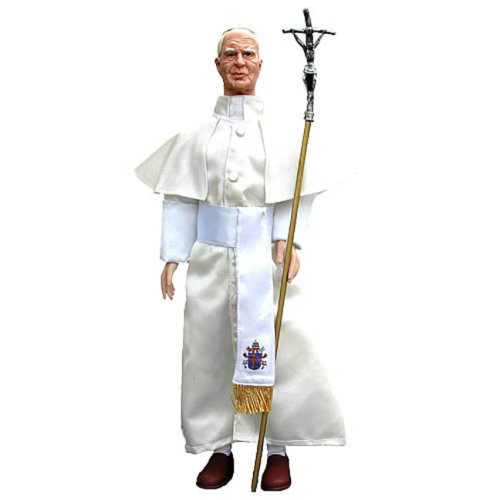
3. An Action Figure of The Pope

pope

2. Classic Neil Diamond Records

Neil-Diamond-The-Best-Of-434488

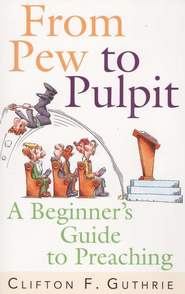
And the #1 gift not to give your pastor this Christmas is The book “From the Pew to the Pulpit: A Beginner’s Guide to Preaching”

066603_w185

Why Many Worship Leaders Don’t Like (Or Are Afraid Of) Christmas Carols

frustrated

Christmas is a special time of year for many Christians as they gather to celebrate the mystery that is the birth of our Savior. However, for many worship leaders, the Christmas season is a mystery, a conundrum, an enigma, for an entirely different reason:  Christmas carols.

For many years, a decade or more, I noticed a decline in the singing of Christmas carols in churches across America. Even though I’m beginning to see that trend reverse, there is still a resistance to Christmas carols from some worship leaders.

Here are a few reasons why:

  • Christmas Carols are often written in traditional, hymnlike styles and basically sound old. This can be a inward struggle for some worship leaders who strive most of the year to create or maintain a modern style only to feel like they’ve been jerked back hundreds of years by one month every year. Many feel like they are caving into their stylistic principles just because it’s Christmas.
  • Christmas Carols are often written in key or time signatures unusual to worship leaders and instrumentalists, therefore making them more difficult to play and forcing preparation times to go longer. Worship leaders are often puzzled as to how to lead people into the presence of God when their team is struggling with figuring out the music.
  • Christmas Carols have the dual problem of being wordy and containing antiquated lyrics, making them less relevant to many congregations. To compound the problem, most churches typically only sing them at Christmas, so worship leaders, singers, and congregation members find it easy to forget the words while finding it hard to decipher them. Being tied to the music or a confidence monitor for words often makes it difficult for a worship leader to lead others in worship.
  •  Christmas Carols change chords often, sometimes containing 3 to 4 chords per measure. This compounds the problem for worship leaders and their teams when they are already struggling with an overabundance of unusual key and time signatures and unusual lyrics. Because of this, worship teams are sometimes frustrated, glued to the music or lead sheet, and completely self-focused, making it extremely difficult to lead people deeper into worship.
  •  Sometimes, Christmas Carols just don’t appeal to people and they can’t explain why. I asked one worship leader why he never led Christmas Carols and he answered, “Because they’re stupid and I hate them.”

piano

So what are worship leaders to do? Should they just quit singing Christmas carols and ignore the Christmas season altogether? Should they completely cave in and go traditional for one month of every year? Is there anyway to strike a balance with modern worship music and Christmas carols?

I did a quick survey of a few worship leaders I know who are successfully integrating carols into their times of musical worship. Here are a few of their answers:

  • “When possible, simplify and rewrite the chord progressions by allowing for less harmonic movement. For example, some hymns and carols may have 3 or 4 chords per measure of music. Try reducing it to 1 or 2 when possible.”
  • “Mash them up. Think through how to combine Christmas Carols and worship songs that can be sung in conjunction with each other. This can be done by adding in the chorus of a new or favorite worship song as a tag to a Christmas Carol or vice versa.”
  • “Update the carols musically and creatively with production elements, different arrangements, varying instrumentation, modernizing the chords while keeping the melody, mashing them up with current worship songs, and writing extra choruses and bridges with modern words.”
  • “Don’t wait until right before the service to prepare. Find an arrangement with a demonstration your team can listen to throughout the week. Provide the music or lead sheets for them in advance and ask them to come to practice prepared to worship.”
  • “Use mashups. Every Christmas song we’ve done this year has been a mashup with other songs our congregation already knows well. This way, the song isn’t such a shock to the system for everyone involved, including the musicians onstage. It makes the music easier to play, even familiar in some situations. It’s actually been really exciting for me to find interesting ways to combine new and old songs in a fun way. I the fact that it forces me to think in creative ways…”
  • “Have a rehearsal before your pre-service runthrough to prepare your Christmas songs. Taking time to work through songs without the pressure of a service starting in an hour or less gives the worship team time to perfect the songs, allowing them to feel more natural to you.”

worship leader

To millions of people, the Christmas season, Christmas carols, and Christmas songs provide a reminder that God loved the world so much that He gave us Jesus. In this hectic world, Christmas carols can slow us down, help us forget about our frustrating pace of life, and remind us of the real meaning of Christmas. Hopefully, the suggestions above can help worship leaders and worship teams not be frustrated while preparing to lead people in times of worship utilizing carols in the Christmas season.

(Special thanks to my worship leader friends for their input)

Every Christian Has at Least One Gift

“Yet each person has a special gift from God, of one kind or another.” 1 Corinthians 7:7b

spirituagifts

Devotional Thoughts

The man looked me right in the eyes and said, “The Lord must have missed me when He was handing out spiritual gifts.”

“Why do you say that?” I asked.

“I just don’t see any evidence of any of the spiritual gifts in my life.”

I smiled at him, reflecting on how he must feel.  “Think about what you are saying,” I replied. “Do you seriously believe the God who created everything, who gave His life for you, who lives within you, who guides and empowers you, simply forgot to give you a spiritual gift?”

“I’m not certain,” he replied.

Paul clearly writes in 1 Corinthians 7:7 that “each person has a special gift from God.”  Since the Holy Spirit inspires all of the Bible, we can be assured that He also inspired that verse. God doesn’t forget anyone in His distribution of spiritual gifts. It doesn’t matter if we’re popular or outcast, rich or poor, slow or smart, handsome or homely, He has given every Christian at least one spiritual gift for use in ministering to others and fulfilling His purposes.

Follow-Up Activity

Take time to discover or explore your own spiritual gifts.  You can do so in 3 different ways:

  1. Study: Read about spiritual gifts in the Bible, looking for ones that seem to describe qualities you may possess. For further study, register for the next SHAPE class being offered at your campus.
  2. Trial and Error: Get involved in ministry where certain spiritual gifts are necessary. If you are unsure how to do so, check with your life group leader or campus pastor.
  3. Insight from Others: Speak to mature Christians you trust about which traits of specific Spiritual Gifts they may see in you.

Prayer Focus

Lord, I know You care for me. Thank You for giving me at least one spiritual gift. Help me to further discover and develop my giftings.   

(This devotion is featured as today’s devotion in the Celebration Church HOLY OTHER Devotion Series. If you would like to subscribe to the devotion series, lasting from now through the end of October, Click Here )

IMG_0437

The Gifts of the Holy Spirit

Thegiftsoftheholyspirit

“Now, dear brothers and sisters, regarding your question about the special abilities the Spirit gives us. I don’t want you to misunderstand this.” 1 Corinthians 12:1

Devotional Thoughts

The Corinthian Church was in a mess. Many of them were argumentative, judgmental, and self centered. As He does with all Christians, the Holy Spirit had blessed each member with spiritual gifts, but they were not being used appropriately. Instead of being activated to minister to others and therefore glorify the Lord, they were being used for personal gain and selfish ambitions.

Obviously, one of the Corinthians had asked the Apostle Paul about spiritual gifts. Scripture doesn’t reveal to us the content of the question, but it does share Paul’s answer in 1 Corinthians 12:7. He writes, “A spiritual gift is given to each of us so we can help each other.” In other words, a spiritual gift is a special ability, given by the Holy Spirit to every believer at their conversion, to be used to minister to others and therefore build up the body of Christ.

Satan probably enjoyed the chaos and confusion in the Corinthian church over spiritual gifts. He wants you to be confused as well about the spiritual gifts the Lord has given you. Do not allow that to happen. Whenever you are tempted to use what God has given you for selfish reasons, stop and pray immediately, asking God to give you wisdom to use your gifts in a way that builds up the body of Christ.

Follow-Up Activity

Read 1 Corinthians 12. As you make your way through the chapter, underline or highlight specific verses which could help a person’s understanding of the gifts given to us by the Holy Spirit.

Prayer Focus:

Lord, thank You for giving us spiritual gifts. Help me to fully use mine to honor You by building up the body of Christ.

(This devotion is part of the Celebration Church HOLY OTHER devotion series. You can subscribe to that devotion series here: Celebration Church HOLY OTHER devotions

IMG_0437

The interesting origin of the tune for “Jesus Loves the Little Children”

Jesus loves the little children

While watching the old classic movie The Old Maid this evening, I heard a brass band playing the tune to the song I’ve always known as Jesus Loves The Little Children.  You may remember the song from your childhood.

Jesus loves the little children,

All the children of the world,

Red and yellow, black and white,

They are precious in His sight,

Jesus loves the little children of the world.

It’s a song that teaches the great truth that Jesus does indeed love everyone in the world, especially the children.  What’s interesting is that the tune was originally written by George F. Root for one of the most popular songs of the American Civil War.  The name of the song was Tramp! Tramp! Tramp!  Root wrote the song from a prisoner’s point of view, hoping to give hope to the Union prisoners of war.  The words were as follows:

Tramp, tramp, tramp, the boys are marching,

Cheer up comrades they will come,

And beneath the starry flag

We shall breathe the air again,

Of the freeland in our own beloved home.

From Here To Eternity: Improving Relations Between the Preacher and the Visuals Technician

projector

A few years ago, the church where I serve hosted a gathering of pastors for inspiration and encouragement.  For one session, a famous author and speaker, known for his ministry with teens and young adults, was to give the featured address.  He arrived shortly before the event with his young intern following close behind him.  After brief introductions, the intern handed me a thumb drive containing the speaker’s slides for his presentation.  He followed me to our media booth where I handed the thumb drive to our visual technician, who in turn, quickly loaded the speaker’s 300 plus slide presentation.

“Wow!” said the technician.  “He’s knows this is just one session, right?”

“Yes, he does,” replied the smiling intern, “But you had probably better let me run his presentation.  He’s very particular about his timing and sometimes snaps at the operator.”

“Really?” asked the technician as he gladly surrendered his seat.

“Yes,” said the intern.  “I wouldn’t want you to be embarrassed.”

The presentation began and the intern followed the speaker flawlessly, at least in my opinion.  So, I leaned back in my chair ready to be inspired by this famous author’s presentation.

“I’m always extremely supportive of young people,” he said.  “I have a very important ministry of encouragement for young college students.  It’s more vital than ever for us to invest our lives in the next generation.”

Suddenly, the speaker glanced at the screen then glared at the intern.  His entire demeanor changed.  He was just shy of yelling as he said, “Ok, Buddy, you’re falling behind.  When I say the word that matches the slide, you have to put it up immediately with no hesitation.  Now, pay attention, stop falling behind, and follow me!”

The young intern was mortified as hundreds of eyes locked onto him.  He swallowed hard and nodded his head affirmatively.

The speaker continued:  As I was saying, we have to invest in the next generation with encouragement.  I do this myself as…

Even though it’s been several years since that incident, whenever that speaker’s name is mentioned amongst our pastoral staff, the story of him chewing out his own intern in the midst of his speech about how to encourage young people always becomes part of the conversation.

The rude author story may seem like an exception rather than the rule, but I’ve been in multiple services and events where there were extremely awkward moments between the person on stage and the visuals technicians.  Sometimes I have been the speaker.  Sometimes I have been the visuals technician.  Most of the time, I have been somewhere in between, sensing the enormous awkwardness of the moment and feeling bad for both parties.

Here are three brief awkward moments I received from my social media friends:

My husband was preaching and the tech was trying to wave him down during the sermon because he didn’t introduce a video on the schedule.  My husband had decided on the fly to nix the video due to time constraints and the tech had not worked with him long enough to pick up on his nonverbal cues.   

I was at a women’s conference when the speaker was advancing her own slides with a clicker, but she kept telling the visuals technicians, in front of several hundred ladies, that they were falling behind her.  She forgot she was her own visuals technician.

Back in the day when we used overhead projectors, I was speaking when suddenly, everyone in the congregation started laughing.  Apparently, a roach was inside the machine and was being magnified for the entire congregation to see.  The operator was looking down at her shoes, clueless as to what was happening.

overheadprojector

Even though awkward moments do exist, the truth is that a visuals technician is of vital importance to the preaching pastor.  The visuals technician partners with the pastor throughout his entire presentation, enhancing every scripture read and every point made.   

In hopes of Improving relations between the stage and the media booth, here are

5 Tips for pastors when working with visual technicians.

  1.  Be appreciative.  They are volunteering their time to help you communicate.  Because they are operating behind the scenes, they are most often never acknowledged unless something is going wrong.  Take time to acknowledge them both privately and publicly.
  2.  Be informed.  Learn the name of the visuals program they are operating.  If they are running Propresenter, call it Propresenter.  If it’s EasyWorship, call it EasyWorship.  If it’s Powerpoint, call it Powerpoint.  Even though it might be difficult to understand, it can come across as demeaning to the operator if you reduce it (in their eyes) to an older form of visual presentation they haven’t used in years.  If you’re daring, take time to learn the programs strengths and shortcomings.  Doing so will help you better communicate with your visuals technician.
  3.  Be understanding.  The visuals technician wants to do a good job for you and for the Lord.  One technician I know shared this with me:  “If something is not right, calling the tech team out NEVER helps. You can be assured they are already desperately looking for a solution. They will either find it, or they won’t, and often, they are at the mercy of an equipment failure which takes time to overcome. In any case, tech people do tech because they love making stuff work and getting stuff right. If they didn’t have that passion, they wouldn’t be there.  So, the preacher should be able to trust they are already doing everything they can to fix the problem.
  4.  Be informative. The visuals team wants you to communicate your plans for your sermon with them.  One visuals technician once told me, “Communication is very important.  We need to know what’s in his head so we can illustrate what he’s trying to say.”
  5.  Be patient.  In the end, no matter how many times the visuals technician reads and highlights your sermon outline and no matter how many times they review your slides and videos, they do not know your sermon as well as you do.    

Propresenter

To be fair, some visual technicians aren’t always the best at fostering good relationships with pastors either.  At the end of one worship service I attended, the pastor privately asked the visuals technician to keep some type of ongoing message on the screens until everyone had left the building.  Understanding this meant he had to stay until everyone else left the building, the technician projected a slide with the following message:  THE SERVICE IS OVER!  EVERYONE GET OUT!

So, in hopes of improving relations between the media booth and the stage, here are

5 Tips for visual technicians when serving with pastors.

  1.  Be respectful.  Offer them the level of respect that is due their position.  Often, the person speaking is the lead pastor of the church.  While he wants his message and presentation to go well, he has lots of other worship service items going through his mind.  He is concerned about children’s ministry volunteers, the church budget, the condition of marriages in the church, and connecting with visitors and first time guests, not to mention church members dealing with sickness, depression, and addictions.  Cut him some slack.  He’s got a lot going on.  Because of all of these items, he’s counting on you to help him with his presentation.  So, show him respect by paying close attention to what he’s saying.
  2.  Be informed.  Know the name of the sermon the pastor is preaching.  Do your best to read his outline and study notes prior to the service.  Don’t be afraid to ask him specific questions regarding the timing of slides, graphics, or videos.  The lead pastor at the church where I serve prints his notes for the visuals technician and highlights the areas where he is expecting certain pictures or videos to appear.  If your pastor is willing to do the same, it can be an extreme help to you.  And if he is willing to take the time to prepare highlighted notes, the least you can do is take the time to review his notes.  
  3.  Be understanding.  Remember that the pastor has spent multiple hours developing the content they are delivering.  They’ve spent time seeking the Lord over the words they have to say.  They’ve struggled with whether or not they have the right title.  They’ve searched for quality creative stories and object lessons.  So, remember, the sermon they are sharing is a big deal to them and to the people sitting in the worship center.
  4.  Be obedient.  If your pastor wants you to put up a picture of pig eating an orange in Cafe du Monde in the New Orleans French Quarter, put up the best picture of a pig eating an orange in Cafe Du Monde in the New Orleans French Quarter you can find.  (If you find one, send it to me)  Remember, the one speaking is the one responsible for the content of the sermon, not you.  Unless he’s mistakenly included a picture that is immoral or ungodly, your responsibility is to display the content and help make it as awesome as possible.  
  5.  Be patient.  Odds are, unless your pastor is a former tech person, he doesn’t spend time reading about visual production systems.  So, if he calls your visuals presentation software by the wrong name, forgive him and move on.  You are his partner is presenting the Word of God to hundreds if not thousands of people.  That’s much more important than whether or not he says the name (or even knows) the correct version of your presentation software.

In the end, both preachers and visual technicians are people.  And people make mistakes.  People miscommunicate.  People fail to listen.  People say the wrong things and people press the wrong buttons.  Preachers are people.  Visual technicians are people.  Problems and mistakes will arise.  The important thing is to work through the issues and try to continually improve your presentation and your relationship.

IMG_0436

Why Church Greeters Are Important

handshake

Not long ago, I noticed a church billboard I had not seen before.  It had the name and address of the church with a picture of their smiling pastor and his wife.  The following words were displayed across the bottom:

The friendly church with the friendly pastor

“Well,” I thought, “That certainly sounds like a friendly church. I should visit there some weekend when I’m free.”

Ironically, at that moment I was on my way to visit another church in town for their regular Sunday evening service.  One of my friends was going to be leading the musical worship and had invited me to observe and participate.

My friend, let’s call him Mack, had warned me not to tell anyone where I was from.  He told me his church was internally focused and did not trust pastors, leaders, members of other churches, or guests of any kind.  I thought this was a little strange, but I guaranteed Mack that I wouldn’t speak with anyone about who I was or what church I was from.  I even decided to dress down for the evening.  (Not the best decision)  I suppose I was trying to look like someone who decided to attend the service on the spur of the moment.

I arrived at the church building about 10 minutes before the start of the service.  The building looked deserted, but I walked through the empty foyer and found the worship center without encountering another human being.  As I entered, the worship team was just breaking from their pre-service music run-through.  Mack came and shook my hand, but none of the others on the team spoke to me.  After interacting with Mack, I took a seat near the back row of pews and waited for the service to begin.

After a couple of minutes, a man in a suit entered and spotted me from across the room.  He immediately headed my way.

“Ah,” I thought, “He must be coming to greet me.”

I was wrong.

“Hello,” he said without extending his hand for me to shake.  “I’m the associate pastor here.”

“Nice to meet you, Pastor” I said.  “My name is John.”

“Ok,” he replied, putting his hands on his hips.

“This is a very nice church building,” I said, trying to make conversation.

“Yes.  Why did you come tonight, John?”

I was somewhat taken aback.  I was dressed down, but I didn’t look like a homeless person.  I replied, “Oh, I know Mack and he told me he was singing tonight.  I had the night off so I thought I’d come hear the music.”

Suspicious-eyes

The man looked me over cautiously.  I expected him to shoot me the I’m watching you hand signals, but instead, he replied, “I guess that’s ok.”

“Thank you,” I answered, not knowing what else I could possibly say.

Without another word, He shifted on his shiny black loafers and walked away.

“Man,” I thought, “I should have gone to visit the friendly church with the friendly pastor.”

I wish I could tell you the pastor redeemed the church with his sermon, but I left shortly after the music ended.  Up to this point, I’ve never returned, much to Mack’s dismay.  Every so often, when I drive past the building, I shake my head, remembering my dreadful experience.

And then I wonder…

  • How often have people gone unwelcomed in the church where I serve?
  • How many guests have felt like the foyer of my church building was deserted?
  • How often have our church leaders failed to have someone greeting guests as they enter to worship?
  • How often have I been guilty of turning away visitors by my words, actions, or disposition?

The answers to all of these questions should help us all remember why it’s important to build a culture of friendliness in our churches, especially surrounding our worship services.  This is one reason why church greeter teams play such a vital role in vibrant, growing churches.

Greeters are groups of church members (or regular attenders) who work cooperatively to ensure that every person (first time guest, regular visitor/attender, or long term member) entering the church facility is welcomed warmly and directed sufficiently.

When I think of church greeters, I can’t help but think of Wal-Mart.  Many Wal-Mart stores around the country hire greeters to stand at the door in their blue vests with the sole purpose of greeting people as they walk through the door.  So, you may ask, what does this accomplish for Wal-Mart?

A lot.

  1. A friendly welcome at the door helps the customer feel (at least the slightest bit) welcomed, can serve to put them in a better mood so they have a more pleasant shopping experience.
  2. The Wal-Mart greeter is an instant source of information to the customer entering.  It doesn’t matter if the person wants to know how to find sporting goods, electronics, home office, or the nearest restroom.  The Wal-Mart greeter, often with the words How May I Help You? written across their back, is a plethora of knowledge, especially when you don’t have it.
  3. Wal-Mart is known for hiring Senior Adults as front door greeters which creates positive feelings (for some at least) for a company which hires people in this demographic group to fulfill these roles.

willie

Church greeters accomplish a lot for the church as well.  Here are just a few of their responsibilities:

  • Monitoring the cleanliness of the gathering place entryway.
  • Opening the door for guests and greeting them as they enter.
  • Passing out worship guides to people as they enter the worship service.
  • Assisting the church ushers, pastors, and staff with unforeseen emergencies.
  • Helping guests know where to go for the worship service, children’s ministry, or restroom.

All of these tasks are extremely important, but not one of these tasks fully describes the full realm of responsibilities fulfilled by the church greeters.  I think a better description of church greeters was made by Dr. Nelson L. Price in the following:

Greeters are the personification, the representative, the exemplar, that is, the church embodied.  Their very presence is the first living impression of the church body.  Greeters need to realize they are more than themselves.  They are the style and spirit of the church in human form.  Greeters are the Ambassadors of the Door.  They are the gatekeepers in the House of the Lord; the envoy of the Lord of the House.*

Well said, Dr. Price.

Church greeters aren’t just bulletin passers, information sharers, door openers, and direction givers.  They most often serve as the church’s first contact with the unsaved, unchurched, curious, misguided, broken, hopeful and hurting people who enter our places of worship.  Church greeters provide a tremendous service for the Kingdom of God that impacts people for Christ just as much as the Sunday morning preacher or worship leader.

Imagine how different my story at the beginning of this article would have been if I had been greeted warmly, given a welcome packet or worship guide, and directed to the worship center.  Their friendliness would have impacted everyone in the building.  I might have stayed for the sermon and left with a smile referring to them as the friendly church with the friendly pastor.

*Nelson L Price, The Importance of Church Greeters 

IMG_0436