The Ancient Christmas Eve Carol

The original author of O Come, O Come Emmanuel is unknown, but it was most likely an 8th or 9th century monk or nun. Roughly 1000 years later, an Anglican priest named John Mason Neale discovered the song while reading Psalterium Cationum Catholicorum, an ancient book of Latin poetry and music. 

Neale lived in the Madeira Islands near the continent of Africa, where he had started an orphanage, a school for girls, and a ministry to reclaim prostitutes. He spoke many languages, including Latin, and was able to translate O Come, O Come Emmanuel into English. He first played and sang it for the people he served, who were considered the lowest of society. It was so well received that Neale included the song in his 1851 collection titled Mediaeval Hymns and Sequences.

The song is written as if you are in the first century and you are awaiting the actual birth of the Messiah. An anticipation is there for what Jesus would bring. The original Latin text contains seven antiphons (verses) which work together to help the reader or singer focus on the coming Christmas. Most modern versions do not include all seven and rarely in the same order as the original. Here are those verses in order and their related meanings:

  • O Sapentia (Wisdom)
  • O Adonai (Hebrew for God)
  • O Radix Jesse (Root of Jesse) 
  • O Clavis David (Key of David)
  • O Oriens (Dayspring)
  • O Rex genitium (King of the Gentiles)
  • O Emmanuel (God with Us)

You can see from the order above that the 8th and 9th century Christians who declared these verses sang them in the opposite order than most people today. Back then, they wouldn’t sing the “O Come, O Come Emmanuel” verse until Christmas Eve. They did this because it was the fulfillment of the song and of the expectation of the Messiah. 

The original Latin text creates a reverse acrostic which is not fulfilled or seen until the last verse is sung. When the ancient worshipers finally sang this verse on Christmas Eve, the reverse acrostic was solved for all the see. The message it proclaimed was “I shall be with you tomorrow.”

Click Here to Hear “O Come, O Come Emmanuel sung by Maverick City

*Image courtesy of Kelly Sekkema

**This is a repost from Dec 13, 2022 by request

28 Quotable Christmas Movie Lines

I love classic Christmas movies. There’s something about the poignant nostalgia that peeks into my world when I watch George Bailey battle with Mr. Potter, Ebenezer Scrooge soften at the sight of Tiny Tim, and Kevin McCallister chat with his scary neighbor in church. So many of these lines are perfect for this time of year and are perfect for sermon illustrations, blog posts, and Christmas conversations. I hope you enjoy this list. 

“Christmas was on its way. Lovely, glorious, beautiful Christmas, upon which the entire kid year revolved.” – Ralphie, A Christmas Story

“I will honor Christmas in my heart and try to keep it all the year” – Ebenezer Scrooge, A Christmas Carol

“Faith is believing in things when common sense tell you not to.” – Fred Gailey, Miracle on 34th Street

“It’s Christmas Eve and we are going to celebrate being young and being alive.” – Miles, The Holiday

“Seeing isn’t believing. Believing is seeing.” Judy Elf, The Santa Clause

“Tell her that you love her. You’ve got nothing to lose and you’ll always regret it if you don’t” – Daniel, Love Actually

“Strange, isn’t it? Each man’s life touches so many other lives. When he isn’t around, he leaves an awful hole, doesn’t he?” – Clarence, It’s A Wonderful Life

“The thing about trains… it doesn’t matter where they’re going. What matters is deciding to get on.” – The Conductor, The Polar Express

“This is extremely important. Will you please tell Santa that instead of presents this year, I just want my family back?” – Kevin McAllister, Home Alone

“If you’re worried and you can’t sleep, count your blessings instead of sheep. Then you’ll fall asleep counting your blessings.” – Bob Wallace, White Christmas

“Never be afraid when people can’t see what you see. Only be afraid if you no longer see it.” – Jeronicus Jangle, Jingle Jangle: A Christmas Journey

“What if Christmas, he thought, doesn’t come from a store. What if Christmas… perhaps… means a little bit more!” – The Grinch, How The Grinch Stole Christmas

“Just because I can’t see it doesn’t mean I can’t believe it.” – Jack Skellington, The Nightmare Before Christmas

“I never thought it was such a bad little tree. It’s not bad at all really. Maybe it just needs a little love.” – Charlie Brown, A Charlie Brown Christmas

“That’s what Christmas memories are made from, they’re not planned, they’re not scheduled, nobody puts them in their Blackberry, they just happen.” – Kelly Finch, Deck the Halls.

“That’s the one good things about regret. It’s never too late. You can always change tomorrow if you want to.” – Claire Phillips, Scrooged

“I suppose it all started with the snow. You see, it was a very special kind of snow. A snow that made the happy happier, and the giddy even giddier. A snow that’s make a homecoming homier, and natural enemies, friends.” – Narrator, Frosty the Snowman

“I think there must be something wrong with me, Linus. Christmas is coming, but I’m not happy. I don’t feel the way I’m supposed to feel.” – Charlie Brown, A Charlie Brown Christmas

“When we love someone, we are really loving God.” – Courtney B. Vance, The Preacher’s Wife

“Surprised, Eddie? If I woke up tomorrow with my head sewn to the carpet I wouldn’t be more surprised than I am right now.” – Clark Griswold, National Lampoon’s Christmas Vacation

“The best way to spread Christmas cheer is singing loud for all to hear.” Buddy, Elf

“You’ll Shoot Your Eye Out!” Every Adult, A Christmas Story

“If you look for it, I’ve got a sneaky feeling you’ll find that love is actually all around.” Richard Curtis, Love Actually

“A toy is never happy until it is loved by a child.” King Moonraiser, Rudolph, the Red-Nosed Reindeer

“This is Christmas, the season of perpetual hope.” Kate McAllister, Home Alone

“No matter what happens, we are family.” Sam, Love the Coopers

“Would you like to go eat food? You know, the code?” – Buddy, Elf

“God Bless Us, Everyone.” – Tiny Tim, A Christmas Carol 

Merry Christmas.

*Image courtesy of Ben White

Christmas Candles

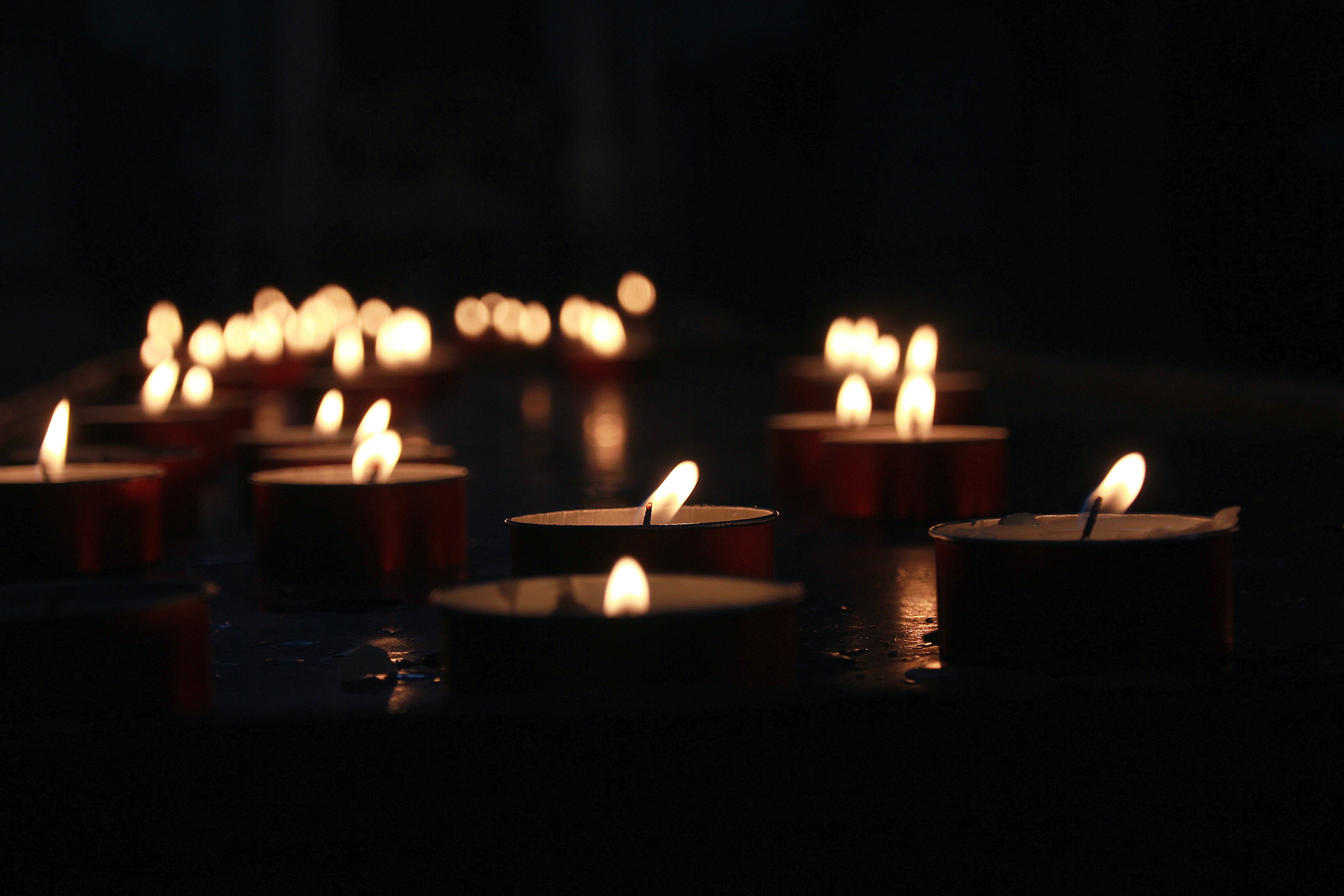
As Christmas approaches, churches often plan services where congregations of all sizes and all ages hold lighted candles and pass the flame to others as they sing carols. While this practice brings concern to fire marshals, church facilities personnel, and parents of small participating children, it can also be extremely meaningful. 

But I sometimes wonder why. What is the significance of candles at Christmas? 

Although candles were often used in ancient winter solstice celebrations as a way of remembering that spring would soon come, Christians most likely picked up the practice of using candles from Judaism where candles were used in ancient services for various purposes. As unspiritual as it may sound, candles were probably first used as a source of illumination (not the spiritual kind). 

At some point, in early Christian worship, someone realized the light of the candle could easily symbolize Jesus who once said, “I am the light of the world. If you follow me, you won’t have to walk in darkness, because you will have the light that leads to life.” (John 8:12)

Over the years, people began to associate candlelight with various spiritual practices. In Orthodox traditions, members were encouraged to place small votive candles in small sandboxes which symbolized a spirit of prayer within the church. To Catholic and Protestant clergy alike, candlelight often represented the power and the presence of God, akin to the pillar of fire that led the Israelites in Exodus. To others, candles represented their prayers being lifted to the Lord, symbolizing their lives as offerings to Him, being slowly consumed in their Christian service. And at Christmas in the Middle Ages, a large lit candle was used to represent the star of Bethlehem. 

It can be a moving experience to be a part of a service when the lights are lowered, a carol is sung, and the candle flame is passed from believer to believer. It is certainly visually stimulating to see a worship center filled with countless numbers of candles, filling the darkness with light. If that light carries meaning, it can be an even greater experience (especially if you can keep from dripping burning wax on your hands)

Merry Christmas.

*Image courtesy of Zoran Kokanovic

Manger Throne, a New Classic

All across the nation and around the world, it’s beginning to look a lot like Christmas. However, it many houses of worship, even those with the best decorations, it doesn’t yet sound much like Christmas. There are many reasons for this (and I’ll write more in future posts) but one reason is that the sound and feel of many Christmas carols and songs are often quite different from many modern worship songs. Christmas carols are filled with nostalgia and wonder, yet many are written in mysterious sounding keys with varying time signatures and often have hard to understand lyrics. On the other hand, worship songs are often written in straightforward time signatures with predictable (I mean that in a good way) lyrics and (dare I say it) easier to play keys. 

It is possible to have the best of both worlds, but like many good things, it takes some effort. That’s why I’m always pleased to hear new Christmas worship songs that are strong musically and lyrically and quite frankly, work well for powerful worship experiences. One of my new favorites is the new Christmas anthem Manger Throne, written by Jonathan Smith and Tony Wood and released by Phil Wickham. 

Here’s what Wickham recently shared with CCM magazine: “More than a Christmas song, this is a worship song… Every Christmas season, when I take the time to think on it, I am amazed in a greater way of the moment when Creator stepped into creation. God in human flesh. Heaven walking on earth. Everything about how Jesus came was different than what we would have expected, and also far better. He met us right in our humanity.” 

Check out Manger Throne at one of the links below. 

*Click here for the official music video 

**Click here for the lyric video 

***Click here for ccm article mentioned in the post.

Merry Christmas!

*Image courtesy of ProChurch Tools

Not By Bread Alone

In recent years, I’ve written about Christmas services, traditions, and worship practices. I’ve shared the origins of Christmas carols and posted pictures from family and church celebrations. I’ve never even written a short note about white bread. 

Until now. 

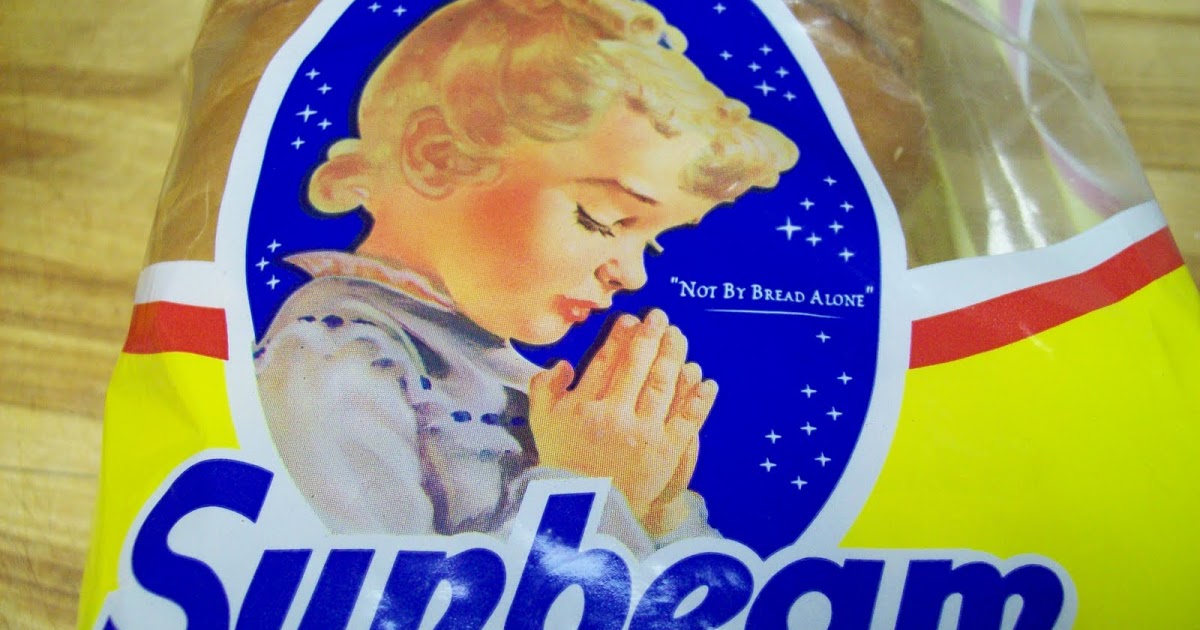
In 1942, Ellen Barbara Segner created Little Miss Sunbeam for the Quality Bakers of America. The character was based on a young girl Segner observed playing in New York’s Washington Square Park. Over the years, she produced over 30 oil paintings of Little Miss Sunbeam for the company in its marketing

For well over 60 years, the Quality Bakers of America has changed its bread packaging just after Thanksgiving to add an image of Little Miss Sunbeam bowing her head in prayer. Next to her, the phrase “Not by bread alone” is written. This is a portion of a quote from Jesus who, in Matthew 4:4, said “It is written: Man shall not live by bread alone, but by every word which proceeds from the mouth of God.” This packaging usually remains until early in the new year.

The Quality Bakers of America’s blog states that the annual temporary change in marketing “serves as a gentle nudge to look beyond the material aspects of life. It encourages consumers to reflect on the spiritual nourishment that goes hand in hand with the festive season.”

I don’t know anything about the Quality Bakers of America. Their executives and employees may simply be continuing the packaging for tradition’s sake or as a marketing technique. Regardless, the image and message has reminded millions at Christmas time that people need more than the meeting of physical needs to truly live. 

We need the “bread of life.”

We need Jesus.

*Image courtesy of the Quality Bakers of America

**Special thanks to my friend Dr. Shantrell Byrd

Who is the Center of Your Nativity Scene?

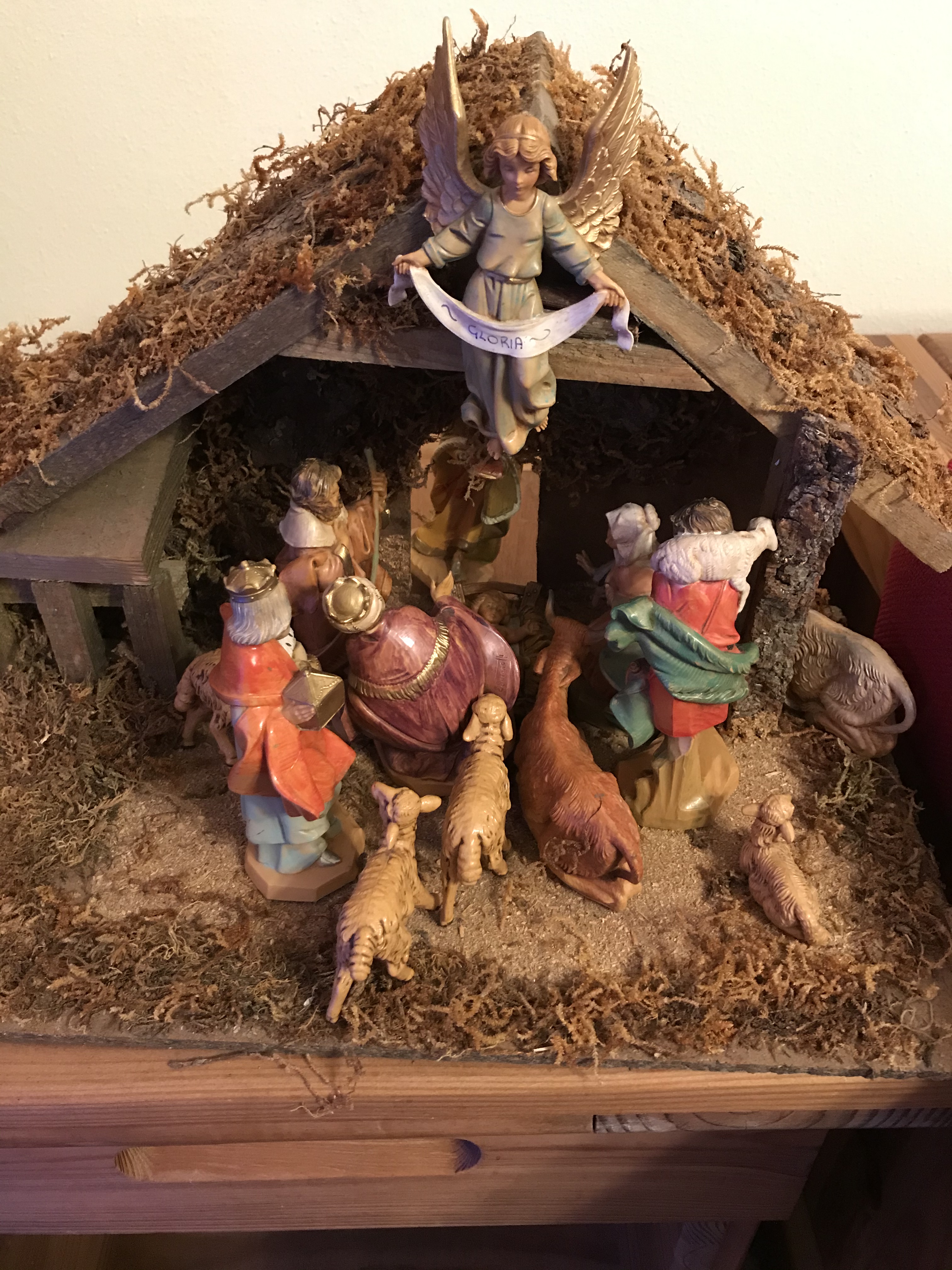
A few years ago, my wife invited a mom and her preschool daughter to our home to help decorate for Christmas. She asked the young girl if she would place the Nativity scene figures in a small stable that was sitting on an end table near our sofa. The little girl smiled upon hearing the opportunity. She looked carefully at each piece before placing the Baby Jesus figure, who was of course lying in a manger, in the center of the stable. Then, she slowly placed Mary and Joseph, the animals, the shepherds, the wise men, and finally, the angel.

Sounds pretty normal, right? Most people would probably use the same process.

Except… 

Instead of facing the figures outward, this young girl placed them facing the center of the stable.

I remember thinking, “What has she done? These characters aren’t facing the people who will be looking at the nativity scene. They look like they’re just focused on Jesus.”

Then, I realized that she had it right. Jesus is the center of the story. It’s all about Him. Why would the figures look at anything or anyone else but Him? 

That’s a good life lesson for us all as well. This year, let’s fix our eyes on Jesus. Let’s make Christmas all about Him.

Is Christmas Really the Birthday of Jesus?

I hear the question every December: “Is Christmas Really Jesus’ Birthday?”

In short, yes and no. 

The argument, as I see it, is less about Christmas and more about December 25th. 

Many people believe that Christmas is actually based on Saturnalia, a pagan festival for Saturn, the Roman god of agriculture and time. This festival began as a single day held on December 17 yet by the first century before Christ, it had expanded to a seven day festival. Saturnalia was a holiday for everyone, even the enslaved. Homes were decorated with wreaths and greenery. Saturnalia led to another Roman holiday connected to the winter solstice which recognized the birthday of the Roman sun god Sol Invictus.

On the other hand, some theologians believe that the Annunciation (when the angel Gabriel shared with Mary that she would give birth to the Son of God) took place on March 25. Therefore, since the average term of a human pregnancy is 9 months, the due date for the Messiah must have been December 25. 

The Roman Emperor Constantine was raised in the cult of the Unconquered Sun God and most likely celebrated Saturnalia and worshiped Sol Invictus. However, Constantine converted to Christianity in 312. Shortly after, he declared it the official religion of the Roman empire. He made a conscious effort in turning the culture of his day away from paganism and toward Christ. Because of his influence, western Christians began celebrating Christmas (Christ Mass) on December 25 in 336. Constantine’s efforts were continued by Pope Julius 1st, who declared in 385 that Christmas, the celebration of the birth of Jesus, would be observed on December 25. 

So, when was Jesus born? Lee Strobel, author of The Case For Christmas, states that it must have been in the spring because shepherds were watching their flocks by night, which they would have done in the spring when ewes bore their young. 

That makes sense to me. 

But does it really matter? 

Several years ago, my wife wished our niece a happy birthday on her actual birthday. “Thank you,” she replied, “But my mom changed my birthday this year so tell me again this coming Saturday.” Her mother didn’t really change her birthday, just the time of the celebration of her birthday. But we still had cake and presents and sang “Happy Birthday” to her on the day of celebration.

Point being, the date didn’t change the importance of our niece’s birthday. In a similar way, we celebrate the birth of Jesus on the 25th of December, knowing full well He could have just as well been in March, April, or August. Celebrating the birth of Jesus is what’s important, not the date. 

But what about those practices that came along with Saturnalia? Are we somehow worshiping the sun god as we hang our wreaths, drape our garland, go caroling in our neighborhoods, and exchange gifts? 

I believe the answer lies in intentions.

It’s doubtful, at least to me, that the ancient Roman Christians were trying to trick us all into worshiping the sun. They were most likely seeking an alternative to Saturnalia and wanted to focus on Jesus instead of the pagan god, so they began celebrating Christmas instead. Overtime, the intent of Saturnalia was overtaken by the celebration of Jesus’ birth. In a sense, this festive time of the year was redeemed by these early saints.

There are probably some people who hang their decorations and celebrate Saturnalia instead of Christmas, but that is not my intent. I imagine it’s not your intent either. 

So, Merry Christmas and Happy Birthday, Jesus.

*Image courtesy of Jonathan Borba